























































































































TORONTO -- An intravaginal ring, similar to those used to deliver contraceptives and hormonal agents, is a promising way to deliver anti-HIV microbicides, investigators reported here.

TORONTO -- An intravaginal ring, similar to those used to deliver contraceptives and hormonal agents, is a promising way to deliver anti-HIV microbicides, investigators reported here.
TORONTO -- An investigational pediatric version of a recently approved HIV drug is safe and well-tolerated at two different doses and appears to be effective, researchers said here.
TORONTO -- This Special Report from Zach Wise, a contributing videographer for MedPage Today, provides a multimedia portrayal of the activities at the 16th Annual International AIDS Conference here.
TORONTO -- The transmission of drug-resistant HIV appears to be stabilizing, at least in Europe, but about 9% of newly infected HIV patients still carry a virus that carries resistance mutations to one of the three main classes of anti-retroviral medications.
TORONTO -- This Special Report from Zach Wise, a contributing videographer for MedPage Today, provides a multimedia portrayal of the activities at the 16th Annual International AIDS Conference here.
TORONTO -- HIV patients are 18 times more likely than the general population to become infected with community-acquired methicillin-resistant Staphylococcus aureus (MRSA), and the rate appears to be increasing.
TORONTO -- HIV-positive patients are at a small but increased risk of cardiovascular disease from antiretroviral therapy, investigators reported here.
TORONTO -- Increased cholesterol and triglycerides in HIV-infected children being treated with highly active antiretroviral therapy (HAART) can be markedly reduced by switching regimens, researchers reported here.
TORONTO -- Even in HIV-infected patients who have tried and failed several drug regimens, the goal should still be to reduce the virus to undetectable levels, according to guidelines presented here.
TORONTO -- This Special Report from Zach Wise, a contributing videographer for MedPage Today, provides a multimedia portrayal of the activities at the 16th Annual International AIDS Conference here.
TORONTO -- Once patients have controlled HIV with a standard drug cocktail, treatment with a "boosted" protease inhibitor may be all they need to keep the virus at bay.
TORONTO -- HIV patients ages 50 and over do a better job controlling the virus but may need more help managing adverse effects and comorbidities.
CHAPEL HILL, N.C. -- Of U.S. adolescents in the general population, 3.5% have exchanged sex for money or drugs, and two-thirds of these youths were boys, researchers reported.
LOS ANGELES -- Unmarried life may impinge on life expectancy, according to researchers here.
GENEVA -- The notion of HIV-treatment interruption -- consigned not long ago to the ash heap of failed ideas -- should be revisited, said investigators here.
LONDON -- Improvements in highly active anti-retroviral therapy (HAART) has resulted in lower viral loads and higher immune cell counts but not a decline in mortality or progression to AIDS.
Abstract: A significant advance in CT imaging is the use of 3-dimensional (3D) reconstruction techniques. A 3D reconstruction, for example, permits a volumetric evaluation of the contours of the airways and displays areas of stricture, or narrowing, more effectively than do routine axial images. External 3D rendering, also called CT bronchography, helps reveal complex airway abnormalities and improves the detection of subtle airway stenoses. Although it is primarily an investigational tool, internal 3D rendering (virtual bronchoscopy) has several potential applications, including assessing airway stenoses, guiding transbronchial biopsy procedures, and screening for lung cancer. Multiplanar reformation imaging methods can aid in the assessment of airway stenoses, airway stents, tracheomalacia, and extrinsic airway compression. A review of multiplanar images can also aid in the planning of stent placement or surgery. (J Respir Dis. 2006;27(8):348-352)
Abstract: A number of factors can contribute to a delay in the diagnosis of tuberculosis in pregnant women, including the presence of nonspecific symptoms, such as fatigue and cough; extrapulmonary manifestations; and asymptomatic disease. The diagnostic evaluation is the same as for nonpregnant patients and includes tuberculin skin testing and, when indicated, chest radiography (with appropriate shielding) and acid-fast bacillus stain and culture. Antituberculous therapy during pregnancy is generally safe and effective, although streptomycin should not be used because of the risk of vestibular or auditory damage to the fetus. For patients with active tuberculosis, treatment should be initiated as soon as the diagnosis is established. The treatment of latent infection is somewhat more controversial. The timing of the initiation of therapy is based on the risk of progression to active disease. (J Respir Dis. 2006;27(8):338-347)
Child With Dysphagia, Fever, and Weight Loss
Kaposi sarcoma (KS) is a hyperplasia or neoplasia caused by human herpesvirus 8 (HHV-8).
A succinct review of hyperkalemia . . . its various causes, clinical manifestations and consequences, ECG findings, and treatment approaches.
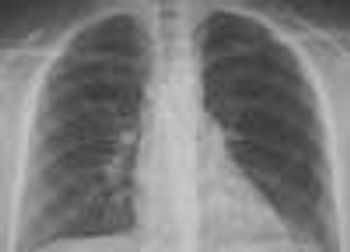
A 6-year-old girl with a nonproductive cough for 4 days and chest pain for 2 days was brought to the emergency department. According to the mother, the child had no fever or wheezing. She had no history of surgery, was not taking any medications, and had no contact with ill persons.
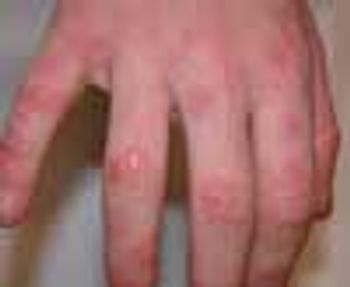
Several asymptomatic, erythematous papules and plaques had appeared on the hands of an otherwise healthy 11-year-old girl. The personal and family medical histories were noncontributory. A punch biopsy from the largest lesion on the palm confirmed the clinical diagnosis of localized granuloma annulare, a self-limited inflammation of the dermis.
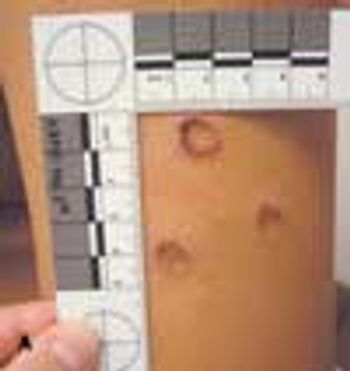
The patient had 3 circular healing wounds of varying diameters on the lateral and inner aspects of his upper left arm. The patient volunteered that he had inflicted these wounds with a cigarette in an attempt to tattoo himself to symbolize his "crazy life." (He was right-handed.) "Smiley faces" had also been tattooed on his hand with a lighter. There were no tattoos, body piercings, or body mutilation other than those mentioned.
SACRAMENTO, Calif. -- Even when HIV has all but disappeared from the peripheral blood after the start of therapy, the virus may still be lurking in the gut, slowing the restoration of immune response, according to researchers here.