





Neurology
Latest News
Advertisement
Latest Videos



Shorts

1:03
No Smoking, No Diabetes, No Hypertension: 30 Extra Dementia-Free Years
2 months ago
by
Josef Coresh, MD, PhD

0:36
A Vicious Cycle: How Sleep and Dementia Connect
4 months ago
by
Bryce Mander, PhD

1:06
Why One Specialist Wants Clinicians to Prioritize Sleep in Patient Discussions
4 months ago
by
Michael Grandner, PhD
0:55
Why Sleep Apnea is Often Misdiagnosed in Women
4 months ago
by
Bryce Mander, PhD

0:42
40% of Adults Now Track Sleep With Wearables, But Clinical Use of Data Lags
4 months ago
by
Leanne Kaye, PhD, MPH
































































































































































Advertisement
More News

Brief speech, motor, vision, or balance changes may signal a TIA and require urgent evaluation, Rodica Di Lorenzo, MD, tells Patient Care Online.

A team-based blood pressure intervention delivered through primary care reduced dementia risk by 15% over 7 years.

Physical activity was associated with up to 22% lower mortality and 19% lower stroke risk in adults with and without atrial fibrillation in a large Norwegian cohort study.

Plasma p-tau217 levels helped estimate 5- and 10-year cognitive impairment risk in older adults without memory or thinking symptoms.

FDA cleared C2N’s PrecivityAD2 blood test to aid Alzheimer disease evaluation in symptomatic adults aged 40 years and older.

Josef Coresh, MD, discusses biomarkers, hearing correction, and integrated vascular care as emerging dementia prevention strategies.

A Swedish observational study linked NOAC use to slower cognitive decline in individuals with atrial fibrillation and Alzheimer disease.
Josef Coresh, MD, PhD, discusses how primary care clinicians can address hypertension, diabetes, and smoking to support long-term cognitive health.
Corresponding author Josef Coresh, MD, PhD, explains how hypertension, diabetes, and smoking in midlife were linked to fewer dementia-free survival years.
The FDA approved oveporexton for narcolepsy type 1 in adults, marking the first orexin receptor agonist targeting the underlying biological cause of narcolepsy.
The US FDA Fast Track status advances remlifanserin for Alzheimer disease psychosis, with phase 2 RADIANT data expected in fall 2026.

Ruth Benca, MD, PhD, and Adam Spira, PhD, discuss how sleep disturbances, especially sleep apnea, may drive dementia risk and what to ask patients.
FDA accepted Axsome’s NDA for AXS-12 for cataplexy in narcolepsy and set a PDUFA target action date of May 1, 2027.

Once-weekly subcutaneous lecanemab matched IV initiation exposure in early Alzheimer disease, but comparative clinical outcome data remain limited.
SLEEP 2026: A sleep expert discusses screening tools, referral pathways, and why sleep disorders matter for cardiometabolic health in primary care.

Tirzepatide, nerve stimulation, and oral AD109 are reshaping OSA care as phenotyping replaces the one-size-fits-all CPAP default.

Patients with OSA who cannot tolerate CPAP may benefit from discussions about oral appliances, HNS, and other treatment options. Sairam Parthasarathy, MD, dives deeper.

SLEEP 2026: Virend Somers, MD, PhD, details how busy primary care physicians can address sleep in routine visits.

SLEEP 2026: GLP-related home sleep testing made up 44% of primary care referrals, but many studies were negative or suboptimal, according to a late-breaking abstract.
SLEEP 2026: Virend Somers, MD, of Mayo Clinic, outlines why sleep has been added to the AHA's Life’s Essential 8.
Laura B. Herpel, MD, reviews REFRESH trial data on once-nightly oxybate in narcolepsy, focusing on daytime function, stimulant reduction, and mental health.

Patil reviews 3 new AASM guidelines at SLEEP 2026 covering updated CSA treatment, first-ever inpatient OSA guidance, and chronic insomnia therapy hierarchy.

Andrew Ho, MD, reviews single-center data showing GLP-1 coverage barriers reshaped OSA referral patterns, with symptom documentation absent in most cases.

SLEEP 2026: In an 8-week randomized trial, reishi mushroom extract reduced Insomnia Severity Index scores more than melatonin in adults with chronic insomnia.

Baker explains how smartwatch sleep data can open clinical conversations about menopausal sleep disturbance but emphasizes the importance of patient-reported outcomes.
Advertisement
Advertisement
Trending on Patient Care Online
1
FDA Approves Once-Monthly Olanzapine Injection for Adults With Schizophrenia
2
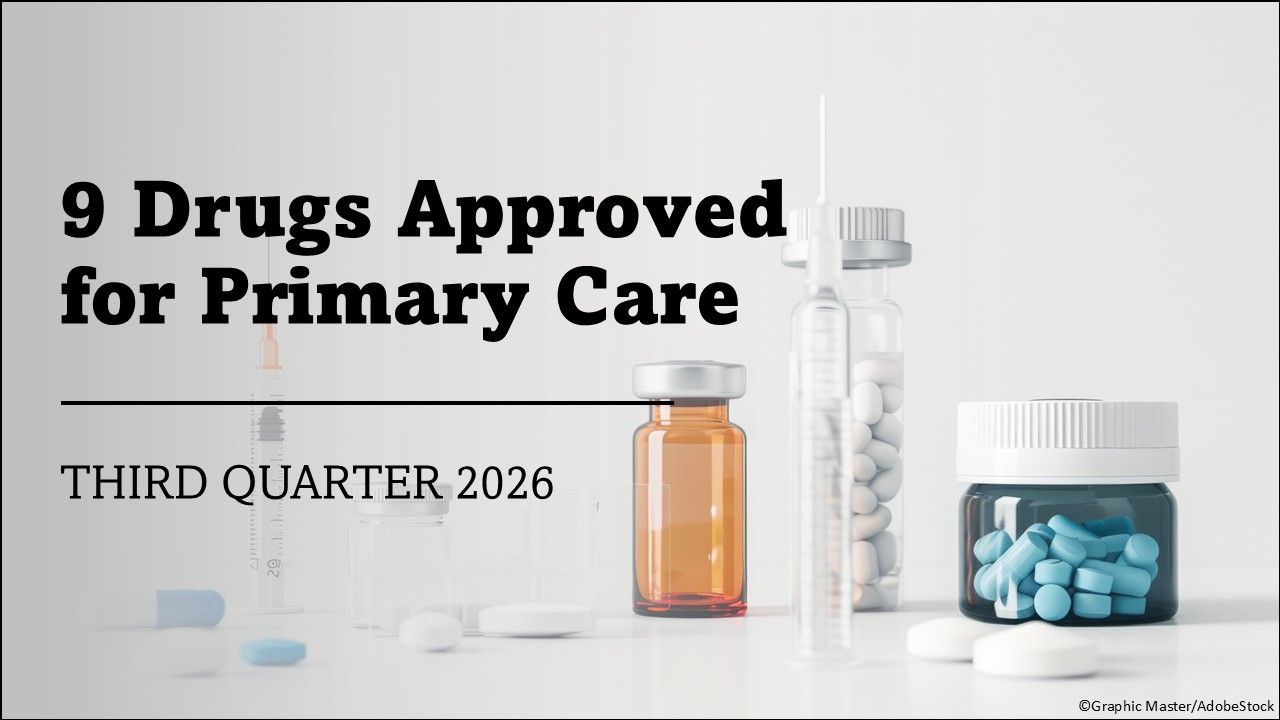
9 Drugs Approved for Primary Care: Q3 2026
3
Abbott Gains FDA Approval for CardioMEMS Update Letting Heart Failure Patients View Pressure Readings on Their Phones
4
Multicomponent Strategies to Ease Vaccination Pain and Fear Across Ages
5