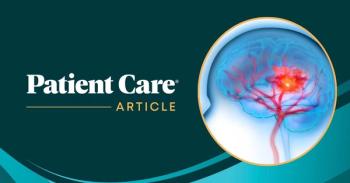
FDA has granted IDE approval for the STROKE-REWIRE pivotal trial evaluating NeuWire Medical's neurostimulation device for chronic ischemic stroke recovery.
Brief speech, motor, vision, or balance changes may signal a TIA and require urgent evaluation, Rodica Di Lorenzo, MD, tells Patient Care Online.
Brief neurologic symptoms can disappear before a patient reaches the office, but symptom resolution should not reassure clinicians that the danger has passed, Rodica Di Lorenzo, MD, a vascular neurologist at Cleveland Clinic, explains in this video. She focuses on transient speech difficulty, unilateral weakness, facial droop, vision loss, dizziness, and sudden imbalance—presentations that patients may attribute to migraine, fatigue, or an inner-ear disorder.
The discussion centers on transient ischemic attack (TIA), which is no longer defined by symptoms lasting less than 24 hours. The current tissue-based definition describes a transient episode of neurologic dysfunction caused by focal cerebral, spinal cord, or retinal ischemia without acute infarction.¹ Many episodes last less than an hour, and the neurologic examination may be normal by the time the patient is evaluated. Those features can make the diagnosis difficult, particularly when the history is incomplete or symptoms are nonspecific.
A 2023 American Heart Association scientific statement emphasizes that TIA is a strong predictor of subsequent stroke and that almost half of post-TIA strokes occur within 2 days. The statement recommends protocols that combine a careful history and examination with brain and vascular imaging, risk stratification, specialist input, and rapid follow-up to determine which patients can be discharged safely and which require admission.¹
Di Lorenzo also calls attention to symptoms outside the classic face-arm-speech mnemonic. The
For primary care clinicians, the message is to reconstruct the episode precisely: onset, duration, focality, associated symptoms, vascular risks, and whether the event was negative loss of function or a positive phenomenon more typical of a mimic. Suspected TIA or stroke warrants emergency evaluation even when the patient feels normal again.
Di Lorenzo has no relevant disclosures.
1. Amin HP, Madsen TE, Bravata DM, et al. Diagnosis, Workup, Risk Reduction of Transient Ischemic Attack in the Emergency Department Setting: A Scientific Statement From the American Heart Association. Stroke. 2023;54:e109-e121.