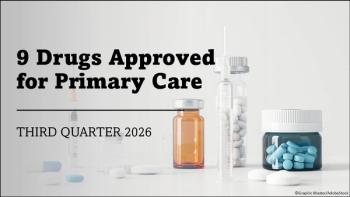
Catch up on the 9 FDA drug approvals most relevant to primary care, including new options for HIV-1 infection, narcolepsy, diabetes, pain management, and more.
ACOG updated HIV screening and prevention guidance, recommending opt-out lifetime HIV testing and stronger PrEP counseling and prescribing.
The American College of Obstetricians & Gynecologists has issued updated clinical guidance on
ACOG Committee Statement No. 32, Human Immunodeficiency Virus Screening and Preexposure Prophylaxis, recommends that health care professionals conduct comprehensive, inclusive, and nonjudgmental sexual histories during routine wellness visits for all individuals, regardless of age, marital status, or perceived risk. The statement replaces ACOG Committee Opinion No. 595 and Committee Opinion No. 596, both issued in May 2014.1
ACOG recommends that at least 1 lifetime HIV test be offered to all people using an opt-out approach. More frequent testing should be offered to individuals with ongoing risk factors. The guidance also recommends that clinicians proactively initiate discussions about HIV prevention, including
The updated statement says health care professionals should prescribe PrEP to patients at increased risk of HIV acquisition and to any individual who requests it. ACOG notes that patients may request PrEP because they are concerned about HIV acquisition but may hesitate to disclose sexual behaviors or injection drug use.1
PrEP should be prescribed to adults and adolescents weighing at least 35 kg, or 77 lb, who have high-risk behaviors. These include a history of
The guidance emphasizes shared decision-making when selecting the route and formulation of PrEP. Options for cisgender women include daily oral emtricitabine/tenofovir disoproxil fumarate,
Before PrEP initiation, a negative HIV test should be documented within the preceding week. Patients also should be tested for
The updated statement points to persistent gaps in HIV screening, prevention counseling, and PrEP access. In 2024, more than 38 000 new HIV diagnoses were reported in the United States, including 7752 diagnoses among females. Heterosexual contact was the predominant mode of transmission within that group.1
ACOG also highlights disparities in HIV acquisition and PrEP uptake. Black women make up 13% of the US population but accounted for 50% of new HIV cases among women as of 2022, and 2024 HIV diagnosis rates were 21.6 per 100 000 among Black women, 6.4 per 100 000 among Hispanic/Latina women, and 1.8 per 100 000 among White women. Young people aged 13 to 24 years accounted for 18% of new HIV diagnoses in 2024 and were the group most likely to be living with undiagnosed HIV.1
“Combating the HIV epidemic requires that we as ob-gyns talk to our patients about their sexual histories and facilitate nonjudgmental conversations about their unique risk factors and prevention. We know from research that one of the most important factors in someone deciding to get tested is their doctor recommending the screening,” Jessika A. Ralph, MD, MS, FACOG, a guidance coauthor, said in the ACOG announcement.2
For primary care clinicians and other clinicians providing preventive or reproductive health care, the guidance reinforces the importance of normalizing HIV screening and prevention discussions during routine visits. ACOG notes that ob-gyns provide nearly half of all women’s preventive health visits annually, and these visits may be the only interaction some patients have with the health care system in a given year.
“By normalizing conversations about HIV prevention and ensuring awareness of and access to PrEP, ob-gyns can help reduce transmission and better meet the needs of the patients we care for,” Jenell S. Coleman, MD, MPH, a named author of the guidance, said in the announcement.2
ACOG concludes that ongoing HIV transmission is preventable and that PrEP remains an underutilized prevention tool. The organization states that normalizing prevention conversations, encouraging screening, and improving PrEP awareness and access can help reduce disparities among individuals with HIV and those at risk of acquisition.1