
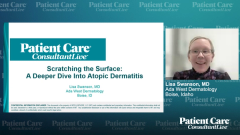
Opinion|Videos|April 2, 2025
Collaborating for Better Atopic Dermatitis (AD) Care: How Primary Care and Dermatology Can Work Together
Author(s)Lisa Swanson, MD
A panelist discusses how effective coordination between primary care providers and dermatologists creates a complementary care model that optimizes atopic dermatitis management through shared decision-making, clear communication pathways, and defined roles for each specialty.
Advertisement
Collaborating for Better Atopic Dermatitis (AD) Care: How Primary Care and Dermatology Can Work Together
Roles and Responsibilities
- Primary Care Physicians (PCPs): Initial diagnosis, management of mild-to-moderate disease, coordination of care, holistic patient monitoring
- Dermatologists: Management of severe/recalcitrant cases, specialized testing, initiation of advanced therapies, procedural interventions
- Shared Responsibilities: Patient education, comorbidity identification, trigger avoidance strategies, treatment adherence support
Optimal Referral Pathway
- Referral Criteria:
- Diagnostic uncertainty
- Inadequate response to optimized first-line therapy (2-4 weeks)
- Severe/widespread disease affecting >10% BSA
- Significant psychosocial impact
- Recurrent secondary infections
- Consideration for systemic therapy
- Referral Communication: Include treatment history, response to therapies, comorbidities, current medications, impact on quality of life
Collaborative Care Models
- Shared Care Protocols: Define management algorithms with clear transitions of care
- Electronic Consultation: Virtual case reviews before formal referrals
- Integrated EMR Systems: Shared documentation of treatment plans and outcomes
- Co-management Arrangements: Alternating visits between specialties for complex cases
Knowledge Transfer Strategies
- Joint CME Programs: Cross-specialty education on AD management
- Practice-Based Learning Networks: Case-based discussions between PCPs and dermatologists
- Standardized Tools: Shared assessment metrics (EASI, POEM, DLQI) across settings
- Decision Support Systems: EMR-integrated guidelines for therapy selection
Improving Access to Dermatologic Care
- Teledermatology Options: Store-and-forward or live video consultation
- PCP Extension Programs: Dermatologist-supported management in primary care
- Nurse Practitioner/Physician Assistant Integration: Mid-level providers with specialized AD training
- Group Visits: Multidisciplinary education sessions for AD cohorts
Quality Improvement Initiatives
- Care Pathways: Standardized, evidence-based approaches across settings
- Regular Outcome Measurement: Tracking disease severity and quality of life metrics
- Patient Registries: Shared databases for monitoring complex patients
- Audit and Feedback: Regular review of referral appropriateness and outcomes
Addressing Common Challenges
- Communication Gaps: Structured referral forms with clear response expectations
- Resource Limitations: Prioritization strategies for dermatology access
- Insurance Barriers: Collaborative advocacy for coverage of needed therapies
- Geographical Disparities: Telehealth solutions for underserved areas
Future Directions
- Integrated AD Centers: Multidisciplinary clinics for complex cases
- Shared Decision-Making Tools: Patient-centered collaborative care planning
- Population Health Approaches: Risk stratification and proactive management
- Digital Health Platforms: Patient-reported outcomes shared between specialties
Advertisement
Related to this article

Real-world phase 4 data show fezolinetant eases menopausal hot flashes and improves sleep, cutting nighttime awakenings by 2.6 by week 12.

September FDA news included updates in CKD and type 1 diabetes, major depressive disorder, insulin pump technology, alopecia areata, and more.
EADV 2026: Lebrikizumab improved hand and foot clearance, itch, and pain at 16 weeks versus placebo in a phase 3b atopic dermatitis trial.

EASD 2026: The combination of semaglutide/cagrilintide altered food-cue responses and showed a 22.4% estimated weight difference vs placebo; separate data found less organ fat in type 2 diabetes.
The FDA accepted Bayer's sNDA and granted Priority Review to elinzanetant for vasomotor symptoms in women on endocrine therapy for HR+ breast cancer.

The FDA has approved baricitinib for adolescents aged 12 and older with severe alopecia areata, marking the first systemic oral therapy cleared for this population.

Stroke incidence in adults aged 20–54 nearly doubled from 1993–1994 to 2020, driven largely by ischemic stroke, while 30-day fatality declined, according to new research.
The FDA has approved insulin efsitora alfa-gobe (Onswik) for adults with type 2 diabetes.
Advertisement
Advertisement
Trending on Patient Care Online
1
Atrial Fibrillation Stroke Prevention: Expert Guidance for Primary Care Physicians
2
5 FDA Decisions for Primary Care to Know from September 2026
3
Fezolinetant Linked to 2.6 Fewer Nighttime Awakenings in Women With Menopausal VMS
4
Lebrikizumab Improves Hand and Foot Atopic Dermatitis in Phase 3b Trial
5