

Pauline M. Maki, PhD, reviews early OPTION-VMS findings showing improvements in hot flash bother, work productivity, depression, and anxiety with fezolinetant (Veozah).
Pauline M. Maki, PhD, reviews early OPTION-VMS findings showing improvements in hot flash bother, work productivity, depression, and anxiety with fezolinetant (Veozah).
Pauline M. Maki, PhD, introduces OPTION-VMS and explains why real-world data are needed to test whether randomized trial findings for nonhormonal VMS therapy generalize to everyday patients.
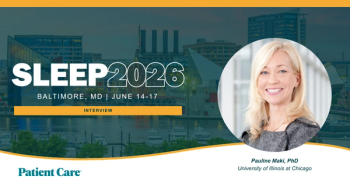
Pauline Maki, PhD, reviews data showing over half of elinzanetant's sleep benefit in postmenopausal women is independent of VMS reduction.

Panelists discuss how advancing NK receptor research is reshaping menopause care, emphasizing education, innovation, and patient empowerment for lasting impact.
Panelists discuss how structured monitoring and interdisciplinary collaboration enable safe, effective integration of NK-targeted therapies into primary care.
Panelists discuss how NK receptor antagonists can be strategically positioned as core nonhormonal options within the broader VMS treatment landscape.
Panelists discuss how NK receptor antagonism may improve mood and sleep quality, linking thermoregulation with broader emotional and cognitive health benefits.
Panelists discuss how NK1 receptor antagonists show promise beyond VMS, suggesting wider therapeutic potential across neurological and systemic conditions.
Panelists discuss how NK receptor antagonists deliver fast symptom relief with strong safety profiles, improving adherence and clinical confidence in their use.
Panelists discuss how elinzanetant offers a safe, effective nonhormonal option for managing VMS in women receiving endocrine therapy for breast cancer.
Panelists discuss how elinzanetant demonstrates strong efficacy and safety across trials, reinforcing neurokinin modulation as a viable core treatment for VMS.
Panelists discuss how dual NK3/NK1 receptor antagonism may expand therapeutic benefits by targeting multiple neural pathways involved in VMS and mood regulation.
Panelists discuss how NK3 receptor antagonism through fezolinetant offers effective, rapid relief from VMS with a strong safety profile and nonhormonal benefits.
Panelists discuss how NK receptor antagonism provides a targeted, nonhormonal strategy that addresses the physiological root of vasomotor symptoms.
Panelists discuss how limited treatment options and systemic barriers underscore the urgent need for accessible, targeted therapies for vasomotor symptoms.
Panelists discuss how vasomotor symptoms undermine physical comfort, sleep, and long-term health, emphasizing integrative management to restore overall quality of life.
Panelists discuss how hormonal decline and KNDy neuron overactivation drive vasomotor symptoms and inform the development of targeted neurokinin receptor therapies.

November 19th 2025
December 17th 2025
November 12th 2025
November 5th 2025