













































































































































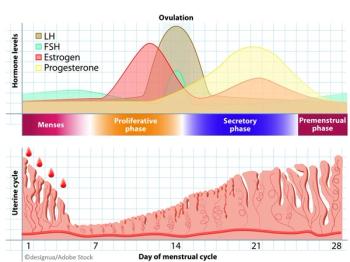
Women whose menstrual cycle varied in frequency had a significant 24% greater risk of a composite cardiovascular event during a 26-year follow-up, a new study reports.
Women whose menstrual cycle varied in frequency had a significant 24% greater risk of a composite cardiovascular event during a 26-year follow-up, a new study reports.

Your daily dose of clinical news you may have missed.

A new study found the probability of initiating psycholeptics and having a postpartum psychiatric emergency was lower in early and late discontinuer groups vs the continuer group.

Fezolinetant, a nonhormonal selective neurokinin-3 receptor antagonist, significantly reduced frequency and severity of menopause-related VMS in a pivotal phase 3 trial.

Beginning on Sept 24, 2024, all women must be notified of their breast density status in mammography reports and encouraged to pursue supplemental screening.
Your daily dose of clinical news you may have missed.

ACC 2023. The Mediterranean diet has a beneficial effect on the primary prevention of cardiovascular disease and death in women, according to new analysis.

After coronary artery bypass surgery, women are still at higher risk for MI, stroke, and other adverse events than men despite years of improvement in technique and care.
Your daily dose of clinical news you may have missed.

Nitrous oxides were found to be the most damaging to bone architecture in the first study to look at the pollution-BMD association in postmenopausal women.

ACC 2023. Increasing rates of adverse pregnancy outcome over the last decade are largely attributable to a woman’s health status before she gets pregnant, rather than age, according to new research.

Many older adults show symptoms of food addiction, a new survey found. Is it time to start screening? A primary care physician considers the feasibility and the value.
Your daily dose of clinical news you may have missed.
Video
Behavioral problems with food were found more common among women in their 50s and 60s and among men and women who report being lonely, in poor health, and overweight.
The novel findings suggest that continuation of aspirin therapy until gestation week 36 in those at high risk of preeclampsia may not be necessary in all cases.
A new review found that menopausal hormone therapy for vasomotor symptoms is safe and appropriate for most women at low atherosclerotic cardiovascular disease risk.

Women who gave birth to infants in the highest birthweight category were at a 21% increased risk for prediabetes/diabetes 10 to 14 years later.
Your daily dose of clinical news you may have missed.

All pregnant persons should have BP measured at each prenatal visit to prevent complications of hypertension disorders, says the USPSTF.

The novel oral agent is administered once daily for 14 days and has demonstrated rapid and sustained improvement in symptoms across trials.
Your daily dose of clinical news you may have missed.

The findings come from an analysis of data related to more than 80 000 participants in the Women's Health Initiative Observational Study.
Your daily dose of clinical news you may have missed.

Differences in cardiometabolic health between IVF- and naturally-conceived children were small and not statistically significant in the largest study of its kind.

Among women with prepregnancy migraine diagnosis, rates of gestational hypertension and preeclampsia were 28% and 40% higher, respectively, vs women without migraine.