
Panelists discuss how delaying intervention in stage 2 T1D can lead to faster disease progression, increased risk of complications like diabetic ketoacidosis, and greater long-term burden on patient health and quality of life.
Panelists discuss how delaying intervention in stage 2 T1D can lead to faster disease progression, increased risk of complications like diabetic ketoacidosis, and greater long-term burden on patient health and quality of life.
Panelists highlight the burden of type 1 diabetes including the significant physical, emotional, and financial challenges faced by patients and their families, emphasizing the need for early intervention and proactive management strategies.
The medical experts conclude by summarizing essential insights and practical tips for effectively managing diabetes in elderly patients.
Medical professionals evaluate strategies for optimizing diabetes treatment protocols in older adults, emphasizing the critical role of deprescribing in geriatric diabetes care.
Diabetes specialists examine the shifting paradigm of type 2 diabetes treatment, highlighting the role of combination therapies and emerging approaches specifically designed for geriatric patients.
The panel examines crucial factors in determining appropriate medication dosages and managing glucose levels for elderly patients with type 2 diabetes.
Medical experts analyze a case involving a 78-year-old man with a 15-year history of Type 2 Diabetes Mellitus.
A panel of medical experts presents a case study featuring a 68-year-old woman exhibiting classic diabetes symptoms—polyuria, polydipsia, and significant weight loss—along with a notably elevated glucose level of 458 mg/dL.
Medical doctors examine strategies for customizing diabetes care for older adults across various environments, from home settings to healthcare facilities.
Medical experts explore personalized diabetes management strategies, emphasizing the critical need to tailor treatments for older adults.
The expert panel concludes by analyzing a patient case and offering final insights on customizing treatment for complex geriatric diabetes patients, taking into account cardiovascular health, weight management, and renal function considerations.
Key opinion leaders explore methods for optimizing treatment in older adults with type 2 diabetes, focusing on streamlining regimens and the process of deprescribing, with particular emphasis on defining and implementing the deprescribing approach.
Experts examine strategies for managing treatment modifications in older adults with type 2 diabetes, weighing the approaches, challenges, and advantages of combination therapy regimens.
Leading experts in geriatric diabetes care explore comprehensive aspects of insulin therapy, including dosing strategies, available injectable options, and methods for tailoring glucose control in elderly patients.
The panelists analyze a patient case, examining treatment profiles, adherence factors, and drug class selection criteria while discussing strategies to enhance elderly care.
Key opinion leaders explore strategies for enhancing elderly patient care by implementing American Diabetes Association guidelines on glycemic targets and long-term management in geriatric settings.
The expert panel concludes by examining strategies for managing hypoglycemia challenges related to dumping syndrome, particularly in the context of continuous glucose monitoring use.
The key opinion leaders explore strategies for incorporating continuous glucose monitoring into primary care diabetes management, highlighting essential takeaways from their comprehensive discussion.
Medical experts analyze the case of a 78-year-old woman with diabetes, evaluating the impact of continuous glucose monitoring on her treatment outcomes and overall diabetes management.
The panelists discuss the selection criteria for continuous glucose monitoring (CGM) candidates, identifying patient groups who would derive the greatest benefit from CGM use and those at higher risk of complications without such monitoring.
Key opinion leaders explore the advantages of remote medication adjustments facilitated by distant patient monitoring and the ability to view glucose data from afar, enhancing diabetes care management.
Medical experts in diabetes management examine a real-world case study, providing valuable insights into the clinical impact of continuous glucose monitoring systems and their role in enhancing patient management strategies.
The panel analyzes various continuous glucose monitoring (CGM) methods, detailing the advantages of each approach and sharing their preferred CGM systems for optimal patient care.
Key opinion leaders emphasize the significance of continuous glucose monitoring for diabetes patients, underscoring its advantages in enhancing physician practices and improving patient care strategies.
Key opinion leaders in the management of diabetes delineate the definition of older patients and examine the implications of homeostenosis, a condition that disrupts homeostatic mechanisms in aging individuals.
Medha Munshi, MD, and Javier Morales, MD, FACP, FACE, emphasize the significance of personalized diabetes management, emphasizing age and other patient-specific factors as crucial considerations for optimizing care.
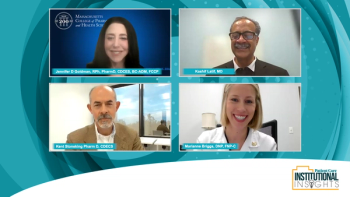
A panel of experts in the management of diabetes share their key takeaways and clinical pearls for the utilization of teplizumab for the delay of onset of type 1 diabetes.
Kent Stoneking Pharm D, CDECS and Marianne Briggs, DNP, FNP-C share their experiences with the dosing regimen and infusion process for teplizumab. This segment offers an in-depth look at the 14-day course of treatment, providing insights into the patient experience and what individuals can expect during this crucial intervention period.
In this discussion, a panel of diabetes management experts examines the groundbreaking potential of teplizumab, the first FDA-approved therapy of its kind, in delaying the onset of T1D stage progression. They discuss its unique mechanism of action and explore its pivotal role in early intervention strategies.
Dr Jennifer D. Goldman and Marianne Briggs, DNP, FNP-C explore the critical role of antibodies in determining T1D progression and emphasize the importance of regular screening. In this segment learn about the four main antibodies pivotal in T1D screening and stage progression.