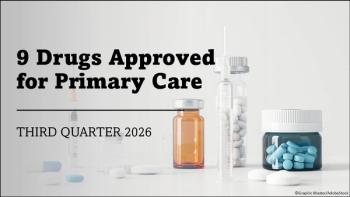
Catch up on the 9 FDA drug approvals most relevant to primary care, including new options for HIV-1 infection, narcolepsy, diabetes, pain management, and more.
FDA identifies deficiencies in Anaphylm's NDA, impacting labeling discussions, while review continues for this innovative treatment for severe allergic reactions.
The US Food and Drug Administration has notified Aquestive Therapeutics that it has identified deficiencies in the New Drug Application for Anaphylm, a sublingual film formulation of dibutepinephrine intended for the treatment of severe allergic reactions, including anaphylaxis. According to the company, the deficiencies currently preclude labeling discussions, although the agency emphasized that its review of the application remains ongoing and that no final regulatory decision has been made.
The update was disclosed by Aquestive Therapeutics today following receipt of an FDA communication related to the pending NDA. The company stated that the FDA did not specify the nature of the deficiencies in its initial notification. However, the agency confirmed that the review process is continuing and that the notification does not represent a final action on the application.
“As part of its ongoing review of the Company’s NDA for Anaphylm, the FDA notified us that it had identified deficiencies in the NDA that preclude discussion of labeling and post-marketing commitments at this time,” Dan Barber, president and chief executive officer of Aquestive, said in a press release. He added that the company is working to better understand and address the agency’s concerns.
Anaphylm is being reviewed by the US Food and Drug Administration with a current Prescription Drug User Fee Act action date of January 31, 2026. The agency indicated that it will not issue a Discipline Review Letter during the remaining review period, although additional information requests are possible. The company noted that delays in receiving further detail about the deficiencies could lead to a delay in a potential approval.
The NDA for Anaphylm is supported by a clinical development program comprising 11 independent studies with approximately 967 total administrations across 411 participants. This includes 840 single-dose and 127 repeat-dose exposures. According to the company, the program demonstrated a pharmacokinetic profile comparable to that of currently available epinephrine auto-injectors and showed that the product was generally well tolerated, with a safety profile similar to epinephrine. The development program also included a real-world oral allergy syndrome study designed to assess performance in an allergen-induced setting.
Anaphylm is a polymer matrix–based epinephrine prodrug formulated as a sublingual film. The product is designed to dissolve on contact without the need for water or swallowing and is packaged in a compact format intended for portability and durability. The proprietary name Anaphylm has received conditional approval from the FDA, pending approval of the product itself.
While the FDA review continues in the US, Aquestive reported progress on global regulatory activities. The company has initiated regulatory engagement in Canada, Europe, and the United Kingdom and expects to submit a New Drug Submission to Health Canada in the first half of 2026. The company also reported receiving feedback from the European Medicines Agency indicating that no additional clinical trials are required prior to submission, with a marketing authorization application planned for the second half of 2026. In the United Kingdom, feedback from the Medicines and Healthcare Products Regulatory Agency is expected in the first quarter of 2026.
References:
Aquestive Therapeutics Announces Regulatory Development for Anaphylm™ (dibutepinephrine) Sublingual Film and Provides Business Update. News release. Aquestive Therapeutics. January 9, 2025. Accessed January 9, 2025.