

Chovatiya, expert clinical dermatologist and researcher, points out that the term "skin of color" comprises a heterogenous set of topics, in an interview at AAD 2025.
Chovatiya, expert clinical dermatologist and researcher, points out that the term "skin of color" comprises a heterogenous set of topics, in an interview at AAD 2025.

Among pediatric patients aged 1 month to 18 years with emergent anaphylaxis, cephalosporins were the leading antibiotics and ibuprofen the top NSAID implicated in a new study.

Three of the 5 osteoporosis screening tools recommended by the USPSTF for identifying osteoporosis in postmenopausal women aged 50 yo 64 years proved suboptimal.
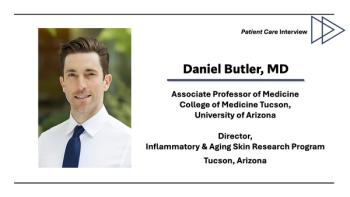
Antihistamines for itch caused by disorders like atopic dermatitis pose more problems, like sedation and fall risk, than they provide relief, according to Daniel Butler, MD.

Both trials met their primary endpoints, demonstrating a statistically significant improvement in HiSCR50 compared to placebo, with a favorable safety profile, according to Incyte.

A new study compared health care utilization and costs between adults initially misdiagnosed followed by a correct diagnosis of migraine and those whose first diagnosis was accurate.
AAD 2025: Tracing the multiple pathways that contribute to chronic itch vs looking for a singular cause helps optimize choice of therapy, Butler says.

A new economic evaluation estimates that semaglutide would need to drop its current price by 81.9% and tirzepatide by 30.5% to be cost effective.

Improvement in AD signs and symptoms continued through 56 weeks of treatment with the PDE4 inhibitor including when used just twice weekly as prophylaxis.

Dupilumab-treated participants with recalcitrant head and neck symptoms who were switched to upadacitinib rapidly reached EASI 75 and steadily improved, among other findings.

Positive findings for postsurgical acute pain relief from the pivotal phase 3 ALLEVIATE-2 trial complete the development program, allowing plans for NDA submission.

Higher levels of cardiovascular health were associated with lower levels of neurofilament light chain across age, sex, race/ethnicity, and Alzheimer disease risk.

Elinzanetant, a first in class dual neurokinin-1 and 3 (NK-1,3) receptor antagonist in late-stage clinical development, has a US PDUFA date set for July 26, 2025.

Analysis of data from the donanemab TRAILBLAZER development program underscores the essential role of patient selection and treatment monitoring.

Brian S Kim, MD, a leading investigator in the study of itch physiology, discusses the marked progress made in understanding the sensation and targeting its treatment.

The impact of childhood onset AD on adult psychosocial experience is far reaching and profound according to findings from the Scars of Life Survey.

The impact of childhood onset AD on adult psychosocial experience, including employment and the decision to become a parent, is profound, this study reveals.

The menopausal symptom and lifestyle management app provides guideline-based CBT principles to augment hormone therapy or even to replace it for some women.

CagriSema proved superior to placebo in the pivotal phase 3 trial but as in the earlier REDEFINE 1 study fell short of the 25% or greater reduction Novo Nordisk projected.

AAD 2025. Guttman, among the world's foremost researchers in dermatology, toplined how far the field has come in her "Hot Topics" presentation on the final day of the 2025 AAD.

Data on delgocitinib from the DELTA development program highlight efficacy of the topical JAK inhibitor for treatment of chronic hand eczema.
Brian S. Kim, MD, a worldwide leader in research into itch and other skin conditions, says the safety profile and ease of use of new treatments for AD mean primary care clinicians should definitely consider prescribing them.
Daniel Butler, MD, discusses a more complex definition of immunosenescence, and the interplay between aging and itch-related conditions.
Butler addresses how primary care can help manage the burdens of itch in their older patients and offers pearls for consulting and referring to dermatology.
Approximately one-third of participants treated with rocatinlimab achieved EASI-75 at 24 weeks, more than 2 times the proportion in the placebo group, among other robust findings.

Dupilumab was associated with the highest drug survival in monotherapy with nearly 90% of study participants remaining on treatment at both 12 and 24 months.
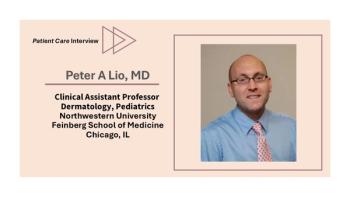
AAD 2025. Peter Lio, MD, from the Feinberg School of Medicine in Chicago, says, skip the elimination diet because food is rarely a cause of atopic dermatitis.

AAD 2025: The IGNITE study of the OX40 inhibitor included adults previously treated with a biologic or systemic JAK inhibitor, according to Amgen and Kyowa Kirin.

The proportion of participants with poor response to dupilumab who achieved a PNRS improvement of 3 points or greater was 72.9% at week 16 and 77.5% at week 24.

By the end of the TRuE-AD1 and TRuE-AD 2 studies, 30.0% of participants met all 4 disease control criteria.