





































































































































Your daily dose of the clinical news you may have missed.
Your daily dose of the clinical news you may have missed.
Your daily dose of the clinical news you may have missed.
Your daily dose of the clinical news you may have missed.
GX-03 has proven effective in preclinical trials, reducing disease severity by more than 50% vs placebo. Data from the current study are expected by year end.

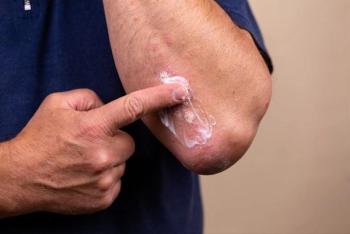
Tralokinumab met key trial endpoints with no new safety signals in treatment of moderate-to-severe hand eczema, in adults who are candidates for systemic therapy.
Discover essential clinical insights on Alzheimer disease screening in primary care, eczema treatments, and the latest in cancer detection and diet impacts on CHD risk.

The investigational IL-13 inhibitor showed topline EASI-75 of 66.9% and reduced injection frequency in part A of the APEX phase 2 clinical trial.

Roflumilast 0.15% is the only 1 of 4 newly evaluated branded topical therapies to receive the Academy's strong recommendation for AD management in adults.
Atopic dermatitis is not just "another rash on the schedule. It could be the reason that patient doesn't leave the house," Shahriari says.
In the phase 2b trial, the IL-2 pathway agonist and Treg proliferator demonstrated a strong dose-dependent biological response across 3 treatment arms vs placebo.

RAD 2025: Multidisciplinary collaboration at disease-specific meetings drives clinical and therapeutic progress in AD, Dr Yu told Patient Care.
Dermatologists aren't trained in mental health but once in practice they need to have a deep appreciation for the emotional impact of diseases like AD and a low bar for mental health referral.
At RAD 2025, Dr Yu shared hopes for more real-world data and targeted treatment approaches for chronic hand eczema.
RAD 2025: Yale dermatologist Mona Shahriari, MD, urged primary care clinicians to refer patients with AD who don't improve to prevent cumulative emotional burden.
RAD 2025: Expert insights on the psychosocial burden of AD, flexible dosing, and cross-specialty collaboration in pediatric care.
RAD 2025: Johann Gudjonsson, MD, PhD, on investigational AD treatments, including anti–IL-31 receptor antibodies, anti–IL-13 treatments, IL-4 receptor blockers, JAK inhibitors, and new topical agents.
RAD 2025: Brad Glick, DO, MPH, discusses the intensity of TSW symptoms and cautions against assuming there is mental health disturbance at work.
Johann Gudjonsson, MD, discusses how OX-40/OX-40L signaling drives immune activation in AD and its emerging role as a genetic and therapeutic target.
The literature on topical steroid withdrawal syndrome is scant, Glick says; we're learning more about it, but we need more research to help our patients.
RAD 2025: Peter Lio, MD, discussed the benefits of disease-specific meetings, the evolving AD landscape, and why continuity across sessions enhances clinician education.
RAD 2025: Glick spoke to Patient Care about the similarities between TSW and a flare of atopic dermatitis as well as specific signs now being identified d as characteristic.

Explore key insights from the 2025 Revolutionizing Atopic Dermatitis meeting, featuring expert interviews and the latest treatment advancements.
At RAD 2025, pediatric dermatologist Elizabeth Swanson, MD, discussed the value of focused AD education and anticipated label expansions for several treatments.

At RAD 2025, Johann Gudjonsson, MD, PhD, discussed the OX-40 pathway’s role in AD, genetic links to disease risk, and promising combination therapies in development.
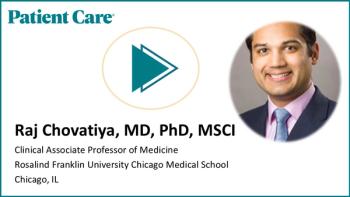
RAD 2025: Chovatiya toplines shifts in dosing strategies for topical, oral, and injectable AD therapy observed in both clinical trials and clinical practice.