















































































































































Your daily dose of the clinical news you may have missed.
Your daily dose of the clinical news you may have missed.

ASCO GI Cancers Symposium: The Freenome blood-based test identified nearly 80% of individuals who had colorectal cancer.
Annual colorectal cancer screening with FIT was the most cost-effective strategy among patients with low adherence, researchers reported.

The USPSTF recommends all women ages 65 and older and at-risk postmenopausal women under 65 should be screened for osteoporosis.
Your daily dose of the clinical news you may have missed.
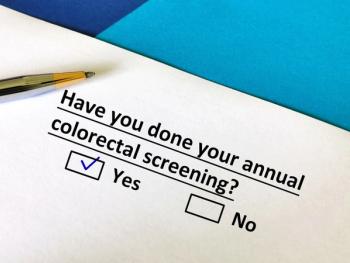
The USPSTF's revised CRC screening guidelines to include adults aged 45-49 years increased screening needs by about 23% without additional funding or resources for CHCs.
Your daily dose of the clinical news you may have missed.

A centralized mailed FIT outreach intervention significantly improved CRC screening in a diverse patient population, according to recent data

Find details on US colorectal cancer screening rates, dietary interventions for people with IBS, and research on the primary drivers of cost of IBD care.
Your daily dose of the clinical news you may have missed.

Comments on the draft recommendation can be submitted through December 23, 2024.
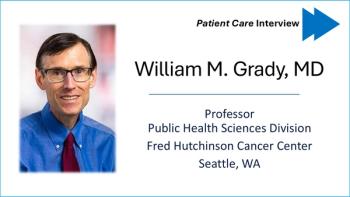
William Grady, MD, coauthor of the ECLIPSE clinical trial, discusses the study's rationale, methods, and key findings.
Among current smokers, 71% had never spoken a clinician about screening and among those who had quit, 75% had never had a conversation.
Your daily dose of the clinical news you may have missed.
Your daily dose of the clinical news you may have missed.

ACG: Mortality associated with both early- and late-stage EO-CRC rose most significantly among young adults aged 20 to 44 years between 2000 and 2022, new research reveals.

CATD 2024: The Elecsys plasma panel also demonstrated high sensitivity and specificity for AD, building strong evidence for streamlined early disease detection.
Rebecca Hartman, MD, MHP, assistant professor of dermatology at Brigham and Women's Hospital and Harvard Medical School, reviews new point-of-care detection technology.
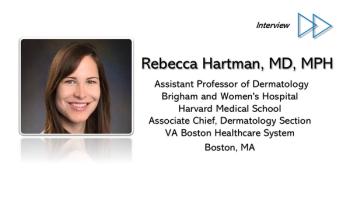
Dermatologist Rebecca Hartman, MD, MPH, said that reliable point-of-care screening results can help reduce unnecessary specialist referral for benign lesions.
The DermaSensor skin cancer screening device was pitted against clinical impressions of lesions suspected with high confidence to be melanoma. Results, here.
Dermatologists at high volume dermatology centers referred suspicious lesions to pathology for biopsy and diagnosis. The results were compared with DermaSensor read-outs.

More than half of US adults who had a colonoscopy in past 5 years said they wish they knew more information before their first procedure.
Nearly 40% of adults aged 45 to 50 years completed a fecal immunochemical test within 3 months, according to a large retrospective study.

Essential health screenings and immunizations are declining among US adults. A new survey identified 7 issues that help drive the reduced rates.
Your daily dose of the clinical news you may have missed.