

Denied claims take revenue off your balance sheet and frustrate the staff tasked with processing them. Are any of the top 5 here familiar to you?
Denied claims take revenue off your balance sheet and frustrate the staff tasked with processing them. Are any of the top 5 here familiar to you?
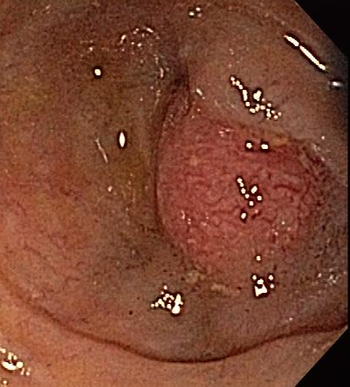
Test your knowledge of this GI finding with questions on diagnosis, laboratory screening, and removal.

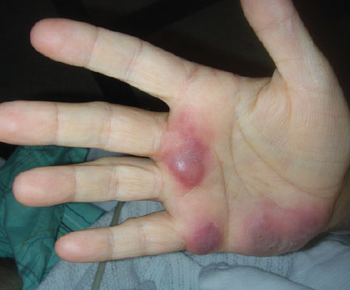
Bullous pemphigoid, varicose veins, dermatomyositis, myasthenia gravis, coma bullae, xerosis, atrophie blanche, Grover disease-a review of age-related clinical concerns and how to recognize them.
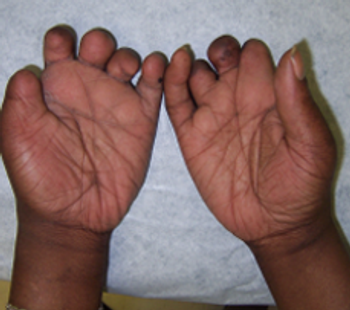
This man was born with digital deformities. X-rays show absent middle and distal 2nd, 3rd, and 4th phalanges with tapering proximal phalanges and tapering of the distal 5th phalanx and distal 1st phalanx. No TBX5 gene mutation. What’s your diagnosis?

A controversial new law in the state would permit medical school graduates, without additional training, to provide primary care in medically underserved areas of the state, supervised at first, and then on their own. Your thoughts?
A new study shows that social interaction may offer protection against this leading cause of death among men in the United States.
Not only is there no increased risk of myocardial infarction among older men with testosterone therapy, there may be a protective effect.

Can a medical practice survive without taking Medicare? Many are being forced to try. Here, one family physician lists her reasons for walking away.
Test yourself on symptoms of Löfgren syndrome, comorbdities of Down syndrome; complications of diabetes, and more in this week’s quiz.
The prediction of more shallow sleep in overweight and obese men with high testosterone levels is useful because poor sleep quality has been linked to an increased risk of diabetes and hypertension.
Pamela Wible, MD, is a family physician in solo practice in Oregon. She accepts most insurance plans. But, to protect herself, her practice, and her patients, she is very clear on what type of contract she will not sign.

Here, 12 reasons why physicians could use a little TLC. Tell us how many ring true for you.
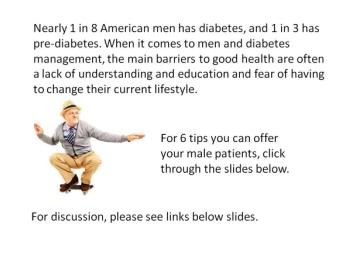
Here: 6 quick health tips (some even inspirational!) you can offer your male patients.
Three new opioid analgesics that purport to offer benefits that current products lack come with marketing messages that ring both contradictory and redundant.
The rate of undiagnosed diabetes mellitus is high in men even though the overall risk is not particularly high. Perhaps it’s because men do not like to talk about health issues.

This 20-year veteran of family medicine says she believes patients want professional closeness, not professional distance. She believes closeness can be done appropriately-and that it should be done.

A family physician talks honestly about the stress and the deep feelings of failure that pile up as she tries, day after day, to meet her clinic's demand to pack more sick patients into 15-minute appointments.
Chemotherapy-induced peripheral neuropathy affects approximately 40% of adult cancer survivors. But, new evidence-based guidelines on prevention and management of the condition find very few effective therapies.