

































































































































GOLDEN, Colo. -- More than 300,000 Medicare patients died from 2003 to 2005 because they were hospitalized in institutions that were average or poor on report cards issued today by HealthGrades, a for-profit health care quality rating service here.

GOLDEN, Colo. -- More than 300,000 Medicare patients died from 2003 to 2005 because they were hospitalized in institutions that were average or poor on report cards issued today by HealthGrades, a for-profit health care quality rating service here.
NEW YORK -- Survivors of childhood cancer may face futures fraught with vastly greater chronic and life-threatening health risks than those of their siblings, according to a large retrospective study.
FLORHAM PARK, N.J. -- Novartis Oncology said today it would send letters to U.S. physicians this week advising them of a possible link between Gleevec (imitinib mesylate), the tyrosine kinase inhibitor, and congestive heart failure.
ROCKVILLE, Md. -- The FDA said Bayer was not forthcoming with data from a retrospective study that suggested Trasylol (aprotinin injection) may increase the chance for death, serious kidney damage, congestive heart failure, and strokes.
A previously healthy 56-year-old woman presented to her primary care physician with progressive dyspnea and pleuritic chest pain. She was afebrile and had a heart rate of 83 beats per minute, blood pressure of 104/70 mm Hg, and respiration rate of 20 breaths per minute. Her oxygen saturation was 87% on room air and 92% while receiving 3 L of oxygen via nasal cannulae.
Abstract: Because of recent advances, more patients may potentially benefit from a variety of interventional bronchoscopic techniques. Nd:YAG laser phototherapy is the most widely used modality and is the treatment of choice for patients with endobronchial malignancies who have large-central airway obstruction. Cryotherapy may be superior to Nd:YAG phototherapy for more distal airways lesions because of the lower risk of airway perforation, but it may be suboptimal for bulky airways disease that requires quick relief of obstruction. Brachytherapy relieves symptoms, such as cough, dyspnea, and hemoptysis, in many patients who have locally invasive airway malignancies. Endobronchial ultrasonography appears to be a safe and sensitive method for staging lung cancer. In select patients with emphysema, a 1-way endobronchial valve can be used to reduce lung volumes. Bronchial thermoplasty is being studied as a potential treatment for asthma. (J Respir Dis. 2006;27(10):415-428)
A 29-year-old man presents with a recent episode of light-headedness of sudden onset. Although he denies associated loss of consciousness, witnesses report that he was briefly unresponsive to verbal stimuli. He also denies chest pain, dyspnea, palpitations, and diaphoresis; he is currently asymptomatic.
A 29-year-old man presents with a recent episode of light-headedness of sudden onset. Although he denies associated loss of consciousness, witnesses report that he was briefly unresponsive to verbal stimuli. He also denies chest pain, dyspnea, palpitations, and diaphoresis; he is currently asymptomatic.
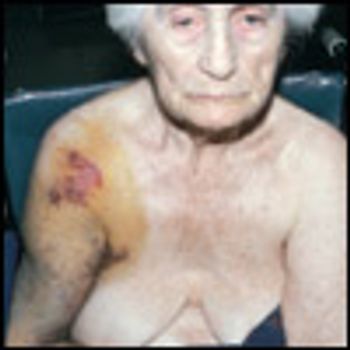
An 89-year-old woman, who has long lived on the special care (dementia) unit of a nursing home because of advanced Alzheimer disease, is seen to assess possible injuries after a fall. Many prior falls have been ascribed to her lack of safety awareness in negotiating the environment, rather than to neuromuscular, sensory, or cerebellar deficits.
ANN ARBOR, Mich. -- Natrecor (nesiritide) is associated with a significant increase in early mortality in patients with acute decompensated heart failure, even when the drug is used at recommended doses, according to investigators here.
NASHVILLE, Tenn. -- Many patients haven't a clue about the meaning of the dietary information in food labels, researchers here reported.
SUITA CITY, Japan -- Heart failure patients who added 30 mg of Pepcid (famotidine) to standard therapy significantly improved NYHA functional class and reduced plasma B-type natriuretic peptide levels compared with those given 150 mg of teprenone.
NEW YORK -- The Environmental Protection Agency's new emission standards for soot have drawn scorn from medical societies and public health advocacy groups that predict dire cardiovascular and pulmonary fallout.
COPENHAGEN -- The ACE-inhibitor Altace (ramipril) does not prevent type 2 diabetes in patients with impaired glucose metabolism, found DREAM trial researchers.
COPENHAGEN -- The ACE-inhibitor Altace (ramipril) does not prevent type 2 diabetes in patients with impaired glucose metabolism, found DREAM trial researchers.
My patient has diabetes, end-stage renal disease, and congestive heart failure (CHF)--and does not want to use insulin. What oral medication(s) would be considered optimal in this setting?
A 62-year-old previously healthy man is admitted for right upper quadrant pain; a workup reveals acute cholecystitis as the cause. During evaluation for surgery, his creatinine level is found to be 6.0 mg/dL; 1 year earlier it was 1.0 mg/dL. A trial of fluids does not lower the creatinine level. Renal ultrasonography shows no obstruction but reveals increased kidney size (left, 11.4 3 4.4 3 5.0 cm; right, 10.1 3 4.6 3 4.5 cm) with increased diffuse echogenicity.
In patients with diabetes who have end-stage renal disease and CHF, the choice of oral medications is limited because metformin is contraindicated. Glipizide has a 5% renal clearance and is relatively safe. Studies suggest that glimepiride is the safest of the sulfonylureas.
A 62-year-old previously healthy man is admitted for right upper quadrant pain; a workup reveals acute cholecystitis as the cause. During evaluation for surgery, his creatinine level is found to be 6.0 mg/dL; 1 year earlier it was 1.0 mg/dL.
NEWCASTLE, Australia -- A pair of meta-analyses has offered yet more evidence that Vioxx (rofecoxib) was the bad actor of the Cox-2 class of pain-killers. And there are new safety concerns about diclofenac, an older nonsteroidal anti-inflammatory drug.
NEWCASTLE, Australia -- A pair of meta-analyses has offered yet more evidence that Vioxx (rofecoxib) was the bad actor of the Cox-2 class of pain-killers. And there are new safety concerns about diclofenac, an older nonsteroidal anti-inflammatory drug.
MONTREAL -- A coronary artery calcium score, obtained via CT, can accurately predict the development of atherosclerotic and ischemic disease in asymptomatic patients with type 2 diabetes, according to a report at the American Society of Nuclear cardiology meeting here.
MEMPHIS, Tenn. -- For children with high-risk medulloblastoma, an aggressive approach can boost five-year survival to about 70% from the current 55%, researchers here reported.
ROCKVILLE, Md. -- The FDA has approved a fully implantable mechanical heart, but has limited the use to a subset of heart failure patients unlikely to live for more than a month without the device.
FRESNO, Calif. -- Pumping up the statin dose may decrease the risk for cardiovascular events in patients with coronary disease and metabolic syndrome.