

Access, cost, and clinician awareness remain significant barriers to implementing supplemental breast screening, according to Plecha.
Access, cost, and clinician awareness remain significant barriers to implementing supplemental breast screening, according to Plecha.
Breast imaging expert Donna M. Plecha, MD, explains the FDA's dense breast notification requirement and when to recommend supplemental MRI screening.

Mitchell highlights hormone therapy prescribing for primary care: treatment algorithms, vaginal estrogen safety, and when progestins aren't needed.

TMS 2025: Katrina Wugalter, MA, discusses research showing that age—not menopause stage—drives brain volume decline, and how lifestyle factors can help preserve brain health in midlife women.

TMS 2025: Regina Castaneda, MD, explains why reproductive stage is a critical variable in obesity and metabolic research.
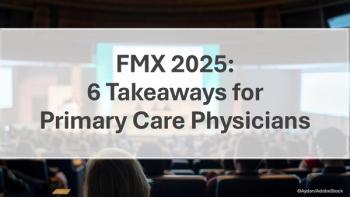
Explore key clinical takeaways from FMX 2025, including updates on CGM, chronic cough, AAA screening, immunization, and more.

New research suggests hormone therapy may increase autoimmune disease risk in postmenopausal women. Dr Jiang discusses early findings and clinical implications.

TMS 2025: Dr Marla Shapiro doesn't start perimenopausal therapy without an answer to the most important question: "What is your most bothersome symptom?"
"If you don't know where your keys are, that's fine." Shapiro's memorable analogy helps distinguish perimenopause brain fog from serious cognitive concerns.

A quick quiz covering new research on menopause hormone therapy, Alzheimer risk, tirzepatide weight loss, and estetrol’s cardiovascular safety.

Genitourinary symptoms of menopause often are ignored--by patients and practitioners alike. Primary care clinicians are in a key position to identify, educate, and initiate treatment.

TMS 2025: Donna Plecha, MD, discusses how primary care physicians should approach breast cancer screening in women with dense breasts and use MRI effectively.

TMS 2025: Cochrane explains the impetus behind 2 studies she has authored on the patient- and provider-level factors that influence MHT prescribing.


New research from TMS 2025 covers menopause effects on brain volume, hormone therapy's role in weight loss with GLP-1s, and dense breast screening updates.
Early breast cancer screening at age 40, especially with 3D mammograms, significantly improves survival rates and quality of life, according to Dr Plecha.

Karim discusses secondary findings from the ELITE trial of timing for estradiol initiation, which reveal a notable impact on Aβ biomarkers of Alzheimer disease.
Menopause specialist Caroline Mitchell, MD, MPH, explains the dual nature of the breakdown in communication that can leave women virtually uninformed about GSM and treatment.

Jiang shares how to use new autoimmune risk data responsibly—identifying high-risk patients while avoiding unnecessary hormone therapy phobia.
Dr. Daniel Jiang shares unexpected research findings showing hormone therapy increased autoimmune disease risk across 15 of 17 conditions in postmenopausal women.
TMS 2025: Jiang explains why he investigated hormone therapy's effect on autoimmune disease risk in postmenopausal women.

The phase 3 E4COMFORT II trial found no impact on BP after 1 year of treatment in postmenopausal women with elevated HbA1c, lipids, and TGs.
TMS: Half of postmenopausal women suffer from GSM, yet only 25% seek treatment. Mitchell, an expert in vulvovaginal health, explains the gap and its impact on women.

The novel once-daily nonhormonal therapy offers a new option to offer women who prefer not to take HRT or for whom it is contraindicated.
Subtle sleep, mood, and cycle changes may herald perimenopause. Dr. Marla Shapiro discusses how clinicians can recognize and address them early.

Less than one-third of residents in IM, FM, and OB/GYN programs receive structured menopause training, leaving many unprepared for midlife women’s care.
A secondary analysis of the ELITE trial suggests that there may be a postmenopausal "critical window" during which use of MHT is optimal.
Only 3% of physician associate respondents reported receiving more than 5 hours of menopause-related training during their professional education.
TMS 2025: Katrina Wugalter, MA, explains why treating vasomotor symptoms may be key to improving cognitive function during menopause.