

All News
Advertisement
Advertisement
CMS' 2010 Fee Schedule ExplainedHear the latest on what CMS’ 2010 final physician fee schedule means for your practice with consultant Betsy Nicoletti.A Lawmaker and a PhysicianCongressman Michael Burgess, a Republican from Texas who was an OB/GYN before being elected to Congress, discusses healthcare reform and his unique perspective as a lawmaker and a physician.Podcast Series: How Healthcare Reform Affects Your Practice In this two-part podcast series, Robert Bennett, a member of MGMA’s government affairs staff, explains what parts of the healthcare reform law are likely to affect medical practices, and Dave Gans, vice president of practice management resources at MGMA, details what practices can do now to get ready for reform.
Trends in HIV Care, Part 2: Antiretrovirals in the Pipeline, HIV/Hepatitis C Virus Coinfection, and Pharmacokinetics of Treatment Adherence-A Roundtable Discussion
Advertisement
Linda S. Nield, MD, is an associate professor of pediatrics at West Virginia University School of Medicine in Morgantown and a member of CONSULTANT FOR PEDIATRICIANS’ editorial board. Dr Nield also works in the pediatric clinic at University Health Associates’ Pediatric and Adolescent Group Practice. She and her husband have 2 children of their own (Olivia, age 12, and Timmy, age 10).
How likely is it that an HIV patient's infection will become less severe? A bioinformatics researcher at Drexel University has developed a competition on Kaggle that asks participants to find the markers in an HIV sequence that could predict a change in severity of infection.
Strategy: Adding Ancillaries - Cash Cow or Money Pit? Inspired by stories of lofty returns promulgated by aggressive marketers and the popular press, medical groups are delivering new patient services at a frenzied pace in a quest to revive their shrinking profits. “The financial return on some of these ancillaries is very high,” Craig Holm, senior vice president of Health Strategies and Solutions, affirms.
Along with the release of revised guidelines, several pharmacological therapies have become available or are under investigation to help improve outcomes in patients with osteoporosis.
Children with sickle cell disease (SCD) were shown to have annual medical costs of $9369 (Medicaid) and $13,469 (private insurance), which is significantly higher than that for children without SCD, according to a study led by Djesika D. Amendah, PhD, an economist at the CDC.1 SCD in children resulted in total medical costs of at least $335 million per year in the United States in 2005.
The effect of payment delays on the normal functioning of community pharmacy operations has been documented. We undertook a study to evaluate and compare pharmacists’ perception regarding reimbursement rates and processing time for prescription drug claims processed for Medicare Part D, Medicaid, and commercial managed care plans.
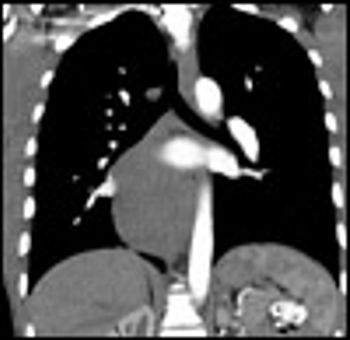
A 24-year-old man with an unremarkable medical history presented to the emergency department with abdominal pain and hematemesis of 3 days' duration. His symptoms were postprandial, and each episode yielded up to half a cup of blood without clots. He denied using NSAIDs or alcohol. He had had an episode of hematemesis 2 years earlier that resolved spontaneously, for which he had not sought treatment. His vital signs were normal, and his physical examination was notable only for moderate epigastric tenderness without rebound or guarding.

A39-year-old man with a history of AIDS and nonadherence to highly active antiretroviral therapy (HAART) presented with frontal headache and scalp pain of 2 weeks' duration. These symptoms were accompanied by nausea, weight loss, and generalized weakness. Physical examination revealed a small, tender scalp lump, 2 × 2 cm over the left parietal area. The findings from the rest of the examination were unremarkable.
Advertisement
Advertisement
Advertisement