All News

IDAlert

CARRIAGE OF A STRAIN of methicillin-resistant Staphylococcus aureus(MRSA) was shown to be prevalentin men who have sex with men. Thefinding was based on epidemiologicalstudies conducted in San Franciscoand Boston. In addition to beingresistant to methicillin, the S aureusstrain isolated from the study populationalso appears to be resistant toclindamycin, tetracycline, and mupirocin.The research appears in theJanuary 14 and February 19 issues ofAnnals of Internal Medicine.

The biomechanical complexities of the foot and the circumstances that cause infections can make foot infections difficult to manage.1 When an otherwise healthy patient presents with a foot infection, a traumatic process usually is involved and treatment is relatively straightforward. Sometimes a more serious condition is the cause. The more common presentation, however, is a patient who is immunosuppressed or who has a metabolic or peripheral vascular defect that complicates treatment of the infection.

Filamentous fungi (molds) can be divided into 2 broad morphologically distinct groups: those that produce aseptate hyphae and those that produce aseptate (or rarely septated) hyphae. Identification of aseptate hyphae in tissue is virtually pathognomonic of zygomycosis (mucormycosis)-disease caused by fungi of the class Zygomycetes (order Mucorales). The discovery of septate hyphae in tissue is less diagnostic; septate hyphae may be caused by fungi that typically grow as yeasts (eg, Candida and Trichosporon) or a vast number of species of molds. The septate molds are often divided into those with darkly pigmented hyphae (phaeohyphomycetes) and those with pale or colorless (hyaline) hyphae (hyalohyphomycetes).

The laryngeal mask airway (LMA) has become a popularalternative to endotracheal intubation. Many cliniciansconsider it a safe procedure, but complications do occur.Although uncommon, retropharyngeal perforation withmediastinal abscess can become a life-threatening event. Wereport a case of mediastinal abscess in an 84-year-old womanwho received LMA ventilation during a surgical procedurefor total knee replacement. [Infect Med. 2008;25:180-185]

The number of Americans with arthritis or another rheumatological disorder is expected to climb to 67 million-a 44% increase-by the year 2030, according to a new study released by the CDC for the National Arthritis Data Workgroup (NADW).

The CDC and other public health organizations have identified numerous disparities in the incidence and outcomes of HIV disease among different population groups

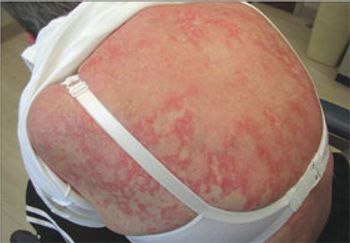
A 37-year-old man with a 9-year history of HIV infection presented to the emergency department after 5 days of fever, chills, malaise, and a pruritic rash initially on his forehead and arms that spread to his scalp, neck, and legs.

Dermatological disorders may occur in more than 90% of persons infected with HIV. In this setting, skin disorders tend to be more frequent as immunodeficiency progresses. The spectrum of cutaneous diseases includes inflammatory dermatoses, drug reactions, infections, and neoplasms. Johnson and colleagues1 present an unusual case of Sweet syndrome in a 37-year-old HIV-positive man coinfected with Treponema pallidum. Sweet syndrome was originally described by the late English dermatologist Dr Rob

Leadership: the ability to move others in a desired direction. Perhaps that is not the definition you will find in Merriam-Webster’s Collegiate Dictionary, but it will do for this discussion.

Patients who have been prescribed an alternating dosage of warfarin--for example, 2 mg one day and 3 mg the next-may have trouble determining how much to take because they cannot remember how much they took the day before.

It can be difficult for children to learn to swallow pills with water. Suggest to parents that miniature versions of candy-coated chocolates (eg, M&M's Minis) are a harmless substitute with which to practice.

For 2 months, a 68-year-old man had had progressive weakness, arthralgia, myalgia, and a rash on the arms and legs. Closer examination of the rash showed petechial lesions and follicular hyperkeratosis with perifollicular hemorrhage and corkscrew hairs. The patient also had poor dentition and swollen, purple, spongy gingivae.

Although many effective pharmacological therapiesare available for patients with allergies, only allergen-specificimmunotherapy has been shown to have significant and longlastingtherapeutic and immunomodulatory effects in the managementof allergic rhinitis, allergic asthma, and venom hypersensitivity.Standard allergen immunotherapy consists of subcutaneousinjections of relevant allergens. It requires a buildupphase during which the dose of the vaccine is increased until atherapeutic (maintenance) level is achieved. This maintenancedose is usually continued for 3 to 5 years, and most patientscontinue to do well after injections are discontinued. Most patientstolerate immunotherapy well, but local reactions are notuncommon. Immunotherapy should be administered only in aphysician's office, because some patients may experience systemicanaphylactic reactions requiring immediate therapy.Even with newer therapies on the horizon, allergen immunotherapywill continue to have an important role in the treatmentof allergic diseases. (J Respir Dis. 2008;29(3):136-141)

The reported incidence of postthrombotic syndrome (PTS) after a first episode of deep venous thrombosis (DVT) is quite variable, depending on the measurement scale used and the severity. Most studies suggest that the rate is 20% to 50%, with symptoms ranging from minor skin discoloration to chronic swelling and ulceration.1 However, the incidence of symptomatic PTS was less than 5% in a population of patients who underwent orthopedic hip and knee arthroplasty, regardless of whether they experienced symptomatic postoperative DVT.2