

These firm papules, a classic sign of sarcoidosis, are seen around the eyes of a 27-year-old woman (A) and the external ear of a 33-year-old woman (B).
These firm papules, a classic sign of sarcoidosis, are seen around the eyes of a 27-year-old woman (A) and the external ear of a 33-year-old woman (B).
For several months, a 59-year-old woman has had numerous asymptomatic lesions on her arms and legs. During this period, she has not been exposed to the sun and has taken no new medications.
Premenstrual disorders affect many women in the United States. These disorders range in severity from the mild, bothersome symptoms that occur in more than 75% of women with regular menstrual cycles, to premenstrual syndrome (PMS) and, finally, to the most severe and disabling, premenstrual dysphoric disorder (PMDD). Nearly 5 million American women have PMDD.
Debate over the optimal time to initiate antiretroviral therapy for HIV infection is as old as the availability of effective anti-HIV treatment.1 As I've noted in several past editorials, there were cogent arguments on both sides,
Although the common cold is usually benign, it can lead to exacerbations of asthma and chronic obstructive pulmonary disease, and it is a leading cause of missed school and work. Strategies for prevention have been directed at interruption of viral transmission between persons, as with the use of virucidal agents or disinfectants, and prevention of infection after acquisition of the pathogen. Hand washing continues to be recommended, but there is no proof that hand sanitizers or virucidal tissues are effective in preventing colds. Prophylactic therapies that have been considered include vitamin C, vitamin E, zinc, Echinacea, ginseng, and probiotics. Although some evidence may suggest possible benefits with zinc and probiotics, for example, overall, the data are insufficient to recommend any of these as prophylaxis for the common cold. (J Respir Dis. 2009;30)
I sometimes get depressed myself (just a little!) when I see the latest offerings from pharmaceutical manufacturers. There are many new medications, but almost all are re-workings of familiar molecules-typically launched just before patent life is about to expire on the original formulation.
A 47-year-old man with HIV infection presented with progressive dyspnea and worsening productive cough for the past 3 weeks. He also reported increasingly purulent sputum production. The patient reported being adherent to his antiretroviral regimen, and he had an admission CD4+ cell count of 550/μL. He did not have any previous opportunistic infections, and he denied any drug or tobacco use, recent travel, and ill contacts.
A 44-year-old man with known HIV infection for more than 20 years presented with fatigue, nausea, and vomiting with a recent weight loss of 40 lb. His most recent CD4+ cell count was 206/µL, and his HIV RNA level was below 50 copies/mL.
Idiopathic intracranial hypertension is a cause of vision loss in HIV-positive patients. In many patients with controlled HIV disease, idiopathic intracranial hypertension develops without any other apparent cause.
A new study presented at the 48th Annual Interscience Conference on Antimicrobial Agents and Chemotherapy in Washington, DC, suggests that persons infected with HIV should begin antiretroviral treatment sooner than guidelines currently recommend (Marchione M. Associated Press. October 26, 2008). The large study finds that delaying antiretroviral therapy until patients’ T-cell counts fall below 350/µL nearly doubles the risk of death in the next few years of their lives when compared with the risk of death in patients whose treatment was started earlier.
At Consultant, our goal is to provide the practical, authoritative information you need to best serve your patients. That is why we “pre-test” article ideas (before we invite articles on those topics) to be sure they are of real interest to you and your colleagues. It is also why we take great care in checking facts, creating useful tables and figures, and choosing illustrations and photographs to enhance teaching messages.
In September 2008, data from what is purported to be the largest sexual health survey ever conducted in the United States, cataloging more than 1.2 million Internet responses to an “anonymous” questionnaire, were released.1 There were the expected admissions from respondents concerning frequent use of behavioral disinhibitors-alcohol being the most popular-to manage anxiety and “have an excuse” to do what they wanted to do anyway, ie, have sex:

These extensive, smooth, irregular masses of pigmented tissue on the earlobes of a 28-year-old woman are keloids. The patient had her ears pierced at age 6 years; the masses began to develop when she was about 9 to 10 years old. The right earlobe mass arose first and is larger. She had one other keloid of 1 cm on her chest that had developed after a scratch. She denied any other skin lacerations or incisions.
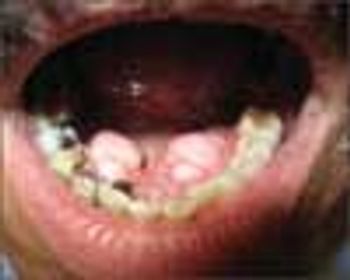
During a new-patient evaluation, a 49-year-old Hispanic man was found to have several nontender, hard nodules protruding from the lingual area. The nodules had evolved slowly over several years. The patient reported no trauma to the area. He was a long-time smoker and took no medications. His medical and family histories were unremarkable.
Patients with HIV infection are at increased risk for several types of malignancy. After Kaposi sarcoma, non-Hodgkin lymphoma (NHL) is the second most common HIV-associated cancer.1
Methicillin-resistant Staphylococcus aureus (MRSA) was once considered a strictly nosocomial pathogen. Over the past decade, however, MRSA has emerged as a prominent cause of community-associated infections in both adults and children. Although community-associated MRSA strains occasionally cause severe invasive infections, they are most frequently isolated from patients with skin and soft tissue infections.
Injection drug use (IDU) has been a route for HIV transmission since the beginning of the epidemic.
As discussed by Mitty and colleagues,1 the proportion of HIV infections associated with injection drug use (IDU) has dropped dramatically across the United States, including the northeastern portion of the country.
This month’s Research Focus, “Trends in HIV Care, Part 1,” is a summary of a roundtable discussion with 4 health care providers from the AIDS Community Health Center (ACHC) in Rochester, NY.
Acute gouty arthritis is frequently misdiagnosed or diagnosed late in its clinical course, and therapy is often suboptimal. Because the treatment of gout as a chronic, progressive disease has not been standardized, optimal disease management remains a challenge.