

Since the introduction of highly active retroviral therapy and with the improvement in the survival of persons with HIV/AIDS, the spectrum of renal disease in HIV-infected persons has expanded.
Since the introduction of highly active retroviral therapy and with the improvement in the survival of persons with HIV/AIDS, the spectrum of renal disease in HIV-infected persons has expanded.
Together the spondyloarthropathies form a group of overlapping chronic inflammatory rheumatologic diseases that show a predilection for involvement of the axial skeleton, entheses (bony insertions of = ligaments and tendons), and peripheral joints. They also may involve extraskeletal structures, especially the eyes, lungs, skin, and GI tract.
Because widespread use of highly active antiretroviral therapy has made it possible for persons with HIV infection to live longer, the epidemiology of HIV/AIDS has shifted in several ways
On Thursday, July 17, plans to conduct a large-scale test of an experimental therapeutic AIDS vaccine were canceled, the latest setback following last year’s failed Merck AIDS vaccine trial (Russell S. San Francisco Chronicle. July 18, 2008).
In recent years, few breakthroughs in HIV prevention science have been realized. Preexposure prophylaxis (PrEP), involving the use of antiretrovirals just before a potentially risky sexual encounter, is an intriguing concept, although it’s not new.
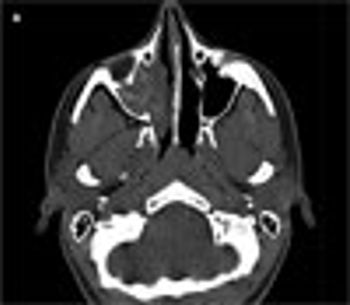
An 18-year-old woman with a history of allergic rhinitis and moderate persistent asthma presented with right-sided nasal congestion of 6 months’ duration. Her symptoms persisted despite her usual allergy medications, allergen immunotherapy, and 2 courses of antibiotics. A sinus CT scan showed complete opacification of the right maxillary sinus with increased attenuation of the mucin. Allergic fungal rhinosinusitis was suspected, and an otolaryngologist was contacted.
I often inject patients’ knees with a mixture of a corticosteroid and an anesthetic agent to alleviate arthritis pain. However, some patients with knee pain have difficulty in climbing onto the examination table.
Many different antiretroviral regimens can be used as initial therapy for infection with HIV.
Is the Seventh Report of the Joint National Committee for Prevention, Detection, Evaluation, and Treatment of Hypertension (JNC 7) still considered current, or are newer guidelines available?
Medication errors contribute substantially to unsafe hospital and ambulatory environments. The Institute of Medicine estimates that on average each hospitalized patient experiences 1 medication error per day.1
A 58-year-old man was brought to the medical ICU after almost an hour of field and emergency department resuscitation following cardiac arrest (intermittent rhythms of ventricular fibrillation, ventricular tachycardia, pulseless electrical activity, and asystole). He had hypertension, diabetes mellitus, and end-stage renal disease managed with hemodialysis. His medications included atenolol, enalapril, amlodipine, and insulin. His last hemodialysis session was 10 days earlier.
In the United States, an estimated 150,000 to 300,000 people are infected with both HIV and hepatitis C virus (HCV), representing about 15% to 30% of all persons living with HIV infection1,2 and 70% to 90% of injection drug users
The HIV epidemic was discovered in the early 1980s, and the response from the medical community was remarkable. Health care providers committed their time and careers to the cause of a group of people afflicted with an unknown and fatal illness.
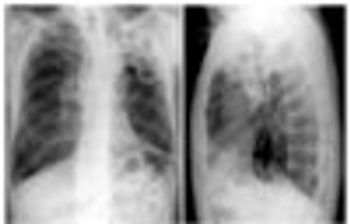
In plombage therapy for pulmonary TB, polymerized methyl methacrylate, or Lucite, balls were inserted into the chest to collapse the lung and to maintain adequate thoracic expansion.
Flesh-colored splinters can be devilishly difficult to extract, mainly because locating them is such a challenge. A drop of iodine or povidoneiodine stains the splinter and makes it easier to find-and at the same time provides antisepsis.
A 10-year-old boy stubbed his toe while running upstairs barefoot. He presented with tenderness, swelling, and ecchymosis of the left great toe and bleeding in and around the nail fold (A). Radiographs of the left foot revealed a Salter-Harris II fracture of the distal phalanx (B).
A 13-year-old girl felt a “pop” while doing a split during gymnastics. She later complained of right hip pain and inability to bear weight on the right leg.
After a fall during a soccer match 2 weeks earlier, a 26-year-old woman had pain of the right midfoot, with moderate swelling. The pain was aggravated with a normal gait and alleviated with an antalgic gait, specifically with inversion of the right ankle such that most of the weight from heel-strike through toe-off transmitted forces from the lateral calcaneus through the fifth metatarsus to the fifth phalanx.
The case concerns a patient with eosinophilic meningitisattributed to the helminthic parasite Angiostrongyluscantonensis. Before the onset of illness, our patient had ahistory of travel to Hawaii, the only area in the United Stateswhere A cantonensis is endemic. Finding eosinophils in thecerebrospinal fluid (CSF) can narrow the differential diagnosisin a patient with meningitis. In our patient, the proportion ofeosinophils in the CSF was 55%. The case is unique because thepatient was a strict vegetarian. This infection usually developsin persons who inadvertently ingest snails or slugs that containthe parasite. [Infect Med. 2008;25:366-368]
Every day, patients seek treatment for eye infections, which have a variety of causes and can affect any part of the eye. Eye infections usually are treated aggressively, because seemingly benign infections can quickly become serious and threaten vision. Symptoms that indicate an eye infection include chronic redness, persistent pruritus, flaking of the eyelid, eye discomfort or pain, blurred vision, eye discharge, and edema of ocular tissue. The following disease descriptions and case vignettes highlight a variety of eye infections, both common and uncommon, with which patients may present.