A 14-month-old infant was brought by his mother for evaluation of fever (temperature, 39.4ºC [103ºF]) and a tender, indurated, warm area with surrounding edema and a centrally located papule in the left groin.

A 14-month-old infant was brought by his mother for evaluation of fever (temperature, 39.4ºC [103ºF]) and a tender, indurated, warm area with surrounding edema and a centrally located papule in the left groin.

A 75-year-old man is brought to the emergency department (ED) after awakening in the night very confused and disoriented. His wife had called 911; when the paramedics arrived, they found his blood glucose level to be 36 mg/dL.

Consider including the “bounce test” in your assessment of a febrile toddler: have the parent bounce the child on his or her knee as in the “horsey ride” game.

Mycobacterium goodii infection is uncommon and probablyoccurs via disruption of skin and bone integrity or theintroduction of a foreign body into viscera, namely implantationof a prosthetic device. We describe a case of nosocomial,total knee arthroplasty–associated M goodii infection thatrequired combined antibiotic and surgical therapy for clinicalmanagement. An infection control investigation revealed thatthe source of the organism might have been the water in theoperating room scrub faucets. [Infect Med. 2008;25:522-525]

Posaconazole, indicated for prophylaxis of invasive Aspergillus and Candida infections in immunosuppressed patients aged 13 years or older and for treatment of oropharyngeal candidiasis (Table 1), is like other triazole antifungals in that it blocks ergosterol biosynthesis. 1 Its chemical structure is most similar to that of itraconazole (Figure), which may confer efficacy even against strains resistant to fluconazole and voriconazole.2

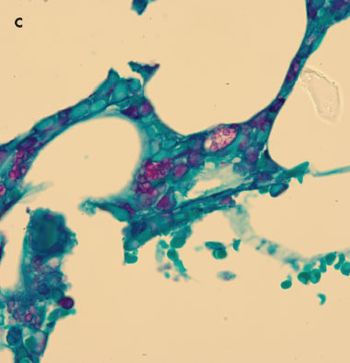
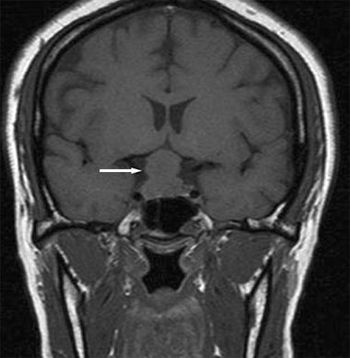
A 55-year-old man with no past medical problems presented with headache, difficulty in walking, and loss of balance of 3 days' duration. Physical examination findings and laboratory test results were unremarkable except for lethargy, slurred speech, positive Romberg sign, hyponatremia, and leukocytosis with left shift.

Third-degree perineal lacerations reputedly occur in2.2% to 19% of vaginal deliveries in the UnitedStates.1,2 Breakdown of a third- or fourth-degreeperineal repair can lead to incontinence of stool or flatus,rectovaginal fistula, or sexual dysfunction.3,4 Infection atthe operative site occurs in up to 12% of cases,5 and a keyfactor in successful anal sphincter repair is the absence ofinfection.6

Many advances and challenges have occurred inthe field of pediatric infectious disease medicineduring the past 10 years. Because this is the 10thanniversary of this column, a summarization of what, inmy opinion, are the most clinically significant developmentsis presented here.

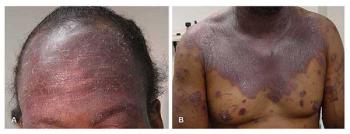
A 28-year-old man presented with a 1-year history of nodular, plaque-like, nontender, pruritic lesions on his face, ears, elbows, and feet. He was born in Mexico but had been residing in the United States for the past 6 years. He worked in construction, was an active smoker, and denied use of alcohol or illicit drugs. The patient had not been taking any oral medications and had no recent history of trauma.

Herpes zoster is a painful, blistering rash that typically manifests in a dermatomal distribution and is caused by reactivation of varicella-zoster virus infection. A classic presentation of herpes zoster involving the right T4 dermatome is illustrated in Figure 1. The patient was a 90-year-old man who experienced severe pain on the right side of his neck and chest followed by development of maculopapular lesions. The lesions, which ranged from macular to vesicular, resolved with no scarring or postherpetic neuralgia following 10 days of therapy with oral acyclovir and intramuscular injections of γ-globulin.

Morbidity and mortality attributed to Candida and Aspergillusinfections can be quite high in immunocompromised hosts.The epidemiology and clinical manifestations as well as clinicalpearls on prevention of infections caused by Candida and Aspergillus are discussed in this second installment of a 3-partseries on opportunistic infections in immunosuppressedpatients. [Infect Med. 2008;25:498-505]

Opportunistic fungal infections are increasingly common inpatients who undergo hematopoietic stem cell transplant(HSCT). Voriconazole is frequently used in allogeneicSCT recipients who receive immunosuppressant therapy forgraft versus host disease to prevent invasive aspergillosis.Indications for voriconazole use include invasive aspergillosis,candidemia, Scedosporium apiospermum infection, and fusariosis.We describe a case in which disseminated Fusarium infectiondeveloped in an HSCT recipient who was receiving voriconazoletherapy. [Infect Med. 2008;25:528-530]

The asymptomatic lesions on this 63-year-old woman’s forehead had been present for about 4 years, gradually enlarging and sometimes scarring in the center as they progressed peripherally.

ABSTRACT: Flexible bronchoscopy was clinically introduced byShigeto Ikeda in 1968 and is now used widely for diagnosticand therapeutic interventions. A combination of advancingtechnology and ingenuity has fostered the development of anexpanded array of devices and applications. The newer videobronchoscopes offer higher-resolution images than fiberopticbronchoscopes. The advantages of fiberoptic technology arelower cost and greater technical ease of adapting to smallerdiameterbronchoscopes. Hybrid bronchoscopes have an imaginglens and fiberoptic bundles that transmit the viewingimage to a charge couple device (CCD) chip in the body of theoperator end of the bronchoscope. The digital image is transmittedfrom the CCD chip to the external processor for viewingon a monitor, for digital storage, or for printing. (J Respir Dis.2008;29(11):423-428)

Endobronchial primary synovialsarcoma is an extremelyrare pulmonary tumor. We reportthe case of a 58-yearoldman who presented witha right-sided endobronchialmass, which was diagnosed asprimary synovial sarcoma onthe basis of histological appearanceand immunohistochemicalstaining. To the bestof our knowledge, this is onlythe third case report of endobronchialprimary synovialsarcoma.

ABSTRACT: Pulmonary arterial hypertension (PAH) is an increasinglyrecognized cause of dyspnea in elderly patients. Theinitial workup typically includes electrocardiography, chest radiography,echocardiography, and pulmonary function tests. Ifechocardiography shows signs of PAH, the diagnosis should beconfirmed by right heart catheterization. Radiographic evidenceof long-standing PAH includes enlargement of the centralpulmonary arteries with abrupt narrowing of the more distalbranches, giving a "pruned-tree" appearance, and right ventricular(RV) enlargement. The classic radiographic signs of RVenlargement include increased transverse diameter of theheart, elevation of the cardiac border on the posteroanteriorview, and narrowing or loss of the retrosternal airspace on thelateral projection. (J Respir Dis. 2008;29(11):443-450)

We describe a patient with intravascularpulmonary lymphomawho presented withprogressive dyspnea and hypoxemiawith normal chest radiographicfindings. After anunrevealing noninvasive evaluation,a high-grade B-cellintravascular lymphoma wasdiagnosed by bronchoscopywith transbronchial biopsy.Treatment with a modifiedCHOP regimen resulted in resolutionof the patient’s hypoxemiaand exercise limitation.Although intravascular pulmonarylymphoma rarely presentswith pulmonary symptoms,it should be consideredin the differential diagnosis ofpatients presenting with hypoxemiaand normal chest radiographicfindings.

ABSTRACT: In general, the management of invasive pulmonaryaspergillosis is based on antifungal therapy and reversal of immunosuppression.Voriconazole is the preferred treatment inmost cases. Liposomal preparations of amphotericin B, caspofungin,and posaconazole are alternatives in patients whocannot tolerate voriconazole or have refractory aspergillosis.Prophylaxis in high-risk patients has gained popularity withthe availability of oral extended-spectrum azoles; posaconazoleis approved for prophylaxis in patients with acute leukemia,myelodysplastic syndrome, and graft versus host disease.(J Respir Dis. 2008;29(11):429-434)

A 71-year-old man who had received a diagnosis of emphysema 12 years ago was referred by his primary care physician to the pulmonary clinic. His symptoms were well controlled until a few months ago, when he complained of mild shortness of breath on physical activity. However, the shortness of breath worsened and became a significant limiting factor. He also had a persistent dry cough.

I read with interest the Chest Film Clinic on pneumomediastinum by Weinstock, Boiselle, and Roberts in the August issue (What caused this woman's pneumomediastinum? J Respir Dis. 2008;29:314-317). In the discussion of the differential diagnosis, the authors did not mention the occurrence of mediastinal emphysema in diabetic ketoacidosis, which was described in 4 patients by Beigelman and associates1 in 1969.