

Self-Test Your Diagnostic Acumen
Self-Test Your Diagnostic Acumen
Patients with HIV infection demonstrate an unexpectedly high incidence of bone-related disorders, most notably osteonecrosis
Osteonecrosis, also known as avascular necrosis or aseptic necrosis, refers to ischemic death of the cellular constituents of bone and marrow when it occurs in the epiphyseal or subarticular region. The incidence of osteonecrosis may be increased by as much as 100-fold in HIV-infected persons relative to the general population,1
Leadership: the ability to move others in a desired direction. Perhaps that is not the definition you will find in Merriam-Webster’s Collegiate Dictionary, but it will do for this discussion.
One time-honored way of acknowledging that a research finding has become mainstream is to see it listed as a clue in the New York Times crossword puzzle.
Yunnan Province opened 7 mobile methadone treatment clinics last year in rural areas along the drug-producing Golden Triangle (Xinhua News Agency. January 5, 2008).
Patients who have been prescribed an alternating dosage of warfarin--for example, 2 mg one day and 3 mg the next-may have trouble determining how much to take because they cannot remember how much they took the day before.
It can be difficult for children to learn to swallow pills with water. Suggest to parents that miniature versions of candy-coated chocolates (eg, M&M's Minis) are a harmless substitute with which to practice.
For 2 months, a 68-year-old man had had progressive weakness, arthralgia, myalgia, and a rash on the arms and legs. Closer examination of the rash showed petechial lesions and follicular hyperkeratosis with perifollicular hemorrhage and corkscrew hairs. The patient also had poor dentition and swollen, purple, spongy gingivae.
Although many effective pharmacological therapiesare available for patients with allergies, only allergen-specificimmunotherapy has been shown to have significant and longlastingtherapeutic and immunomodulatory effects in the managementof allergic rhinitis, allergic asthma, and venom hypersensitivity.Standard allergen immunotherapy consists of subcutaneousinjections of relevant allergens. It requires a buildupphase during which the dose of the vaccine is increased until atherapeutic (maintenance) level is achieved. This maintenancedose is usually continued for 3 to 5 years, and most patientscontinue to do well after injections are discontinued. Most patientstolerate immunotherapy well, but local reactions are notuncommon. Immunotherapy should be administered only in aphysician's office, because some patients may experience systemicanaphylactic reactions requiring immediate therapy.Even with newer therapies on the horizon, allergen immunotherapywill continue to have an important role in the treatmentof allergic diseases. (J Respir Dis. 2008;29(3):136-141)
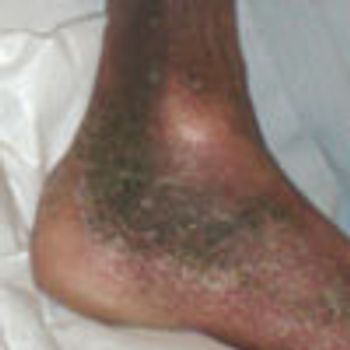
The reported incidence of postthrombotic syndrome (PTS) after a first episode of deep venous thrombosis (DVT) is quite variable, depending on the measurement scale used and the severity. Most studies suggest that the rate is 20% to 50%, with symptoms ranging from minor skin discoloration to chronic swelling and ulceration.1 However, the incidence of symptomatic PTS was less than 5% in a population of patients who underwent orthopedic hip and knee arthroplasty, regardless of whether they experienced symptomatic postoperative DVT.2
The most common manifestation of oropharyngealcandidiasis (OPC) is pseudomembranous candidiasis, commonlyknown as "thrush," which appears as a whitish yellow,curdlike discharge on the mucosal surfaces. Other forms ofOPC include denture stomatitis, angular cheilitis, and glossitis.Patients with denture stomatitis are usually asymptomatic, butthe tissue beneath the denture is typically red and hyperplastic.Patients with angular cheilitis may complain of a burning sensationat the margins of the lips. Candidiasis involving thetongue can be exuberant and is usually associated with complaintsof a white tongue, taste alterations, and a burning sensationof the tongue. The diagnosis of OPC can be establishedby identifying typical fungal elements on potassium hydroxidepreparation or Gram stain of scraped material. Treatment optionsinclude clotrimazole, fluconazole, itraconazole, and nystatin.(J Respir Dis. 2008;29(3):128-135)
Microscopic polyangiitis is a potentially fatal disease if it is notrecognized and treated early. In the case described here, what initiallypresented as a postinfectious residual cough was actuallyactive pulmonary hemorrhage, severe anemia, and a crescenticglomerulonephritis. Significant improvement was achieved withhemodialysis and aggressive treatment with corticosteroids andcyclophosphamide. This case exemplifies a classic presentationof microscopic polyangiitis and demonstrates the importance ofan expeditious diagnostic evaluation and early treatment to preventrapid deterioration. Early recognition and highly aggressiveimmunosuppressive treatment achieved significant suppressionof the disease.
The major causes of chronic cough include upper airwaycough syndrome (UACS, formerly known as postnasal dripsyndrome), asthma, nonasthmatic eosinophilic bronchitis, andgastroesophageal reflux disease. In fact, one or more of these isthe cause of cough in the vast majority of nonsmokers who arenot receiving angiotensin-converting enzyme inhibitors andwho have no evidence of active disease on chest radiographs. Ahigh index of suspicion is required, because each of these conditionsmay present with cough as the sole symptom. BecauseUACS may be the most common cause, it appears reasonableto try empiric UACS therapy in patients in whom other causesare not evident at initial evaluation. In many cases, the combinationof a first-generation antihistamine and a decongestantmay be most effective. (J Respir Dis. 2008;29(3):113-122)
AN UNUSUALLY VIRULENT strainof adenovirus may be the cause ofillness in more than 140 persons,according to the CDC. Indeed, 10deaths have been reported over thepast year. Adenovirus serotype 14(Ad14) causes severe and sometimesfatal respiratory disease in patientsof all ages, even in healthy adults.
Recent advances in diagnostic testing have increased the likelihood that our current model of medical treatment will soon be supplanted, at least in part, by personalized medicine. With this change in the medical paradigm will come numerous benefits and opportunities for patients, caregivers, drug developers, diagnostics firms, and MCOs.
The first time I refused to go along with a physician’s directive, I was 8 months’ pregnant with my first child. My doctor wanted to order a glucose tolerance test to screen for gestational diabetes. I needed to drink a sugary cocktail and then be tested as my blood glucose levels first rose and then fell. Why? I asked. Wouldn’t this put undue stress on the baby? It didn’t make sense to me. I was not overweight and had no personal or family history or other risk factors that I could tell.
Back and neck problems are among the most commonly encountered symptoms in clinical practice. In 2002, an estimated 59 million US adults, or approximately 26% of the adult population, self-reported back pain in the previous 3 months, and 30.1 million US adults, or about 14% of the adult population, self-reported neck pain in the same period, according to a study by Martin and colleagues published in the February 13 issue of the Journal of the American Medical Association. Low back pain alone accounted for 2% of all physician office visits; only routine examinations, diabetes, and hypertension resulted in more office visits.
As more high-cost biologic drugs become part of standard care, the FDA has been under pressure to devise a way to allow generic versions of biologics to reach the market. Although competing industry interests have made it difficult for the agency and Congress to agree on such an approach, 2008 may be the year when that changes.
Medical residents with depression are approximately 6 times more likely to make medication errors than those without depression, according to a study published online on February 7 in the British Medical Journal. A team led by Amy M. Fahrenkopf, MD, instructor of pediatrics, Harvard Medical School, Boston, conducted the prospective cohort study.