

During a baseball game, a 29-year-old man felt pain in the right groin and required assistance to walk after sliding into second base.
During a baseball game, a 29-year-old man felt pain in the right groin and required assistance to walk after sliding into second base.
An up-to-the-minute review of the array of oral and topical agents as well as those used intraurethrally or for intracavernosal injection.
Over the past few decades, the management of chronic disease has assumed a greater role in health care. Diseases such as diabetes, chronic obstructive pulmonary disease, and depression have replaced acute disorders as the leading cause of morbidity, mortality, and health care expenditures.
The recent editorial by David T. Nash, MD, "OTC Statins: Panacea or Pandora's Box?", prompted a number of readers to write in.
A 62-year-old man presents with a violaceous, nonpruritic eruption that arose 2 weeks earlier on the hands and feet, including the palms and soles, and spread to the arms and legs.
A 26-year-old woman presented with acute pain at the base of her thumb after her ski pole hit her hand as she jumped over a small mogul.
A 12-year-old boy presented with pain in the right shoulder. Six months earlier, he had fallen on his outstretched right hand during baseball practice and had persistent shoulder pain ever since.
The risk of complications (such as lactic acidosis) that can be associated with metformin increases in patients with renal insufficiency. At what creatinine clearance should this agent be discontinued?
Calcium and Vitamin D Supplements: Breaking News on Fracture Prevention
Hepatomegaly is detected during the routine physical examination of a healthy 40-year-old woman. She has noticed some fullness in the right upper abdomen for many years, but it has not been accompanied by pain or GI symptoms.
What steps can my 68-year-old patient take to help prevent thrombosis on a 14-hour plane flight?
For easy removal of a too-tight ring, spray with glass cleaner. The ring will slip off
When young children have an irritant in their eyes, to reduce the stinging and make opening the eyes easier, try putting a drop of an ocular anesthetic in each medial canthus while the child is supine; be sure to wait for it to seep in.
Application of liquid nitrogen often must be repeated several times when used to treat thick seborrheic keratoses--and still may be ineffective. For an immediate and excellent cosmetic result, try liquid nitrogen for 5 seconds, followed by gentle curettage.
n epidemiologic studies, cigarette smoking is strongly associated with the development of rheumatoid arthritis (RA), in particular seropositive RA. In 1987, Vessey and colleagues1 first reported an unexpectedly elevated risk of RA among women smokers in the Oxford Family Planning Association contraceptive study.

A 44-year-old African American woman presented to the emergency department with constipation of 4 days' duration. She also complained of a sticking sensation in her throat over the past year and dysphagia to solids but not liquids. Over the past 2 years, she had an unintentional 40-lb weight loss, which she attributed to decreased appetite.
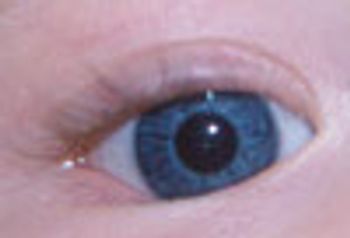
An 11-month-old infant was referred by his pediatrician for possible surgical correction of a bilateral entropion. The mother stated that her son's lashes appear to turn in on occasion; however, he never rubbed his eyes, the eyes were not red, and no discharge or drainage was noted.

Five days after starting aspirin and warfarin with an enoxaparin bridge for new-onset atrial fibrillation, a 92-year-old man presented with abdominal pain, nausea, and vomiting. The patient appeared ill and was tachycardic. He had dry mucous membranes; pale sclerae; diminished bowel sounds; and a large, tender left lower abdominal mass. Hematocrit was 22% (baseline, 39%); hemoglobin, 6.8 g/dL; blood urea nitrogen, 65 mg/dL; and creatinine, 3.2 mg/dL (baseline, 1.3 mg/dL). His "pre-renal" ratio was 20. These findings were consistent with bleeding and acute renal failure. He also had a supratherapeutic international normalized ratio (INR) of 4.1.

Alopecia was noted on the right anterior scalp of a 53-year-old man who had been hospitalized for jaundice of 2 weeks' duration. The hairs in the affected area were broken off at various lengths.
To what do you attribute symptoms of rash and fever in: a man with type 2 diabetes; a woman with systemic lupus erythematosus; a previously healthy girl.