

















































































































































Infectious Disease

Latest News


CME Content


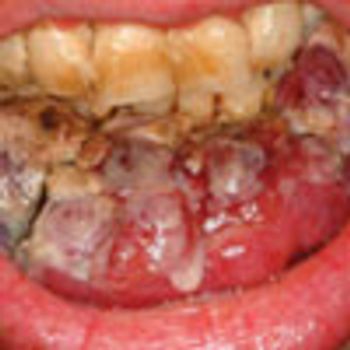
For 2 months, a 30-year-old man with a history of cocaine abuse had had a painful gingival mass and difficulty in eating. Examination revealed a large, fungating mass in the anterior oropharynx that extended posteriorly up to the retromolar region. Posterior cervical lymph nodes were enlarged bilaterally, with no other peripheral lymphadenopathy.

A 36-year-old man presented with a 2-week history of pain, swelling, and redness of the right elbow. He also had decreased range of motion during elbow flexion. There was no associated fever or recent illness.

A young woman recently came to my office for contraception management and a Papanicolaou test; she complained of mild dyspareunia. I sent a vaginal sample for culture to rule out gonorrhea and chlamydial infection.

Lemierre Syndrome

A previously healthy 21-year-old man presented with high fever, cough, and pleuritic chest pain. His illness began 6 days earlier with a sore throat that was followed by worsening dyspnea.

My patient is a 45-year-old otherwise healthy, asymptomatic woman from Iran in whom a hydatid cyst (Echinococcus granulosus) was incidentally discovered. The immunologically confirmed cyst is located in the left lobe of the liver, and it pushes slightly on the pancreas; its dimensions are 13 3 2.5 cm.

An 8-week-old boy is brought for evaluation of gradually worsening yellow skin discoloration of about 1 week's duration. His parents report that he has had constipation for the past several days; before that, he had green diarrhea and occasionally spit up after breast-feeding.

A 53-year-old man, who had initially presented with an upper respiratory tract infection, was found to have a stage IV follicular low-grade lymphoma with malignant cells that were positive for CD19, CD20, CD10, surface kappa, and CD45 and negative for CD5. A grade 1 tumor (follicular center cell lymphoma/follicular small cleaved) was suspected. Enlarged lymph nodes (2.5 to 4.0 cm) were found in the mediastinum, azygoesophageal recess, and periaortic region as well as in the porta hepatis, peripancreatic, mesenteric, and celiac regions.

Several recent studies from Europe and the United States confirm that tailoring the dosage and duration of pegylated interferon alfa 2b and ribavirin therapy can optimize treatment of hepatitis C virus (HCV) infection.

In the vast majority of nonsmokers who are not receiving angiotensin converting-enzyme inhibitors and who have no evidence of active disease on chest radiographs, chronic cough is caused by postnasal drip syndrome (recently renamed upper airway cough syndrome [UACS]), asthma, non-asthmatic eosinophilic bronchitis, or gastroesophageal reflux disease (GERD), alone or in combination.

Dr Thomas Fekete's recent article on emerging infections (CONSULTANT, October 2007) was timely, given recent evidence that the incidence of methicillin-resistant Staphylococcus aureus (MRSA) infection, both hospital-acquired and community-acquired, has assumed pandemic proportions.

Acute abdominal pain, fever, and chills prompted a 51-year-old man to visit his local hospital twice in one week. On both visits, a clinical and laboratory workup was negative. He then presented to a tertiary care center with worsening symptoms. His history included hypertension and tobacco and alcohol use.