


































































































































































A daily dose of clinical news on Patient Care you may have missed.
A daily dose of clinical news on Patient Care you may have missed.

Approximately 80% of infants hospitalized with an RSV-related illness during the 2022 seasonal peak did not have underlying medical conditions, according to new study.

The AAP released 12 tips to prepare children to return to school this year, including several that focus on mental health.
Immunization Awareness Month
The ACIP was unanimous in its recommendation for routine use of nirsevimab-alip to prevent RSV LRTD in newborns and young infants during their first RSV season.
A daily dose of clinical news you may have missed.
Nirsevimab won unanimous support from the FDA AMDAC on the vaccine's positive benefit/risk profile to prevent RSV in newborns and infants in their first RSV season.
The influenza vaccine may offer a protective effect against hospitalization for respiratory syncytial virus in young children, suggest data from Australia.
Nirsevimab, a long-acting monoclonal antibody, if approved, will be indicated to prevent RSV LRTD in neonates and infants born during or entering into their first RSV season.
The Pfizer vaccine RSVpreF administered to pregnant people was judged by the advisory committee to be effective at preventing RSV in infants from birth to 6 months.
The 5-in-1 vaccine candidate, if approved, would provide the broadest meningococcal serogroup coverage and simplify the vaccination schedule.
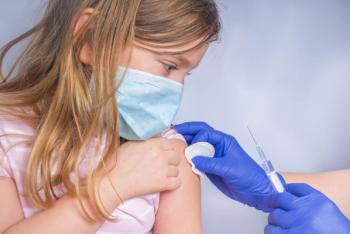
The FDA authorized Pfizer's bivalent vaccine as a booster dose for children aged under 5 years who received 3 doses of monovalent vaccine.
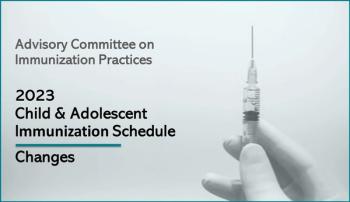
Get a quick topline look at specific revisions and additions included in the ACIP's recommendations for routine immunization of those aged ≤18 years in the US.
Lotteries with cash incentives and other giveaways are just one example of ways the COVID-19 pandemic changed the way US health care is handled.
Vaccination was associated with lower risks of infection, COVID-19-related illnesses, and hospitalizations due to COVID-19-related illnesses in children.

These tips from a family physician on managing misinformation in the exam room can help reduce the spread of false and misleading narratives.
Interview
The COVID-19 pandemic derailed routine immunizations and triggered a flood of vaccine misinformation beyond the COVID shot. Here, 3 ways to move forward.
Interview
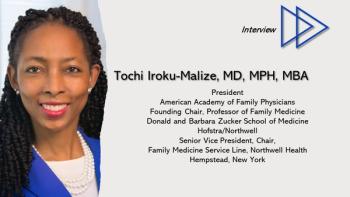
AAFP president Tochi Iroku-Malize, MD, MPH, MBA, urges gentle but persistent efforts among all clinicians to get school-aged children back on vaccination track.
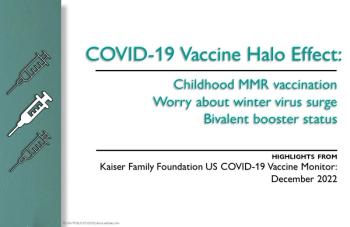
The Kaiser Family Foundation survey found a 10% drop in the proportion of adults who say MMR vaccination should be required for school attendance, and other "halo" effects.
Tochi Iroku-Malize, MD, MPH, MBA, converts the 93% immunization rate for US kindergarteners into raw numbers of children now vulnerable to vaccine-preventable disease.
If approved, nirsevimab would be the first single-dose RSV preventative option for the broad newborn and infant population in the US.
A new study points to the Pfizer shot's initially limited protection against the COVID-19 Omicron variant in those aged 5-11 years and also the the value of vaccine boosters.
The FDA amended Pfizer and Moderna EUAs for updated COVID-19 vaccines to include children as young as age 6 months as holidays and winter weather approach.
Pfizer and BioNTech submitted an application to the FDA for emergency use authorization of their omicron BA.4/BA.5-adapted bivalent COVID-19 vaccines in children aged 6 months to 4 years.
Your daily dose of clinical news you may have missed.

One in 7 parents have not discussed vaccines with their child's primary clinician during the 2-year pandemic period, according to a CS Mott Children's Hospital poll.