
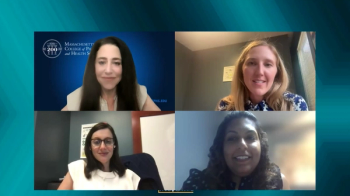
Experts on type 1 diabetes discuss the availability of local medical facilities that offer teplizumab screening and evaluation services for individuals at risk of progression of disease.
Experts on type 1 diabetes discuss the availability of local medical facilities that offer teplizumab screening and evaluation services for individuals at risk of progression of disease.
Amy Burton, MD, reviews findings from the TN-10 study investigating teplizumab, an anti-CD3 monoclonal antibody, for prevention of diabetes in relatives at risk for T1D.
Diabetes experts discuss the important role of teplizumab in delaying the onset of type 1 diabetes and provide insights on the drug’s mechanism of action.
Following audience polls, the panelists provide clinical insights into their screening practices for patients with type 1 diabetes, highlighting key antibodies they screen for.
Audience polls provide the panel insights into common screening practices for patients with type 1 diabetes.
The panel outlines the stages of type 1 diabetes, focusing on the importance of early intervention to prevent complications of the disease.
A panel of experts on type 1 diabetes (T1D) describe the prevalence and burden of the disease, highlighting the emotional and socio-economic burden extending beyond medical expenses.
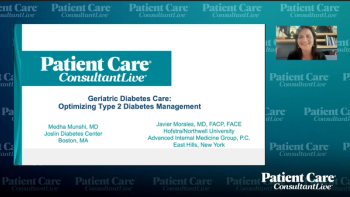
The expert panel concludes by analyzing a patient case and offering final insights on customizing treatment for complex geriatric diabetes patients, taking into account cardiovascular health, weight management, and renal function considerations.
Key opinion leaders explore methods for optimizing treatment in older adults with type 2 diabetes, focusing on streamlining regimens and the process of deprescribing, with particular emphasis on defining and implementing the deprescribing approach.
Experts examine strategies for managing treatment modifications in older adults with type 2 diabetes, weighing the approaches, challenges, and advantages of combination therapy regimens.
Leading experts in geriatric diabetes care explore comprehensive aspects of insulin therapy, including dosing strategies, available injectable options, and methods for tailoring glucose control in elderly patients.
The panelists analyze a patient case, examining treatment profiles, adherence factors, and drug class selection criteria while discussing strategies to enhance elderly care.
Key opinion leaders explore strategies for enhancing elderly patient care by implementing American Diabetes Association guidelines on glycemic targets and long-term management in geriatric settings.
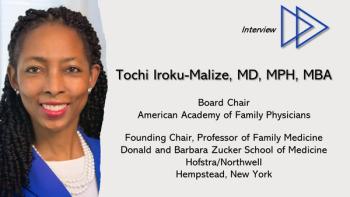
Tochi Iroku-Malize, MD, discusses the ACIP's updated recommendations for immunization against COVID-19, influenza, and RSV.
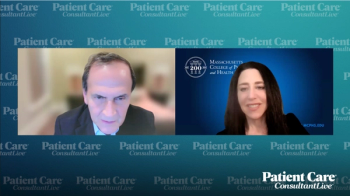
The expert panel concludes by examining strategies for managing hypoglycemia challenges related to dumping syndrome, particularly in the context of continuous glucose monitoring use.
The key opinion leaders explore strategies for incorporating continuous glucose monitoring into primary care diabetes management, highlighting essential takeaways from their comprehensive discussion.
Medical experts analyze the case of a 78-year-old woman with diabetes, evaluating the impact of continuous glucose monitoring on her treatment outcomes and overall diabetes management.
The panelists discuss the selection criteria for continuous glucose monitoring (CGM) candidates, identifying patient groups who would derive the greatest benefit from CGM use and those at higher risk of complications without such monitoring.
Key opinion leaders explore the advantages of remote medication adjustments facilitated by distant patient monitoring and the ability to view glucose data from afar, enhancing diabetes care management.
Medical experts in diabetes management examine a real-world case study, providing valuable insights into the clinical impact of continuous glucose monitoring systems and their role in enhancing patient management strategies.
The panel analyzes various continuous glucose monitoring (CGM) methods, detailing the advantages of each approach and sharing their preferred CGM systems for optimal patient care.
Key opinion leaders emphasize the significance of continuous glucose monitoring for diabetes patients, underscoring its advantages in enhancing physician practices and improving patient care strategies.
Key opinion leaders in the management of diabetes delineate the definition of older patients and examine the implications of homeostenosis, a condition that disrupts homeostatic mechanisms in aging individuals.
Medha Munshi, MD, and Javier Morales, MD, FACP, FACE, emphasize the significance of personalized diabetes management, emphasizing age and other patient-specific factors as crucial considerations for optimizing care.
The panel of experts from UCSD concludes the discussion on delaying the onset of stage 3 T1D by providing key takeaways and clinical advice on the treatment of patients with this condition.
Focusing on the utilization of teplizumab, the expert panel from UCSD shares insights in how to select patients for this treatment and provide practical tips for the infusion process, and infusion location options.

The panel reviews the TN-10 trial investigating teplizumab, focusing on patient inclusion criteria, patient outcomes, and adverse reactions.
Diabetes specialists from UCSD discuss teplizumab, the first FDA-approved drug for delaying onset of T1D, highlighting its benefits and mechanism of action.
Schafer Boeder, MD and Andrea Stallings, PA delve into the intricacies of autoantibody screening tests for T1D with detailed insights on their methodologies, interpretation nuances, and practical analysis considerations.
Following a couple of audience polling questions, Andrea Stallings, PA and her UCSD colleagues, comment on identifying suitable candidates for T1D screening, understanding autoantibodies involved in this condition, and determining when to rescreen those at risk for disease progression.