
Expert Interviews
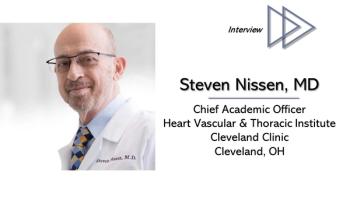
Dr Nissen discusses the impetus behind the study, the potential public health implications of the results, and more.
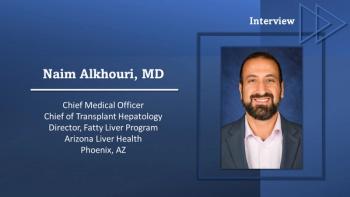
Following the landmark FDA approval of resmetirom for MASH with fibrosis, hepatologist and researcher Alkhouri describes more mid- and late-stage candidates.
Hepatologist Naim Alkhouri, MD, offered 3 take-home thoughts for primary care colleagues to help increase early detection of MASLD.
Naim Alkhouri, MD, a transplant hepatologist and a resmetirom investigator, talks here about the life-changing impact the drug will have for all touched by MASH.
Primary care is where early detection and treatment of liver disease should begin and as Dr Alkhouri highlights here, all the right tools are already at hand.
Alkhouri, a veteran investigator in the field of hepatic disease, including MASLD and MASH, stresses the need for early detection of MASLD when simple intervention can be effective.
The study that led to an historic expanded label for bempedoic acid must be followed by more like it, said Steven Nissen, MD. There is much more to do.
Statin intolerance is a "vexing" problem for primary care clinicians and specialists alike. Bempedoic acid fills a distinct need in that tool box.
The CLEAR Outcomes PI explains the patient selection approach for bempedoic acid, now approved to reduce risk of CV events in addition to lowering LDL-C.
Bempedoic acid became the first nonstatin LDL-C lowering medication indicated to reduce CV risk in both primary and secondary prevention. Nissen explains how.
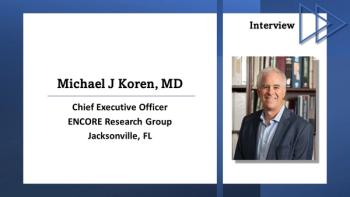
ACC.24: Individuals with ASCVD not at target LDL-C on maximum statin therapy need immediate intervention and one that works, said V-INITIATE primary investigator.
ACC.24: Michael Koren, MD, highlights how the nonstatin lipid-lowering medication's mechanism of action against PCSK9 differs from others in the category.
ACC.24: The primary investigator of the VICTORION-INITIATE study explains why new strategies are needed to accelerate LDL-C lowering in high-risk individuals.
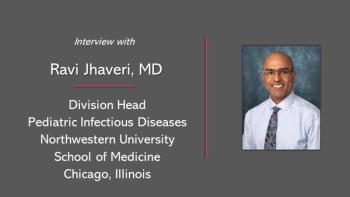
Ravi Jhaveri, MD, provides an overview of AstraZeneca's FluMist Quadrivalent vaccine and discusses why it could help increase vaccination rates.
CLEAR Outcomes PI Steven Nissen, MD, links findings from the pivotal trial with labeling updates that make bempedoic acid the only nonstatin agent approved to reduce CV risk.
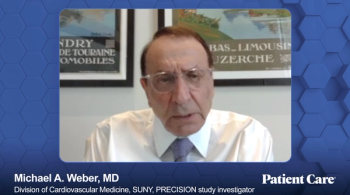
Michael A. Weber, MD, an investigator in the PRECISION study, discusses the newly FDA approved drug aprocitentan (Tryvio), and its promise for helping patients with treatment-resistant hypertension.

Dr Ebisawa details the findings he recently presented at the 2024 AAAAI annual meeting, including adverse events and next steps for the study.
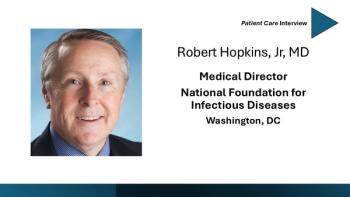
A Vaccination Imperative: "Please, Let's Do It," NFID Medical Director Robert Hopkins, Jr, MD, Urges
The National Foundation for Infectious Diseases medical director appeals to the community at large to set politics and personal grievance aside and to "first, do no harm."
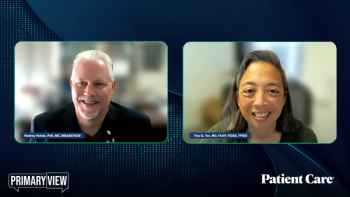
Drs Tina Q. Tan and Rodney Rohde share final thoughts on addressing patient and parent concerns with COVID-19 vaccines.
Experts comment on the significance of mRNA (messenger RNA) technology in developing COVID-19 vaccines, as well as vaccines against other viral infections.
Rodney Rohde, PhD, MS, SM(ASCP)CM, shares his approach to initiating conversations around COVID-19 vaccination to patients and family members, highlighting the safety of administering multiple vaccines at during 1 visit.
Angela Fitch, MD, president of the Obesity Medicine Association, details what to look forward to this year in terms of obesity management.
"It's a very rich pipeline because [agitation] is a very common and very debilitating symptom in Alzheimer's disease," Grossberg observed.
President of the Obesity Medicine Association discusses how clinician perspectives on obesity and obesity treatment are changing for the better.
Experts discuss the efficacy of the latest vaccines against currently circulating strains of COVID-19, commenting on how long immunity lasts from these vaccines.
Advertisement
Advertisement