

Four cases to test your diagnostic skills: bizarre circular ecchymoses, abdominal ecchymosis, myriad nodules, and cavernous dilated blood vessel in a patient’s arm.
Four cases to test your diagnostic skills: bizarre circular ecchymoses, abdominal ecchymosis, myriad nodules, and cavernous dilated blood vessel in a patient’s arm.
Young Man With Painless Penile Ulcer
Is prophylactic oophorectomy recommended for healthy postmenopausal women with a strong family history of cancer?
Which test--antistreptolysin O titers, coronary angiography, enzyme-linked immunosorbent assay (ELISA), Western blot testing for Borrelia burgdorferi, or genetic testing for long QT syndrome--would help you diagnose a young man with worsening chest pain, frontal headache, and diffuse muscle and joint pain?
A focus on the known clinically significant drug-drug interactions of phenytoin.
Glucosamine and chondroitin sulfate are popular nutritional supplements for osteoarthritis, but how effective are they?
The best way to perpetuate behavior that you appreciate is to reward it.
Regular foot inspections can be made easier for elderly persons by using a mirror.
Lower back pain may be aleviated by performing this stretch while lying in bed after waking up.
Lessen the pain from anesthetic injections for your pediatric patients.
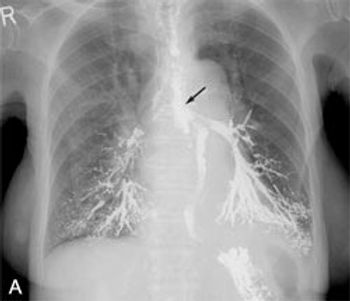
An 84-year-old woman presented with a 10-month history of dysphagia to solids and a 4-month history of dysphagia and coughing to liquids. She was severely dehydrated and cachectic; over the past 10 months, she had lost 16.2 kg (36 lb). Rhonchi and gurgling sounds were audible on auscultation of the chest.

A 77-year-old woman was concerned about a "bump" on her head. The asymptomatic mass had been present for 4 years and had slowly enlarged.
According to the American College of Physicians, we are facing "a looming collapse of the nation’s primary care."
The annual meeting of the American College of Physicians showcased dedicated primary care physicians and clinical milestones finally reached.
How common is “dual” (ectopic and intrauterine) pregnancy in women who usefertility drugs?
What are the birth control options for a teenager who has ahistory of surgical excision of bilateral tubular adenomasof the breasts?
My patient is a 30-year-old woman who has used metoclopramide for years forabdominal pain.
An 80-year-old woman complains of left hip painthat started after she fell while feeding her cat. The painis moderately severe and is localized to the left hip; itdoes not radiate. The patient is unable to bear any weighton the injured hip but denies numbness in her left leg.There are no other injuries.
Osteoporosis is no longer consideredage- or sex-dependent, although prevalencevaries by sex and race. Postmenopausalwhite women suffer almost75% of all hip fractures and havethe highest age-adjusted rate of fracture.Thanks to progress in our understandingof causes and treatments, thisdisease is largely preventable, and significantimprovements in morbidityand mortality are possible. The beststrategy for prevention and treatmentuses a team approach that involves thepatient, physician, health educators, dietitians,and physical therapists.
Are there any generally accepted guidelines for performing arthrocentesis in patients who are receiving anticoagulants?