

A 26-year-old woman complained of flatus and fecal incontinence of solid stool.One year earlier, she was delivered of a 3.86-kg (8.5-lb) infant; a severe perinealtear was repaired after the birth.
A 26-year-old woman complained of flatus and fecal incontinence of solid stool.One year earlier, she was delivered of a 3.86-kg (8.5-lb) infant; a severe perinealtear was repaired after the birth.
A 74-year-old man presented with generalized itching and mild jaundice. A year earlier, he had undergone a laparoscopic cholecystectomy.
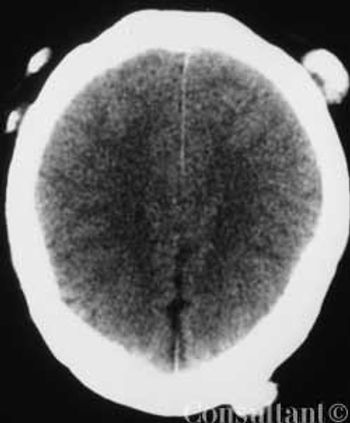
An otherwise healthy 38-year-old woman presented to the emergency department with a 1-day history of generalized left-sided weakness. She had no other significant medical history and was taking no medications. The patient was overweight.
A 74-year-old man presented withgeneralized itching and mild jaundice.A year earlier, he had undergone alaparoscopic cholecystectomy.
Persons with severe mental illnesses (SMI), such as schizophrenia, are at increased risk for comorbid conditions- including type 2 diabetes-independent of therapy. SMI sufferers especially at risk for type 2 diabetes are women, African Americans, and persons older than 45 years. Among the possible causes of increased susceptibility to type 2 diabetes are such schizophrenia-associated conditions as impaired glucose tolerance, overweight, obesity, inadequate nutrition, lack of exercise, and inadequate self-care. Other obstacles to good health care among patients with schizophrenia include impaired communication ability, denial of illness, social withdrawal, and undertreatment because of comorbid conditions. Different antipsychotic medications may also contribute to preexisting insulin resistance or glucose intolerance. Clinicians can optimize care by understanding the most significant barriers for each patient and incorporating this knowledge into an active treatment plan.
Routine screening for colorectal cancer has been shown to reduce mortality. However, only 44% of Americans over the age of 50 years have been screened.
Drs Gary Quick, Theodore Ruff, and Pam Wilson’s “What’s Wrong With ThisPicture?” case of a woman with splenic laceration resulting from an assault by amale friend (CONSULTANT, May 2002, page 714) seems to have missed the“elephant in the living room.”
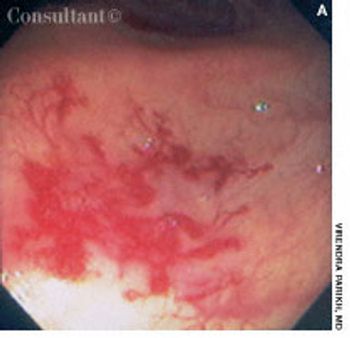
In a 65-year-old man with a family history of colorectal carcinoma, an initial screening coloscopic examination revealed 2 arteriovenous malformations. These delicate red lesions with a vascular network and irregular edges were found in the cecum.
A nondrug remedy for menstrual discomfortis to apply a heating pad tothe lower abdomen when symptomsbegin.
For patients with a persistent coughwho cannot take codeine, a combinationof benzonatate (1 or 2 100-mgcapsules tid prn), along with dextromethorphanand guaifenesin (2 or3 tsp tid prn), can be effective.

Round, smooth, bald areas had recently developed on the neck and chin of a 32-year-old man. No other areas of the body were affected. The patient had a lifelong history of chronic anxiety.
What are the appropriate laboratory tests for an infant whose mother has hepatitisC virus (HCV) infection?
Write billing codes next to the diagnoseson the master problem sectionof patients’ charts so that the codescan be easily transferred to the feesheets.
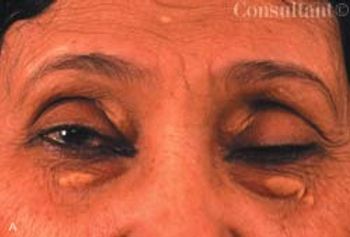
A 59-year-old woman presented for a routine physical examination. She had no physical complaints and took no medications. During the physical examination, bilateral, flat, slightly elevated, yellowish cutaneous lesions were noted above and below the skin folds of the patient's eyelids.
A 54-year-old man is admitted to the hospital because of worsening lower extremityswelling and knee and ankle pain and stiffness. These symptoms havemade walking very difficult for the past month.
A 32-year-old previously healthywoman presents to the emergencydepartment with skin lesions, suprapubicpain, and generalized myalgia of1 week’s duration. Trimethoprim-sulfamethoxazolefor a presumed urinarytract infection is prescribed, and thepatient is discharged. The symptomspersist; she is hospitalized 2 days later.
The family of a 50-year-oldalcoholic man brings him to youroffice. They are concerned abouthis health and note that they had notseen him for several months beforehe reappeared. The patient complainsof generalized weakness, fatigue, andbleeding gums.
ABSTRACT: Many patients with osteoarthritis (OA) try such complementary therapies as special diets, nutritional and herbal supplements, yoga, t'ai chi, magnets, and acupuncture-but only 40% of these patients tell their physicians. Glucosamine and chondroitin sulfate can produce at least symptomatic relief; in addition, glucosamine (1500 mg/d) may increase or stabilize cartilage in osteoarthritic knees. Alert patients to the potential toxicities of many herbal remedies, as well as the risks of harmful drug interactions and possible contaminants and impurities. Yoga postures may have a beneficial effect on knee OA; t'ai chi may reduce joint pain and swelling and increase mobility. Small studies have shown that applied pulsed electromagnetic fields can reduce pain and improve function in patients with chronic knee OA. Acupuncture has also been shown, in small studies, to alleviate the pain of OA. Autologous chondrocyte transplantation was recently approved for treatment of knee OA. The efficacy and safety of various types of gene therapy are currently being evaluated.
Deaths from colorectal carcinoma (CRC) have diminished in recent years; the absolute annual decrease is 1.5% per year.
For the past several weeks, a 54-year-old man has had progressivelyworsening abdominal pain and general achiness.He has no nausea, vomiting, diarrhea, or fever and no historyof trauma.