All News

Numerous factors contribute to the medication errors that kill up to 98,000 patients each year. Unnecessarily high dosages can result in increased side effects with only a small therapeutic benefit, especially in elderly patients. Lack of patient information-such as a history of allergies or adverse drug reactions-is another cause of error and injury. Communication failures include the use of ambiguous abbreviations, misinterpretation of verbal orders, and lack of timely response to a patient's medication-related symptoms. Dosing errors are common in children because of variability in dosage expressions in drug references. Remedies for prescribing errors are described in detail here.

Treatment of fibromyalgia syndrome (FMS) is a challenge. However, most patients benefit from appropriate management. Essential to treatment are a physician's positive and empathetic attitude, continuous psychological support, patient education, patience, and a willingness to guide patients to do their part in management. Other important aspects involve addressing aggravating factors (eg, poor sleep, physical deconditioning, emotional distress) and employing various nonpharmacologic modalities (eg, regular physical exercise) and pharmacologic therapies. Drug treatment includes use of tricyclic medications alone or in combination with a selective serotonin reuptake inhibitor, and other centrally acting medications. Tender point injection is useful. It is important to individualize treatment. Management of FMS is both a science and an art.

A 13-year-old girl of African American descent is brought to the pediatrician’s office becauseof a lesion on her neck. The girl’s mother had telephoned the office before the visit, statingthat the lesion resembled a blister at first, but now looked like a burn.

Vague abdominal pain, malaise, anorexia,and the loss of 10 lb in 2months prompted a 65-year-old manto seek medical evaluation. A yearearlier he had undergone surgery forstage III carcinoma of the sigmoidcolon. Because metastases to thelymph nodes were found in the resectedcolon, the patient was given postoperativechemotherapy. Histologicexamination revealed poorly differentiatedadenocarcinoma.

A 40-year-old man was concerned about an enlarging painlessmass on the right side of his neck that had been presentfor 6 months (A). The patient reported no other healthproblems; his medical history was unremarkable, and hewas taking no medications.There was no family or personal history of thyroiddisease or of exposure to radiation. Thyroid function testresults were within normal limits. A chest film revealed nopathology.

An 86-year-old woman had noted intermittent, transient “shading” and “hazing” of the vision in her right eye. Her best corrected vision in that eye was 20/20. She had pseudophakia from past cataract surgery.

During an annual eye examination, a 65-year-old womanwith a 5-year history of type 2 insulin-dependent diabetescomplained that her vision had slightly worsened in botheyes. Her best corrected visual acuity was 20/30 in botheyes.

Sudden profound vision loss in her left eye prompted an82-year-old woman to seek evaluation. She also complainedof “just not feeling well” and reported new-onsettemporal and occipital headaches of 6 weeks’ duration.

Acute Pulmonary Embolism

A 75-year-old obese woman with subacute-onset dyspnea and lower right posterior chest pain was brought to the emergency department. She had a history of diastolic heart failure, arthritis, and suspected obstructive sleep apnea. The patient was dyspneic at rest.

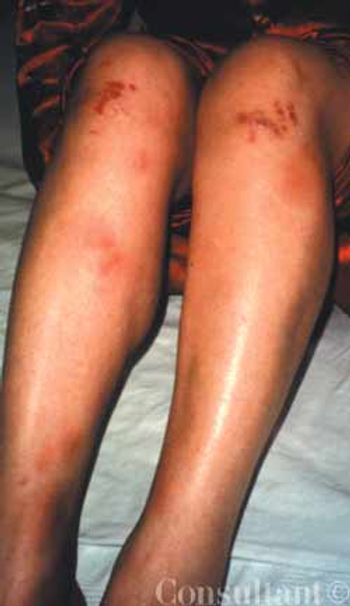
Erythema Nodosum

A 40-year-old woman who said she had asthma was admitted to the hospital with worsening dyspnea and cough. A β-adrenergic agent was her only medication. The patient denied cigarette smoking and alcohol consumption. Except for an appendectomy 20 years earlier, her medical history was unremarkable. The patient was afebrile.

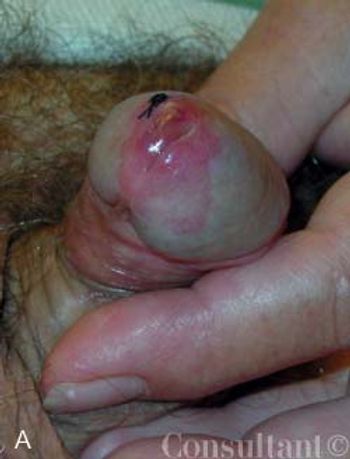
Penile Fracture

A 34-year-old man came to the emergency department after a mishap during sexual intercourse resulted in a cracking sound in his penis with immediate pain and loss of erection. He had no significant medical history. The patient was in moderate physical pain but severe emotional distress. Vital signs were normal.

ain management is a commonand challenging aspect of caringfor elderly patients. The principlesthat guide therapeutic pain managementin these persons are differentfrom those used in the treatmentof younger persons.

Leukoplakia

A 39-year-old man was concerned that his history of long-termnicotine exposure placed him at increased risk forthroat cancer. He had used about 2 cans of “dip” each weekfor many years. The patient habitually placed the tobaccoin the right lower lip area; to avoid spitting, he always swallowedthe spent wad. The patient did not smoke; he usedalcohol occasionally.

Zoon’s Balanitis

An uncircumcised 58-yearold man presented with a persistent “rash” on his penis of 5 years’ duration. He complained of localized irritation with coitus. Over-the-counter ointments and corticosteroid preparations had failed to clear the eruption. The patient had hypertension, hyperlipidemia, and coronary artery disease. He had been monogamous for the last decade and denied any risk factors for sexually transmitted diseases.

Factitious Purpura

This 3-year-old girl was brought to the physician’s office for evaluation of a nonpruritic,purple discoloration around her mouth. The patient’s mother reportedthat the rash developed after the child had eaten a mango and sucked on a cup.

Influenza:

ABSTRACT: When influenza is present in the community, clinical symptoms are as accurate as rapid point-of-care tests for making the diagnosis; in this setting, the combination of cough and fever (temperature, 37.7°C [100°F] or higher) of acute onset has a positive predictive value of 77% to 79%. Accurate diagnosis ensures timely administration of antiviral agents and prevents unnecessary antibiotic use. In elderly persons, vaccination reduces illness severity, incidence of complications, and mortality. An intranasal vaccine is a new option for persons aged 5 to 49 years who are at risk for complications and refuse injection. Chemoprophylaxis with amantadine, rimantadine, or a neuraminidase inhibitor is a useful adjunct to vaccination in certain groups, such as nursing-home residents. Antiviral therapy started within 24 to 48 hours of symptom onset can reduce the duration of illness by 1 to 1.5 days and ameliorate symptoms in patients with uncomplicated influenza. However, treatment is expensive and does not prevent complications.