

Round, smooth, bald areas had recently developed on the neck and chin of a 32-year-old man. No other areas of the body were affected. The patient had a lifelong history of chronic anxiety.
Round, smooth, bald areas had recently developed on the neck and chin of a 32-year-old man. No other areas of the body were affected. The patient had a lifelong history of chronic anxiety.

What are the appropriate laboratory tests for an infant whose mother has hepatitisC virus (HCV) infection?
Write billing codes next to the diagnoseson the master problem sectionof patients’ charts so that the codescan be easily transferred to the feesheets.
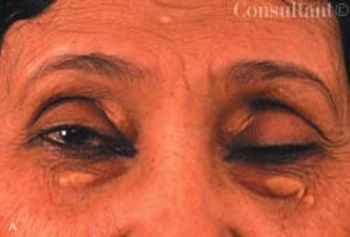
A 59-year-old woman presented for a routine physical examination. She had no physical complaints and took no medications. During the physical examination, bilateral, flat, slightly elevated, yellowish cutaneous lesions were noted above and below the skin folds of the patient's eyelids.
A 54-year-old man is admitted to the hospital because of worsening lower extremityswelling and knee and ankle pain and stiffness. These symptoms havemade walking very difficult for the past month.
A 32-year-old previously healthywoman presents to the emergencydepartment with skin lesions, suprapubicpain, and generalized myalgia of1 week’s duration. Trimethoprim-sulfamethoxazolefor a presumed urinarytract infection is prescribed, and thepatient is discharged. The symptomspersist; she is hospitalized 2 days later.
The family of a 50-year-oldalcoholic man brings him to youroffice. They are concerned abouthis health and note that they had notseen him for several months beforehe reappeared. The patient complainsof generalized weakness, fatigue, andbleeding gums.
ABSTRACT: Many patients with osteoarthritis (OA) try such complementary therapies as special diets, nutritional and herbal supplements, yoga, t'ai chi, magnets, and acupuncture-but only 40% of these patients tell their physicians. Glucosamine and chondroitin sulfate can produce at least symptomatic relief; in addition, glucosamine (1500 mg/d) may increase or stabilize cartilage in osteoarthritic knees. Alert patients to the potential toxicities of many herbal remedies, as well as the risks of harmful drug interactions and possible contaminants and impurities. Yoga postures may have a beneficial effect on knee OA; t'ai chi may reduce joint pain and swelling and increase mobility. Small studies have shown that applied pulsed electromagnetic fields can reduce pain and improve function in patients with chronic knee OA. Acupuncture has also been shown, in small studies, to alleviate the pain of OA. Autologous chondrocyte transplantation was recently approved for treatment of knee OA. The efficacy and safety of various types of gene therapy are currently being evaluated.
Deaths from colorectal carcinoma (CRC) have diminished in recent years; the absolute annual decrease is 1.5% per year.
For the past several weeks, a 54-year-old man has had progressivelyworsening abdominal pain and general achiness.He has no nausea, vomiting, diarrhea, or fever and no historyof trauma.
A 76-year-old woman is admitted to the hospital for increasing fatigue and weaknessthat began about 3 weeks earlier. Her symptoms have worsened duringthe past week to the point of profound weakness and both dyspnea and nearsyncopewith minimal exertion.
Q:Should I prescribe isoniazid prophylaxis for an elderly patient withmultiple health problems who recently converted from negative topositive tuberculin status?
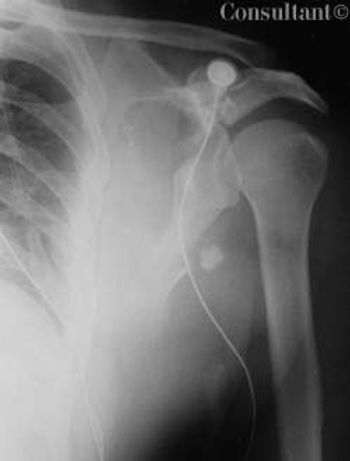
A 56-year-old man, who was involved in an automobile accident, was brought to the emergency department by ambulance. He was awake, intoxicated with alcohol, and complained particularly of pain in his left shoulder. The patient was unable to recall any details of the accident; he believed that he had been hospitalized for a back spasm.
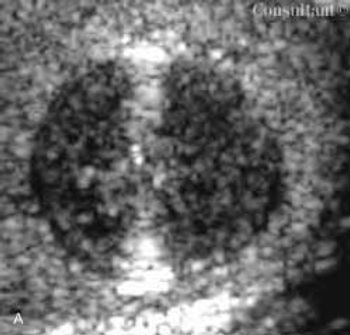
A 25-year-old man sought evaluation of a painless, palpable, left testicular mass that had been present for more than 1 year. There was no personal or family history of cryptorchidism or malignancy. A circumscribed mass was palpated within the anterior superior pole of the left testis.
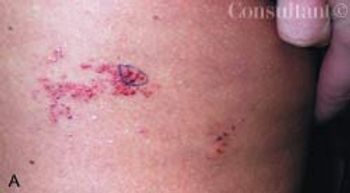
For 10 years, a 22-year-old woman had had an erythematous, translucent patch of grouped blisters on her left thigh. A recent increase in the size of the patch prompted the patient to seek treatment. There was no burning or tingling at the site. The patient reported that the erythema occasionally cleared; however, the blisters always remained. She denied fever, weight loss, and other constitutional symptoms.
A Young Boy With High Fever and LethargyA 5-year-old boy is brought to the emergency department(ED) by his parents. They report that, for thepast week, the child has had a high fever (temperatureup to 40oC [104oF]), generalized weakness, lethargy, andlack of appetite. The boy’s eyes are bloodshot and he hasrefused food and drink. The child has no history ofcough, shortness of breath, hematemesis, melena, headaches,vision problems, or seizures. He has not been incontact with sick persons, has not traveled abroad, doesnot have a pet, and is not taking any medications. His immunizations are up-to-date.
In my view, "very low calorie diet" is a more appropriate term for the type of diet you describe.
The diagnosis of osteoarthritis (OA) is primarily clinical. Key historical clues to idiopathic OA include patient age greater than 45 years, joint pain that increases with activity and is relieved with rest, morning stiffness of 30 minutes duration or less, and involvement of one or more of the following: hips, knees, cervical or lumbar spine, basilar thumb joints, interphalangeal joints of the hands, midfoot joints, and first metatarsophalangeal joints.
ABSTRACT: Topical agents can provide temporary relief from osteoarthritis symptoms with little or no risk. Acetaminophen is first-line oral therapy. Be alert for risk factors for NSAID-induced GI toxicity, such as concurrent use of prescription and OTC agents. Tramadol, narcotic analgesics, muscle relaxants, and antidepressants are options when NSAIDs are ineffective or contraindicated. Intra-articular injections of corticosteroids or hyaluronan are appropriate for patients who have a single joint exacerbation. Total knee and total hip arthroplasty are considered the most effective surgical interventions.
How critical-and cost-effective-is in-officepulmonary function equipment for the primarycare practitioner?