

All News

THE CASE:

A 50-year-old manpresents to your office with severediscomfort in the great toe that began24 hours earlier. He denies any traumabut says that he may have hadsimilar symptoms many years before.He has no recent history of feveror illness. You aspirate fluid from thefirst metatarsophalangeal joint foranalysis.
A 42-year-old woman complains of anxiety, unexplained weight loss, and palpitationsthat started about 3 weeks earlier. She denies fever, trauma, and newstress. She has a history of several urinary tract infections for which imagingfailed to reveal any predisposing factors; all were successfully treated withmedication. The remainder of the history is unremarkable.

Also known as congenital aganglionic megacolon (A), this condition is characterized by a congenital absence of ganglioncells in the submucosal (Meissner) plexus and themyenteric (Auerbach) plexus in one or more segments ofthe colon. This is attributable to a failure of migration ofnerve cell elements from the neural crest in a cephalocaudaldirection along the GI tract. The absence of parasympatheticinnervation causes failure of relaxation of the internalanal sphincter. An aganglionic colon does not permitnormal peristalsis to occur and thus results in afunctional obstruction.

ABSTRACT: The main therapeutic goals for patients who have an acute coronary syndrome are to reestablish normal epicardial flow and to increase distal myocardial perfusion. Fibrinolytic treatment with tissue plasminogen activator within 70 minutes of the onset of symptoms dramatically reduces the mortality rate from myocardial infarction. Other fibrinolytic agents include reteplase, which is given as a double bolus, and tenecteplase, which is given as a single bolus. In most hospitals, fibrinolytic therapy is more readily available than percutaneous transluminal coronary angioplasty (PTCA); however, PTCA may be the preferred approach if it is available within an hour and a half. Antiplatelet drugs, such as glycoprotein IIb/IIIa receptor antagonists, are used to improve distal myocardial perfusion. If follow-up coronary angiography is not available to assess whether epicardial blood flow and distal myocardial perfusion have been restored, a 12-lead ECG can provide valuable information. The resolution of ST-segment abnormalities is a marker for improved perfusion.

The most common blood-borne infection in the United States, hepatitis C is also one of the leading causes of chronic liver disease in this country. About 35,000 new hepatitis C virus (HCV) infections are diagnosed each year; by 2015, the number of persons with documented HCV infection is expected to have increased 4-fold from what it was in 1990.

In the United States, osteoporosis affects 12% to 28% of women over age 65 years. Among women who live to be 85, 50% will sustain an osteoporosis-related fracture. Hip fractures occur in 15% of these women, and vertebral deformities develop in 25%

ABSTRACT: Patients can greatly reduce the risk of traveler's diarrhea by drinking only bottled water and eating only hot foods prepared in sanitary conditions or peelable fruits and vegetables. Antibiotic prophylaxis for traveler's diarrhea is no longer routinely recommended; reserve it for patients who may have to consume food and beverages of questionable safety, those with reduced immunity, and those likely to experience serious consequences of illness. Adequate hydration is the first step in treating traveler's diarrhea. Drug therapy-loperamide or fluoroquinolones in adults and bismuth subsalicylate or azithromycin in children-can ameliorate symptoms and speed recovery. Recommend that patients who are prone to motion sickness take an antiemetic/antivertigo agent before symptoms begin. Acetazolamide can be used both to prevent and to treat altitude sickness. Contraindications to air travel include a resting oxygen saturation of less than 90%, pregnancy of more than 36 weeks' duration, pneumothorax, recent myocardial infarction or chest or abdominal surgery, active infectious diseases, and poorly controlled seizures or sickle cell anemia.

A 78-year-old man presented to theemergency department with a 3-weekhistory of progressive shortness of breathand cough with blood-streaked, yellowishsputum. The patient had dyspnea onexertion limited to 2 blocks, 2-pilloworthopnea, paroxysmal nocturnal dyspnea,and nocturia. Neither fever norchills were present. He had lost 7.2 kg(16 lb) during the last year.

Calcium channel blockersare commonly prescribedto treat severalcardiovascular diseasesand may be helpful inother conditions, such as migraineand bipolar disorder.1 These agentsare associated with numerous clinicallysignificant drug interactions.1-3While some of these interactions,such as the effect of verapamil onserum digoxin concentrations, arewell-known, others are not widely recognized-yet warrant attention.

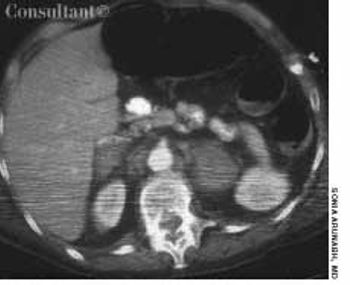
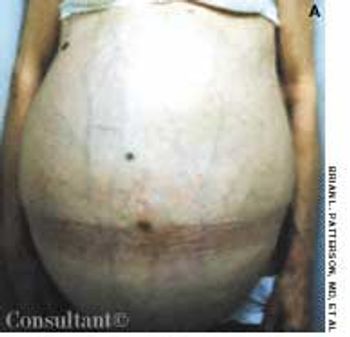
For 2 years, a 55-year-old woman’s abdomen gradually enlarged; the pace of this growth had accelerated during the last 6 months. The patient, who had not seen a physician in 10 years, denied abdominal pain, nausea, vomiting, constipation, diarrhea, or any change in bowel habits. She had no shortness of breath or weakness. The patient reported no significant medical history, had no allergies, and took no medications.

A 44-year-old man presents with sharp, severe abdominal discomfortthat began suddenly while he was driving to your office for a routinephysical examination. The patient reports that several days earlier he hadlifted a refrigerator. He experienced intermittent umbilical discomfort for severaldays afterwards.

ABSTRACT: Age-related anatomic and physiologic alterations in the thyroid gland have a variety of clinically important effects. Hypothyroidism, which is common in older persons, raises cholesterol and triglyceride levels; hyperthyroidism may be masked by the severity of the cardiac problems it causes. In younger persons, depression may accompany hypothyroidism but not hyperthyroidism; however, in the elderly, it may be a feature of either condition. Papillary carcinoma-the most common type of thyroid cancer-is more aggressive in older persons. All these factors necessitate a cautious and deliberate approach to the management of thyroid disorders in elderly patients.

A 19-year-old athlete complains ofpain and swelling of the anteriorpretibial area of his right lower leg. Hehopes to win a football or track scholarshipto college and is concernedbecause his symptoms are impairinghis performance.

During a routine office visit, a 64-year-old woman who has had type 2 diabetesfor more than 10 years complains of increased pedal edema. The edema is minimalon awakening and worsens throughout the day.

All in a Day's Lab Work

Dispel patients’ unrealistic expectationsabout bloodwork by explaining whatthe test results will not show as well aswhat they will show.

A detailed drug history is essentialwhen treating patients with myastheniagravis-especially those whoreport a sudden increase in symptoms.

In his article, “Anemia: A Strategy for the Workup”(CONSULTANT, June 2002, page 869), Dr James Berginmakes several references to a test that measures the“serum transferrin receptor level.”