Depression

Latest News


CME Content


ABSTRACT: For patients who present with ventricular fibrillation (VF) or pulseless ventricular tachycardia that is refractory to repeated countershocks, the drug of choice is amiodarone; the recommended dose for those who are receiving cardiopulmonary resuscitation is 300 mg given as an IV bolus. Vasopressin, 40 U IV, is an acceptable alternative to epinephrine in adults with VF that is resistant to electrical defibrillation. Standard heparin or low molecular weight heparin is indicated in patients who require reperfusion therapy and in those who have unstable angina or non-Q wave myocardial infarction (MI). The initial therapy for patients with acute myocardial ischemia usually includes morphine, oxygen, nitroglycerin, and aspirin, plus a ß-adrenergic blocking agent. Glycoprotein IIb/IIIa receptor inhibitors are currently recommended for patients who have non-Q wave MI or high-risk unstable angina.

ABSTRACT: A thorough history and physical examination can establish the diagnosis of tension headache; further evaluation is generally unnecessary. In contrast, the workup of cervicogenic headache includes standard radiographs, 3-dimensional CT, MRI, and possibly electromyography; nerve blocks may also be used to confirm the diagnosis. Episodic tension headache can be treated effectively by trigger avoidance, behavioral modalities, and structured use of analgesics. Reserve opioids for patients with intractable headaches. Chronic tension headache is treated primarily by prophylactic measures, such as antidepressants and anticonvulsants, and behavioral and physical therapy. Treatment options for cervicogenic headache include analgesics; invasive procedures, such as trigger point injections, greater or lesser occipital nerve blocks, facet joint blocks, segmental nerve root blocks, and diskography; spinal manipulation; and behavioral approaches.

As the world of sport has embraced the participation of women and girls, the incidence of health problems that pertain specifically to premenopausal female athletes has increased significantly. One of these is the female athlete triad, which consists of 3 interrelated medical conditions associated with athletic training

A 72-year-old man sought medical evaluationafter he awoke and was unableto open his right eyelid (A). He deniedpain, recent trauma, and diplopia. Thispatient’s history included well-controlledhypertension and hypercholesterolemia,for which he was taking atorvastatin.He did not have diabetes.

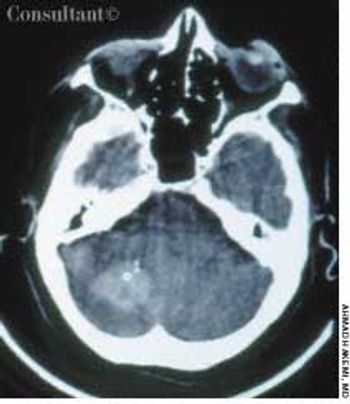
A 65-year-old woman with a long history of hypertension treated with metoprolol and felodipine complained of dizziness, headache, nausea, and vomiting of acute onset. Her blood pressure was 220/110 mm Hg. She was drowsy and unable to stand or walk.