























































































































































WASHINGTON ? Postmenopasual women with high levels of estradiol and testosterone are at a greatly increased risk for developing type 2 diabetes, according to data from the reported Women's Health Study.
WASHINGTON ? Postmenopasual women with high levels of estradiol and testosterone are at a greatly increased risk for developing type 2 diabetes, according to data from the reported Women's Health Study.
TEMPLE, Tex. - Diabetics who develop foot infections have a 55-fold greater risk of being hospitalized than diabetics without foot infections and a 154-fold higher risk of losing the affected foot, found a multicenter study.
Diabetic nephropathy, the leading cause of end-stage renal disease (ESRD) in the United States, affects 20% to 30% of patients with diabetes. Early diagnosis and aggressive treatment may delay the progression of kidney disease.
MANCHESTER, England ? An investigational gene therapy offers promise for diabetic neuropathy, investigators here reported.
My 46-year-old patient had a fasting plasma glucose level of 115 mg/dL; a followupfasting plasma glucose level was 116 mg/dL.
Diabetes is epidemic! The numbersare truly alarming. In 1997, official datashowed that 16 million people in theUnited States had diabetes. Approximately1 million had type 1 disease,and 10.4 million had type 2 disease; theremainder had undiagnosed diabetes.1If these numbers are projected outagainst an annual increase in diseaseprevalence of about 3.5%, it means thatby the year 2028, 50 million people willhave diabetes. However, the actual rateis closer to 7% each year. As such, approximately100 million Americans-roughly 1 of every 4-will have diabetesby 2028.
Have any specific genes been identified for type 1 or type 2 diabetes? If so, howmany genes are involved?
A 49-year-old man presents for a routine examination. He has a 15-year history of essential hypertension and a 7-year history of hypercholesterolemia and type 2 diabetes mellitus.
Breast Infection in a Woman With Diabetes
A 49-year-old man presents for a routineexamination. He has a 15-yearhistory of essential hypertension anda 7-year history of hypercholesterolemiaand type 2 diabetes mellitus.The patient has lost 7.5 lb in the past3 months. The physical examinationis remarkable for a blood pressure(BP) of 168/94 mm Hg and a palpablemidline epigastric mass that isnontender, firm, and immobile.
The prevalence of type 2 diabetes is expected to continue to increase rapidly, and it is not surprising that the issue of the potential effects of different classes of antihypertensive drugs on glucose metabolism and glycemic control has sparked debate.
During the past decade or so, a multitude of weapons have emerged in the battle against the complications of diabetes mellitus.
Up to 10% of Americans older than 20 years have type 2 diabetes, and more than 20% have the metabolic syndrome. The prevalence of both diseases has risen by 33% over the past decade as a result of an increasingly sedentary lifestyle, the obesity epidemic, the growth of ethnic groups at risk for the disease, and the aging of the population.
Researchers in the Netherlands investigating the relative risks of common infections in patients with type 1 or type 2 diabetes mellitus (DM1 or DM2, respectively) determined that both groups are at increased risk for lower respiratory tract infection, urinary tract infection, and skin and mucous membrane infection.
The growing epidemic of type 2 diabetes makes it imperative to identify persons at risk, screen for impaired glucose tolerance (IGT), and treat to prevent progression. Calculation of body mass index (BMI) is an appropriate starting point for identification of patients with possible IGT.
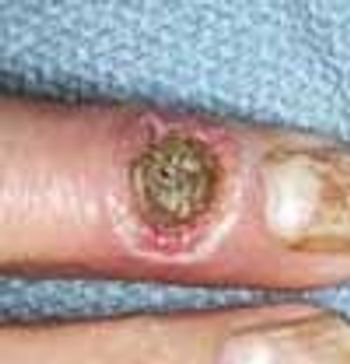
Cutaneous manifestations develop in approximately 30% of persons with diabetes. Premature atherosclerosis is a common complication of the disease that can cause peripheral infarction, ulceration, and necrosis.
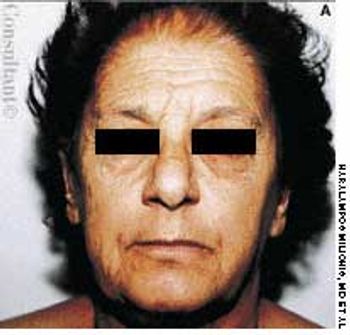
Diabetes mellitus recently had been diagnosed in a 58-year-old woman. The patient claims that her skin had darkened significantly over the past 5 years.
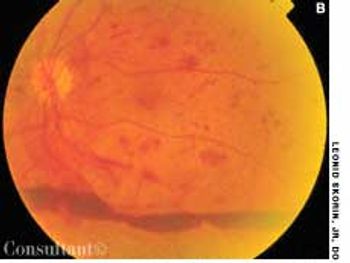
Type 2 diabetes was recently diagnosed in a 59-year-old woman whose vision in both eyes had been impaired for about 1 month. She had experienced fatigue and malaise for 4 to 6 weeks but had delayed seeking medical care.
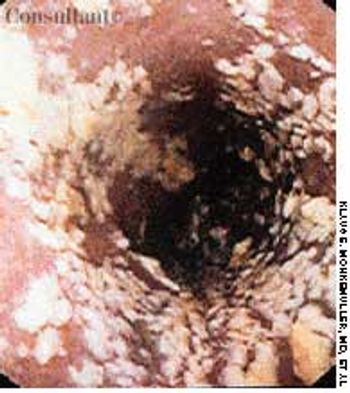
An obese 52-year-old woman with a 5-year history of type II diabetes mellitus had odynophagia and dysphagia for several days. She described the sensation as food “sticking” in her chest. She also complained of vaginal itching, polyuria, and polydipsia. The only remarkable finding on physical examination was candidal vaginitis. The patient did not smoke cigarettes or drink alcoholic beverages, and there was no history of recent weight loss.
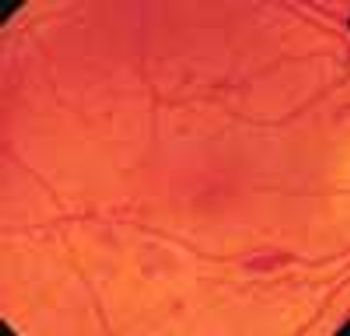
A 55-year-old woman, who had fairly well-controlled type 2 diabetes for 15 years, noticed a slow, progressive decrease in the visual acuity of her right eye during the past 6 to 8 weeks.
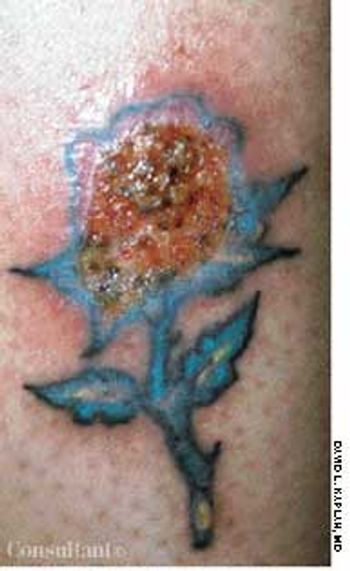
A 32-year-old woman with insulin-dependent diabetes noted a painful erosion at the site of "the rose tattoo," which she had gotten 5 days before.
A 69-year-old man seen because of a pruritic pretibial rash of 3 months' duration. Started as reddish brown papules that slowly enlarged and changed.
As recommended by the authors, I commonly order a fasting lipid profile and measurements of glucose and insulin levels in children at risk for type 2 diabetes. One area of management that remains confusing is the approach to take with children who have an elevated fasting insulin level but otherwise normal laboratory results.
In their article, “Diabetes: How Early-and Aggressively-to Intervene?”(CONSULTANT, November 2005, page 1416), Drs Thomas Clark and John R.Holman discussed the results of the lifestyle intervention and metformin armsof the Diabetes Prevention Program (DPP) study. However, the authors neglectedto include data from the troglitazone arm of the DPP study.
Appropriate foot care, preventive measures, and early intervention reduce the incidence of complications and lower extremity amputation in patients with diabetic foot ulcers. A thorough lower extremity examination includes assessment of the skin, interdigital areas, skin quality and integrity, and ulcerative or pre-ulcerative changes. The key to prevention is patient education and lifelong commitment to self-care.