



















































































































































Incretin-based T2DM therapy is not a direct cause of pancreatitis or pancreatic cancer asserts the European Medicines Agency.

Incretin-based T2DM therapy is not a direct cause of pancreatitis or pancreatic cancer asserts the European Medicines Agency.
GLP-1 receptor antagonists suppress post-meal glucose excursions and are compatible with basal insulin; the combination addresses both FPG and PPG.
Although this study did not show benefits for heart disease, it has shown that weight loss improves many other health problems.
Bariatric surgery is recommended along with oral therapy to help patients with type 2 diabetes control overweight and obesity.
Sodium-glucose linked transporter 2 inhibitors lower renal threshold for glucose transport, cause glycosuria, improved glycemic control, weight loss.
Initial triple-agent therapy for type 2 diabetes, compared with step-wise add-on therapy, produced a durable drop in A1C.
Combination therapy that addresses both fasting and post-meal glucose elevation is the next big thing in T2DM management.
Obesity and kidney disease need to be aggressively managed in patients with type 2 diabetes mellitus.
Added confirmation also indicates that increased weight is not the only cause of a greater risk.

Betatrophin, a naturally occurring hormone, may help restore beta cell mass, and so insulin production, lost through the pathologic changes of the diabetic process.
Test your clinical skills in this week’s 5-question quiz.
Metformin and the class of sulfonylureas are the "work horses" of therapy for type 2 diabetes. Metformin even confers some protection from vascular complications. But, how do they stack up against newer agents? Here, a closer look.
The patient, an active 49-year-old man, had an HbA1c of 8.6 after diabetes was first diagnosed. It’s now 7.6 with metformin and lifestyle measures. Is the current A1c goal adequate, or should you treat more aggressively?
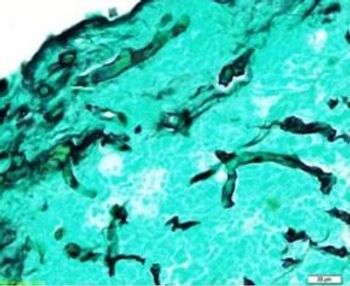
Mucormycosis, an angioinvasive yeast infection of the Mucorales order of the class of Zygomycetes, often grows in patients with diabetes mellitus, especially in the presence of diabetic ketoacidosis.
Mucormycosis, an angioinvasive yeast infection of the Mucorales order of the class of Zygomycetes, often grows in patients with diabetes mellitus, especially in the presence of diabetic ketoacidosis.
Recommendations consider the whole patient, the spectrum of risks and complications for the patient, and evidence-based approaches to treatment.
A call for intensified efforts to prevent and control hypertension is the theme of World Health Day 2013, observed this month to focus attention on reducing heart attacks and strokes.

More than 90% of patients with diabetes mellitus receive their care from primary care physicians. This compact slide show provides visual presentations of a range of DM-related problems.

Diabetic myonecrosis; Persistent bacterial bronchitis; basal cell carcinoma; statin-drug pleiotropy; spinal epidural abscess
FDA investigating pancreatitis risk associated with incretin mimetics including GLP-1 agonists and DPP-4 inhibitors.
High-potency statin therapy may increase risk of new onset diabetes but also reduces cardiovascular events.

Hypoglycemia in type 2 diabetes patients can be the result of insulin or sulfonylureas.
Goals for HbA1C, blood pressure, and LDL-C among diabetes patients are being met by more, according to the NIH.
The primary goal of treatment is to minimize the progression of foot deformity by achieving and maintaining structural stability of the foot and ankle.
A fourth dipetidyl peptidase-4 inhibitor is approved as monotherapy and in combinations with metformin and pioglitazone.