




















































































































































The ACP and AAFP along with 6 other professional groups say the current system is failing US mental health needs and it's time to make changes.

Highly Processed Food is Produced to Be as Rewarding as Humanly Possible, Says Food Addiction Expert

Food Addiction Affects 1 in 8 Americans Over Age 50 Years: New Poll Findings
The ACP and AAFP along with 6 other professional groups say the current system is failing US mental health needs and it's time to make changes.
Approximately one-third of survey respondents with AUD relapsed within 1 year of stopping. Find a profile here of the experience of recovery from those who are trying.
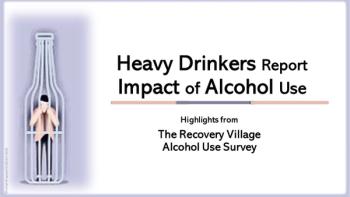
More than one-third of survey respondents began drinking before age 15; the heaviest drinkers had double the risk for cirrhosis, CVD, pancreatitis, and neuropathy.

A new study of more than 2 million US adults and adolescents who could benefit from medication for OUD reveals only 1 in 4 reported past-year use.

Among persons who survived COVID-19, a new study found a 60% increased risk for any new mental health diagnosis during the year following infection.

Family physicians and psychiatrists were the specialties with the greatest number of visits, according to study authors.

Dr Ahmad's book explores in depth the complex long-term consequences of COVID-19 for medicine, mental health, and social conventions.
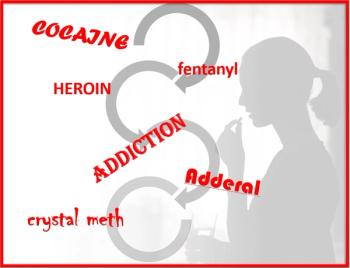
The 100 000 drug overdose deaths in the US recorded for the period ended April 2021 paint a dire behind-the-scenes picture of life during COVID-19.

Primary care physicians noted increased stress among patients during the pandemic and worry that telehealth visits may have hidden signs of drug misuse.
IDWeek 2021
IDWeek 2021: Young people who inject drugs can be cured of hepatitis C virus infection, according to 2 new studies.
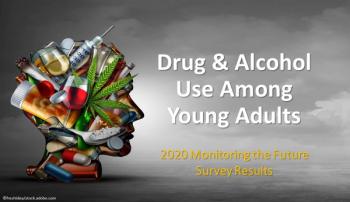
The annual NIH-supported survey revealed changing substance use trends among college students and college-aged adults. Find key results for primary care in our quick slideshow.

COVID-19 has dealt in-person addiction treatment a blow, but the chief medical officer of Groups Recover Together tells a telemedicine success story with a hybrid ending.
Find out how much you know about substance use among US high school students with our 9-question true/false quiz based on the 2019 CDC Youth Risk Behavior Survey results.

The perception of marijuana's risks and benefits may be changing within the US adult population. Are you up to date?

They may determine the presence of alcohol and drug dependence better than longer screening tools, according to a new study.
The goal is better developing the necessary skills for evaluating and managing patients who have persistent pain.
Is hydrocodone less likely to cause addiction than morphine or hydromorphone? The US DEA wants the FDA to reclassify the Schedule 3 opioid to Schedule II.
A 38-year-old man with a history of alcoholism, intravenous drug use, and cerebrovascular accident was referred for assessment of possible endocarditis, based on history, fever 39 °C (102.9 °F) and mildly elevated troponin level.
A 71-year-old woman presents to the emergency department for evaluation of a blistering, intensely pruritic generalized rash that started 5 days earlier. Multiple ruptured and intact hemorrhagic bullae are obvious on the hands, arm, neck, chest, back, and abdomen and to a lesser extent on the lower extremities. The mucous membranes are spared. The Nikolsky sign is absent. The patient reports recent use of furosemide for periodic leg swelling.
A 71-year-old African American man presented to the emergency department (ED) with chest pain, dyspnea, and hemoptysis. He had had a few ED visits for similar symptoms within the previous 4 weeks.
The patient has a history of hospital admissions for complications of alcoholism, including pancreatitis and trauma from falls. What's your diagnosis?
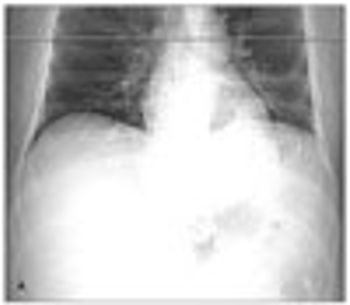
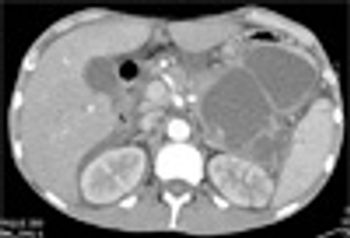
A 38-year-old man found lying on the floor in his home was hospitalized because of alcohol intoxication. A chest radiograph showed a large calcified lesion in the left upper abdomen. A CT scan with intravenous contrast revealed a large, well-defined, cystic mass with mural calcification in the spleen. The CT findings were not consistent with a vascular malformation or echinococcal cyst-specifically, the mass was sharply demarcated, unilocular without septations, and round with a thin wall and attenuation similar to water. Urine Histoplasma antigen test results were negative.
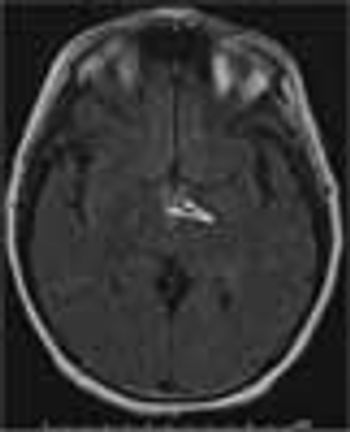
A 51-year-old man was hospitalized for subacute alteration of mental status. The patient had a history of alcohol abuse. He had no other medical disorders. Vital signs were normal. The patient scored 15 out of 30 on the Mini-Mental State Examination. He had an ataxic gait; all other physical findings were normal. The family reported that he had been treated in the emergency department 3 days earlier for hypoglycemia. Results of a complete metabolic profile and complete blood cell count were normal.
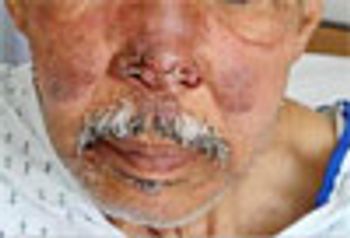
Cocaine abuse is associated with many dermatological manifestations, vasculitides, and infections. Consider this diagnosis in patients with unexplained chronic skin lesions, an ambiguous medical history, previous examinations that found no source of symptoms, labile affect, and delusional behavior.
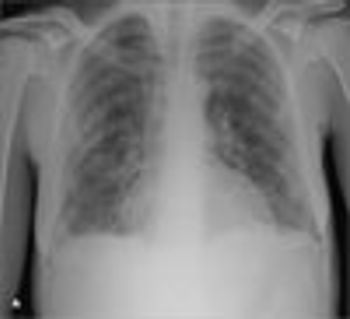
For 3 days, a 45-year-old woman with HIV infection who was noncompliant with her antiretroviral medications had cough, yellowish sputum, fever, and dyspnea. She denied hemoptysis, weight loss, or recent hospitalization. She had a long history of heavy smoking and alcohol and intravenous drug abuse.