







































































































































HIV AIDS

Latest News


CME Content


ABSTRACT: When a solitary lung nodule is detected, the key question is whether the lesion is malignant. The initial evaluation includes a careful history taking focused on risk factors for malignancy, a thorough physical examination, comparison of current chest films with previous ones, and CT scanning. Radiologic signs that suggest malignancy include lesion size greater than 2 cm in diameter, spiculated margins, lack of calcification, and change in size. Video-assisted thoracoscopic surgery or thoracotomy is the next step for patients with a suspected malignant lesion. If the results of the initial evaluation are equivocal, positron emission tomography (PET) scanning is the preferred follow-up.

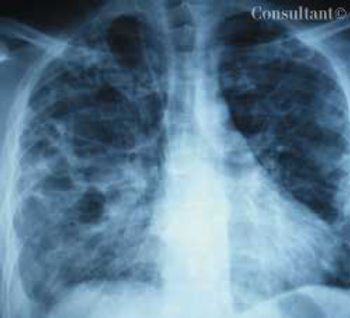
A 33-year-old man with AIDS presented to the emergency department with fever, dyspnea, cough, and pleuritic chest pain of 3 days’ duration. He had had a Pneumocystis carinii infection 3 years before recently emigrating from the Dominican Republic to the United States.

Seen here are asymptomatic papillary growths on the gingiva of a 31-year-old homosexual man who is seropositive for HIV. The diagnosis of human papillomavirus (HPV) lesions can be based on appearance and history. Condylomas may also appear flat and smooth or nodular, resembling fibromas. Because cross infection is common, patients who have these lesions-and their partners-are at increased risk for contracting anal and genital condylomas.