
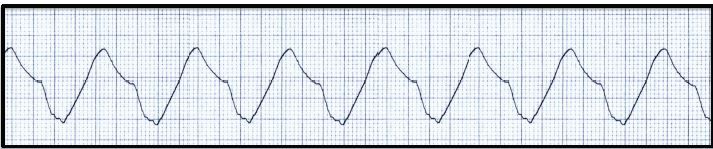


















































































































































Hyperkalemia is the most serious of the electrolyte disorders and can lead to death if not managed appropriately.
Hyperkalemia is the most serious of the electrolyte disorders and can lead to death if not managed appropriately.
If common mechanisms underlying cryptogenic stroke can be clarified, we will need to reevaluate the current approach to secondary prevention. Here, elucidation of "emoblic stroke of undetermined source."
Group-based lifestyle interventions have long-term effects on prevention of diabetes beyond the period of active intervention, this clinical trial shows.
This finding could encourage more men with cardiovascular disease to remain compliant with their therapy.
Good cardiovascular health may help preserve memory and thinking skills into middle age, according to the results of a new study.
Americans’ average daily sodium intake may be associated with better health outcomes than recommended intake levels.
Two new studies show the heart-healthy benefits of this eating plan.
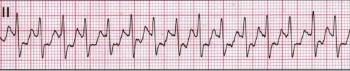
The patient denies dizziness, weakness, chest pain, and dyspnea. Review case details including ECG results. What's your diagnosis?
Management options for PSVT in a stable patient include vagal maneuvers, medications, and electrical synchronized cardioversion.
The benefits of statin therapy no longer stand uncontested as they did early in the life cycle of the class. The pro and con camps each can point to science, but in the end it's about personalized medicine.
A wide-ranging meta-alaysis found that brief, intense outbursts of anger triggered onset of acute myocardial infarction, acute coronary syndrome, and dangerous ventricular arrhythmias.
The authors investigated changes in specific proinflammatory genes associated with neutrophil activation in patients with known coronary artery disease or with significant risk factors.
In clinical scenarios where warfarin is still the drug of choice for anticoagulation, it is still a challenge to achieve optimal time in therapeutic range. Is there promise in a new dosing paradigm?
Results of a new study suggest that number of LAA lobes may one day be useful as an element of the CHADS2 scoring system for embolic risk in patients with atrial fibrillation.
Comprising 15,400 patients from 46 countries, the RE-LY AF registry offers a notable opportunity to study variations in presentation of atrial fibrillation and its risk factors.
In the news: stroke prevention, heart disease and women, migraine and depression, cholinesterase inhibitors and dementia, multivitamins and cataract risk.
Certain modifiable risk factors-ncluding heart rate, smoking status, and antihypertensive medications-affect blood pressure in patients with type 2 diabetes mellitus. And variability in blood pressure has an important role in progression of organ damage.
When a patient complains of feeling dizzy or light-headed, don’t overlook neurological or other causes, but first think about a cardiac cause.
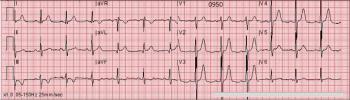
Can you discern the anomaly in this patient's ECG? What clue(s) does it provide to the underlying pathology?
Overnight continuous positive airway pressure is still the gold standard treatment for OSA; but for those who cannot use CPAP, this effective new technology may be an option.
The ECG is frequently the initial diagnostic tool used by clinicians when evaluating patients with suspected acute coronary syndrome.
This study is the first to provide evidence that high levels of sedentary time, even among physically active men, places them at risk for heart failure.
In dialysis patients, anticoagulation for AF may be cause for clinical equipoise, regardless of bleeding risk score. New research, reported here, may begin to shift the balance.
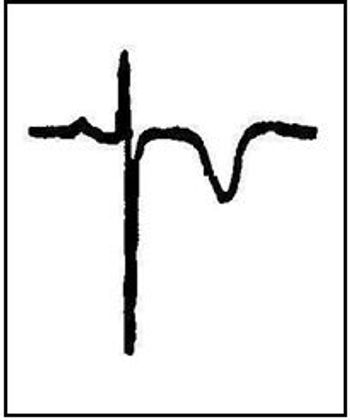
Here, a concise review of the many clinical syndromes that can cause T-wave inversion with accompanying tracings.
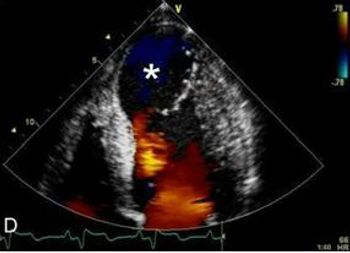
Primary care physicians play a central role in preventing and managing cardiovascular disease. Take a look at the variety of presentations in this week's photo quiz to test your knowledge.