






























































































































































“Lower is better” regardless of the lipid-lowering agent used, publication confirms.
“Lower is better” regardless of the lipid-lowering agent used, publication confirms.

A new imaging study finds that more than one cocktail a day for seniors aged >75 years may do more harm than good.

About one-third of US adults have high blood pressure, the leading diagnosis in primary care. Find the latest news about advances in hypertension research in the pages that follow.

There is a razor edge differential between pharmacologic thrombus prevention and risk for excessive bleeding during procedures for AF. More guidance from a new study.
Hypertension, the “silent killer,” is the leading diagnosis in primary care, and several other circulatory disorders are bringing patients to your practice. Here are the particulars.

Like other pharmaceuticals, ACE inhibitors have their own adverse-effect profile. Find quick answers here to clinicians’ FAQs.
It’s time to rethink aspirin; there’s optimism about the PCSK9 inhibitors; and new help for people with valvular heart disease. What else is new in cardiology?
Guidelines say “no” to anticoagulation for young, otherwise healthy persons with atrial fibrillation. New research finds that clinical practice looks quite different.
No monitoring necessary; don't use them before electrical cardioversion; and count them out for periprocedural use during AF ablation. Really?
Ablation therapy may be an option for these two patients with heart disease. What is your recommendation? And, does the evidence support it?
Stroke and TIA rates are down and fewer patients arrive by ambulance in national emergency department survey.
What does the patient with atrial fibrillation who would benefit from oral anticoagulation look like today? Q & A, here.
Results of the LEGACY study show long-term weight loss decreases AF burden and supports sustained sinus rhythm. A short slide show summarizes the 2015 ACC late-breaking abstract.
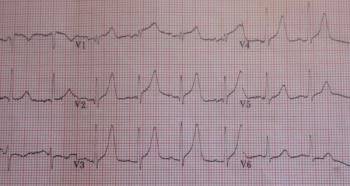
The patient drove himself to the ED after experiencing symptoms while playing basketball. He has a history of anxiety, but is this more than a case of nerves over a missed foul shot?
Be alert for the pitfalls in ECG interpretation of ACS. An initial tracing can be normal in about 10% of cases, even during chest pain. Nonspecific changes occur in another 5% to 15% of cases.
The answer might depend on which study group you ask-and when. Facts from 3 new analyses of testosterone in action are presented in the 7 slides that follow.

Research presented at the American College of Cardiology’s Annual Scientific Session and other developments make the news.
Evidence-based recommendations on the intake of free sugars to reduce the risk of noncommunicable diseases are the ingredients of a new WHO guideline. Find the recipe in these slides.

The FDA will require labels on prescription testosterone products that disclose a possible increased risk of heart attacks and strokes. A “black box” warning won’t be added.
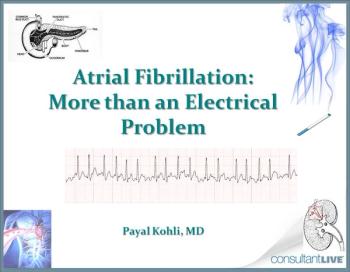
A small study highlights a big point: manage risk factors that affect the atrial fibrillation substrate and ablation therapy success rates improve (ARREST-AF Cohort Study).
What is your command of the components of this risk prediction tool for patients with atrial fibrillation? Find out with our 4-question quiz.
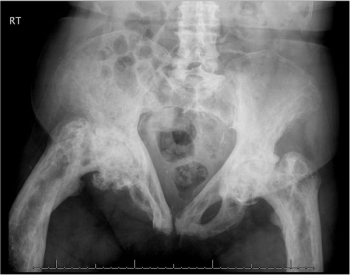
Oral etidronate, IV pamidronate, and then zoledronate caused bone markers to normalize in this 80-year-old woman-temporarily. What’s going on? Answer this and questions on 3 other topics in this week’s quiz.

If your patient asks you whether it is safe for him to get out there and shovel, here are some tips from the American Heart Association you might want to pass along.