





























































































































































The need to address rising levels of obesity and related diseases, including cardiovascular disease, diabetes mellitus, and cancer, continues to grow.

The need to address rising levels of obesity and related diseases, including cardiovascular disease, diabetes mellitus, and cancer, continues to grow.
Some interesting take home-points for your practice from recent studies and surveys: learn the details in this 5 question quiz.
A new study reveals the extent to which milk-processing procedures lower the drink's level of naturally occurring omega-3 fatty acids. More, here.

An observational study of patients with atrial fibrillation suggests that routine screening for depression at office visits may help augment treatment.
Where are we left after a flurry of hypertension publications as 2013 was ending and 2014 beginning? Let’s summarize our recent encounters with the available facts.
If you combine the simplified targets found in JNC 8 with the practical directions offered by the ASH 2013 update, will you actually reach the elusive destination (hypertension control)? Maybe. More, here.
I can see the target destinations on the JNC map, but I need a car and gas to get there.
Here: 9 recommendations that comprise the latest JNC 8 guidelines. Was it worth the wait?
Warning: The maximum daily dose of a single dispersible medication may itself contain more sodium than is recommended from all sources in a day.
A new study provides more evidence of important bidirectional relationships between AF and other cardiovascular comorbidities.
Risk factor control is essential to reduce the symptom burden and severity of atrial fibrillation. A new study finds that weight loss is a highly effective tool in an overall mitigation strategy.
A new study finds a lower incidence of AF in non-White races even though these groups have a higher risk of comorbidites that predispose to AF.
Nuts have long been associated with health benefits, including protection against coronary disease. Now, it seems, nuts might also help postpone death.
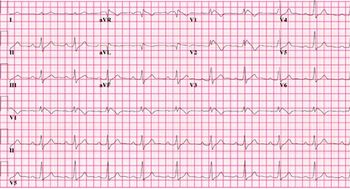
The young athlete is otherwise healthy but his ECG tracing and family history may suggest a different story.
Myocardial rupture is the most feared and often lethal complication of acute MI. It was a potential diagnosis for this patient who presented with sinus tachycardia, ST-segment elevation from V1 to V4, II, III, and aVF with associated Q waves. Follow the workup and outcome here.
The revised guidelines relax some BP targets, incorporate daytime ambulatory and nocturnal BP measures, and recommend that the decision to treat be based on a patient's overall cardiovascular health.
Many years in the making, the revised guidelines on preventing elevated blood cholesterol depart in significant ways from the last version of the NHLBI's ATP III. Here, the top 3 differences primary care physicians will want to know more about.
New ACC/AHA guidelines abolish specific lipid targets, reclassify populations at risk, and recommend statins for their pleiotropic effects.
Patients with type 2 diabetes mellitus should be monitored with ABPM if they are at high risk for cardiovascular complications, according to the results of a new study.
Andexanet alfa is a recombinant factor Xa molecule that binds to and sequesters factor Xa inhibitors in the blood, making them unavailable to bind to native factor Xa.
In new-onset atrial fibrillation there is good evidence for obtaining a troponin T level. High levels are associated with highest rates of stroke, embolism, and cardiac mortality.
Prevention guidelines focus on assessment of CV risk, lifestyle modifications to reduce CV risk, and management of elevated blood cholesterol and body weight in adults.