






























































































































































My patient has lung cancer with liver metastasis.
My patient has lung cancer with liver metastasis.
The patient was a 41-year-old manwith a history of HIV infection diagnosed10 years before admission.He had been noncompliant withtreatment, and therapy with tenofovir,efavirenz, and lamivudinehad not been started until 2 monthsbefore admission, when he presentedto another hospital. At thetime, his CD4+ cell count was156/µL and his viral load was45,743 copies/mL. He also had ahistory of incarceration; had usedinjection drugs, cocaine, alcohol,and marijuana; and had a 20-packyeartobacco history.
A 52-year-old woman was admitted tothe hospital with progressive shortnessof breath of 2 days’ duration. Bronchialasthma had been diagnosed 6 monthsearlier; inhaled corticosteroids, bronchodilators,and leukotriene antagonistswere prescribed. Despite aggressivetreatment, the patient’s dyspneaand wheezing worsened.
A34-year-old woman presents to the emergency department(ED) with rapidly progressive dyspnea.The patient has a history of metastatic vaginal clearcell adenocarcinoma secondary to diethylstilbestrol exposurein utero. Following her diagnosis in 1990, she wastreated with surgery, chemotherapy, and radiation. Shehad done well for years until a recurrence of the cancer tothe left lung was found last year. She completed a courseof chemotherapy with doxorubicin hydrochloride andcisplatin 1 month ago.
What are the pros and cons of chest CT for early screening for lung cancer? Does early detection really change outcomes? Which patients are candidates?
An 85-year-old man with a history of hypertension, coronary artery disease, and diabetes mellitus presented with syncope. He had fallen down a flight of stairs and now complained of left shoulder pain
Dietary phytoestrogens are plant-derived nonsteroidal compounds that have weak estrogen-like activity. The 3 main classes of phytoestrogens are isoflavones, lignans, and cumestrans. Isoflavones are the most common form and are found in soy products and chickpeas, as well as in a number of other foods. Lignans are found in rye grains, linseeds, carrots, tea, spinach, and other vegetables. Cumestran is found in beans, peas, clover, spinach, and sprouts.
Although lung cancer screening has been controversial, recent evidence suggests that a protocol based on the use of spiral CT can facilitate early detection. The addition of F-18 fluorodeoxyglucose (FDG) positron emission tomography (PET) scanning to the screening protocol can help minimize unnecessary invasive procedures for benign lesions without increasing the risk of missed malignancies.
Although tobacco smoke is considered to be the most prevalent cause of lung cancer, other types of smoke also appear to be significant risk factors. For example, a recent study conducted in Mexico found that close to 39% of persons with lung cancer were nonsmokers who had been exposed to wood smoke for more than 10 years. Moreover, serologic analysis indicated that wood smoke exposure produced changes that were similar to those that have been associated with lung cancer.

A 56-year-old man, who had a history of cigarette smoking, noticed a sudden swelling in his neck, mainly on the right side. Shortly thereafter, his right arm became enlarged.

Ten days before presenting for evaluation, a 69-year-old man began to experience neuralgic pain and noticed the eruption of painful erythematous macules and papules on the right side of his chest. Within 24 to 72 hours, vesicles and pustules arose at the site. One week after onset, several of the lesions dried and crusted.
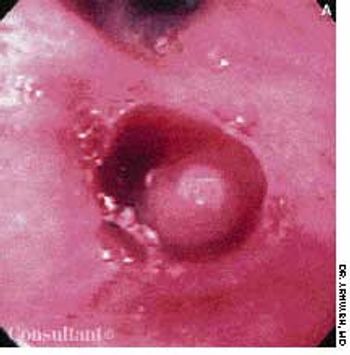
Over the past 6 months, a 72-year-old man was troubled by a persistent cough; he also had lost 9 kg (20 lb). He had no fever or chills, but he noticed mild streaking of blood in his sputum during the past month. He had been a cigarette smoker for 50 years.
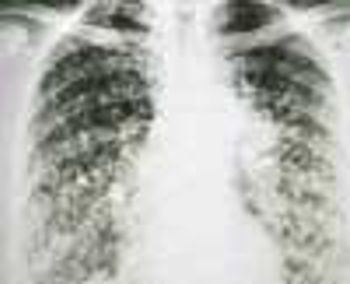
A 52-year-old woman (a nonsmoker) was hospitalized after experiencing a low-grade fever and dyspnea for a month. No abnormalities were noted on physical examination, but the chest film showed multiple nodules, both well- and ill-defined. Lung biopsy confirmed the diagnosis of bronchoalveolar carcinoma.
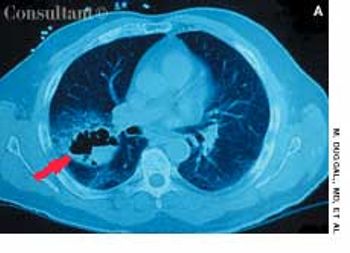
A 60-year-old woman with a 3-month history of cough, chest pain, and shortness of breath was brought to the emergency department. The patient denied any history of fever, chills, or rigors; she complained of mild hemoptysis for 1 week and a 9-kg (20-lb) weight loss during the last few months. The patient had smoked cigarettes for 40 years.
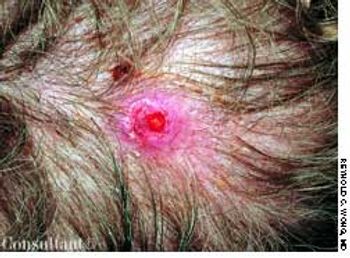
A red papule developed on the scalp of a 52-year-old man who had a history of adenocarcinoma of the lungs. The patient was a former cigarette smoker.
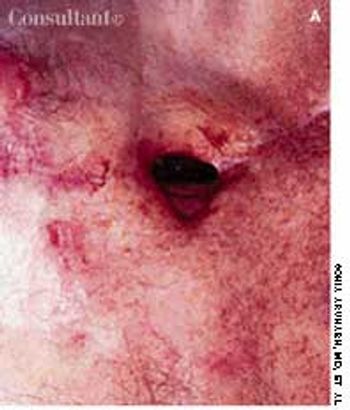
An 82-year-old man underwent right pneumonectomy for squamous cell carcinoma of the right lower lobe. His postoperative course was complicated by prolonged air leak from the chest tube, suggesting a bronchopleural fistula secondary to leakage from the bronchial stump. Over the ensuing 3 months, the air leak slowly decreased, but the patient was left with a nonhealing scar on the anterior thoracic cavity, as seen here.
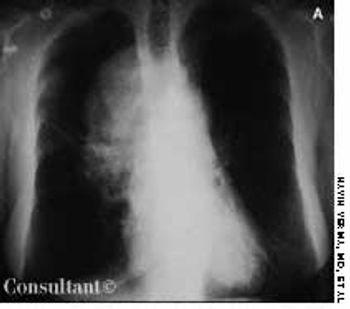
A 42-year-old woman complained of facial puffiness, fullness, and redness for 2 weeks, which were gradually becoming more severe. She also noticed a sensation of “heaviness” in her head. The patient had no significant past medical history. She denied having a cough, shortness of breath, hoarseness, allergies of any kind, and neurologic deficits. Her weight and appetite were unchanged. She had smoked a pack of cigarettes every day for the past 20 years.
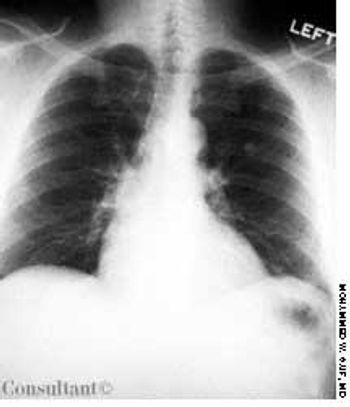
A 59-year-old man presented with a cough and 2 episodes of pneumonia during the past 4 months. He had a 45-pack-year history of smoking cigarettes.
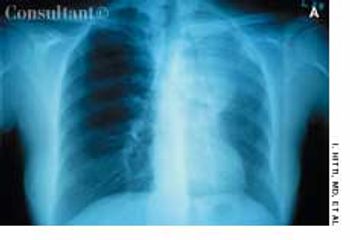
During the past few months, a 50-year-old woman had experienced cough, dyspnea, mild hemoptysis, and a 30-lb weight loss. She had no fever, chills, or rigors. The patient had smoked cigarettes for 30 years.
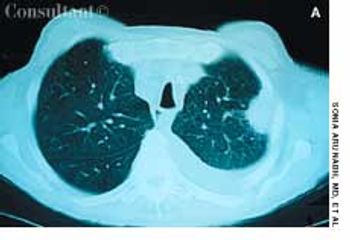
A 67-year-old man with a 5-month history of cough, shortness of breath, and pain in the left anterior chest wall sought medical evaluation. The patient denied fever, chills, and hemoptysis. He reported a recent weight loss of 25 lb. The patient had smoked cigarettes for 37 years.
A 53-year-old man presented with a 3-day history of bilateral pain in the lower extremities. He also had a 3-month history of thickening and desquamation of skin, with associated itching, and a 5-lb (2.27-kg) weight loss. The skin changes initially appeared on the hands and subsequently became generalized.
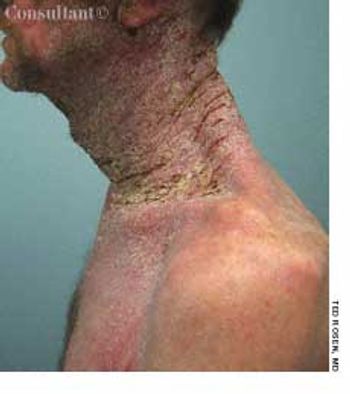
A52-year-old white man presented with a pruritic eruption on the neck of 3 months’ duration. The rash had not responded to a potent topical corticosteroid prescribed by another practitioner for the presumed diagnosis of eczema. The patient reported no current health problems. His history included a pubic louse infestation and several episodes of uncomplicated urethral gonorrhea. He readily admitted to having unprotected sexual intercourse with prostitutes.
A 64-year-old man underwent a right pneumonectomy forsquamous cell carcinoma of the right lung. He was dischargedfrom the hospital on the fifth day after surgery.
A 64-year-old man underwent a right pneumonectomy forsquamous cell carcinoma of the right lung. He was dischargedfrom the hospital on the fifth day after surgery.
For the past 3 months, a 72-year-old man has had progressivelyworsening dyspnea on exertion and constantvague discomfort in the left chest that appears to have apleuritic component. He denies paroxysmal nocturnaldyspnea and has no history of chest trauma. However, hehas a chronic cough that sometimes produces purulentsputum-although it is not associated with hemoptysis.His feet swell occasionally, and he has mild anorexia andhas lost 20 lb in 6 months.