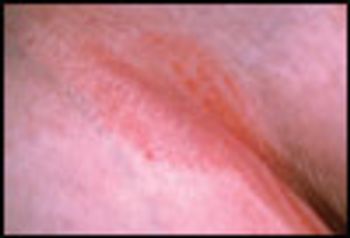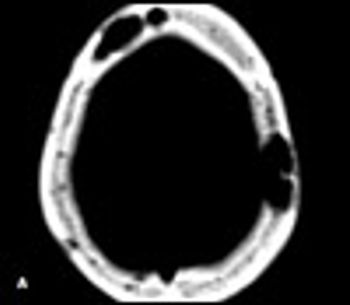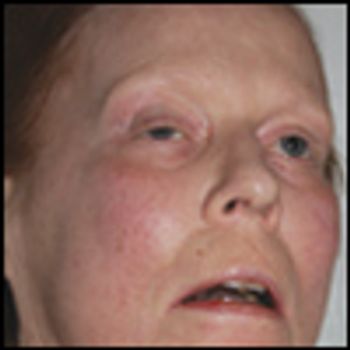


















































































































































Nail lesions shown here: Onychogryphosis, pseudomonal infection, myxoid cyst, onycholisis.

Nail lesions shown here: Onychogryphosis, pseudomonal infection, myxoid cyst, onycholisis.

This abdominal rash developed while a 63-year-old woman was traveling in Israel. She was admitted to the hospital, where she received intravenous antibiotics, and was discharged after 5 days. She now returns to the United States and wonders what she had, because she did not understand what the physician in Israel had told her. She has brought all of her medical records.

I understand that patients with refractory hypertension have a high risk of obstructive sleep apnea (OSA) syndrome. Can this be screened for in an office setting?

Case 1: Mr A. is a 55-year-old man who comes to your office for a routine physical examination. He is a traveling salesman and has recently gained weight. He does not exercise much and is a frequent visitor to fastfood establishments. His father had “a touch of diabetes” and died of a myocardial infarction (MI) at age 59.

No matter what primary care demographic your practice represents, it would be most unusual not to encounter patients infected with hepatitis C virus (HCV). Since HCV infection is chronic and can lead to cirrhosis (occurring in 20% of patients over a period of 10 to 20 years), decisions regarding its management, referral, and follow-up are of the utmost importance.

One of your patients is a 30-year-old woman whose BMI is 42. She has been treated for a compulsive eating disorder for the past 10 years, but medications and psychotherapy have not been effective.

Progressively worsening nasal congestion and headaches with diplopia and left proptosis for 2 months prompted an ophthalmology consultation for a 67-year-old woman. She had been evaluated multiple times for allergic rhinitis and recurrent sinusitis.

For a month, an obese 50-year-old woman with type 2 diabetes mellitus, hypercholesterolemia, and hypertension had blurry vision in both eyes. During this time, she also had ataxia and right-sided numbness. For the past 2 days, she had had horizontal, binocular diplopia with right gaze.

I have been using the finger of a non-sterile glove

Performing Papanicolaou tests in obese patients can be difficult

Unilateral polythelia is suggested by a sequence of supernumerary nipples that follow the embryonic milk line. No areolae are associated with these accessory nipples.

In 2000, the World Allergy Organization (WAO) published a consensus definition of anaphylaxis as a severe, life-threatening generalized or systemic hypersensitivity reaction. The reaction is caused by the release of bioactive mediators from mast cells and basophils.

All elements of the skin are affected by age. In this 2-part article, I discuss how the blood vessels, the lymphatics, and the ground substance- which surrounds these vessels- respond to age, and I show how the aging elements of the vasculature can engender a variety of pathological cutaneous conditions.

Each acute ankle injury commonly seen in the office has associated with it a mechanism by which it can be injured, trademark symptoms that the patient experiences during the injury, and a level of disability at the time of the injury and shortly after.

Osler nodes may accompany bacteremia without endocarditis, septic endarteritis, typhoid fever, gonococcemia, systemic lupus erythematosus, and nonbacterial thrombotic endocarditis.

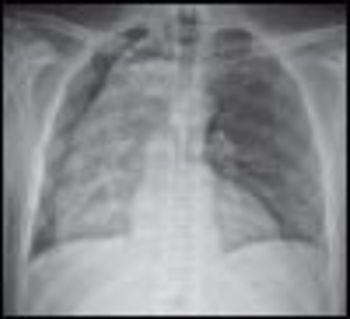
For 3 months, a 63-year-old man had experienced progressively worsening dyspnea. He denied fever, weight loss, and hemoptysis. Eight months earlier, he had had a right thoracotomy to drain a right empyema. Comorbidities included morbid obesity, type 2 diabetes mellitus, hypertension, and obstructive sleep apnea. However, he did not have any intrinsic lung disease.

An 88-year-old man who had left hip repair after a fracture a few months earlier is now admitted to behavioral hospital because of implacable refusal to take medications, and because of poor food intake and ongoing refusal of rehabilitation. Ambulated with a walker before fracture but now barely ventures out of wheelchair even with rolling walker and therapist guidance.

Losing weight can significantly reduce intracranial pressure and the complications it causes, including headache and optic nerve anomalies.

Prevalence of migraine is higher in men and women who have total body obesity (TBO) or abdominal obesity (Abd-O), according to the results of a study by Lee B. Peterlin, DO, assistant professor in the Department of Neurology, and colleagues at Drexel University College of Medicine in Philadelphia.

Two weeks after being treated for a fracture of the left humerus and several palpable breast lesions, a 63-year-old African American woman was hospitalized for generalized weakness and confusion. She had a history of type 2 diabetes mellitus, hypertension, coronary artery disease, chronic kidney disease, and low-grade B-cell lymphoma (which had been in remission for 2 years).

A 50-year-old woman presents to the emergency department with severe dizziness, weakness, and dyspnea of 1 week’s duration. Ten days earlier, an upper respiratory tract infection (URTI) was diagnosed; over-the-counter cough syrup and acetaminophen were prescribed. However, the patient’s condition has steadily deteriorated since then. In addition, her urine has darkened over the past few days.

A 51-year-old man is admitted to the hospital with painful ulcers on both lower extremities, severe anemia, and a 45-kg (100-lb) weight loss over the past year. Pain from the ulcers prevents him from walking. The ulcers developed about 5 years earlier, as a result of his wearing high boots for work; they began as small sores and grew over time.

These joint deformities occurred in a 61-year-old man with chronic tophaceous gout. The patient had had joint pain and swelling since he was 40 years old; the symptoms began in 2 fingers and were initially mild. He did not seek medical attention. Within 5 to 10 years, joint abnormalities had developed in the fingers and then in the left elbow and right ankle. The toes were not affected. He had no family history of joint pain or swelling. Serum uric acid level was 9.7 mg/dL.

Q:My patient is a 66-year-old man with long-standing hypertension and atherosclerotic heart disease. During a recent coronary arteriogram, the cardiologist performed renal artery screening, which revealed a left renal artery stenosis. Renal artery angioplasty and stenting were recommended. Is this appropriate?

Although gout has been recognized since ancient times, its management remains challenging. In a previous article (CONSULTANT, December 2008, page 1010), I focused on diagnosis; here I discuss how the treatment approaches for an acute flare and for chronic gout differ, and I compare the safety and efficacy of available therapies.