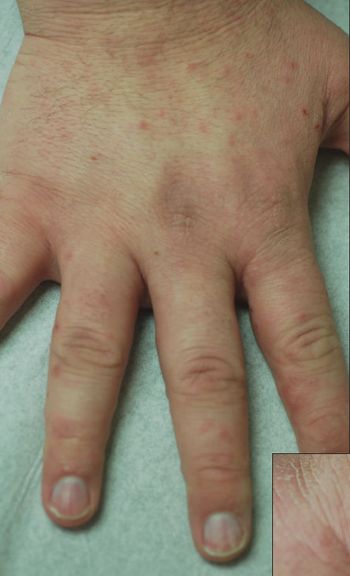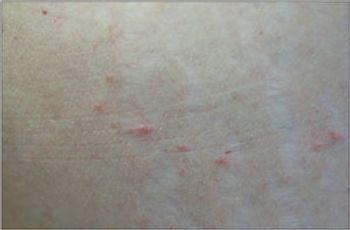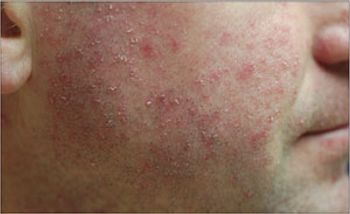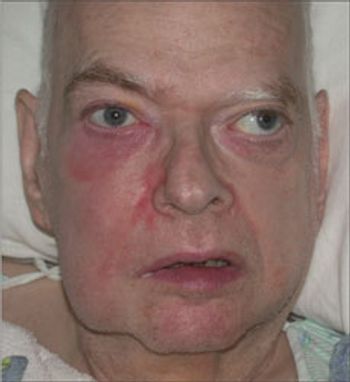



















































































































































A previously healthy 16-year-old boy presents for evaluation of a slightly pruritic, nontender, generalized rash.


A previously healthy 16-year-old boy presents for evaluation of a slightly pruritic, nontender, generalized rash.

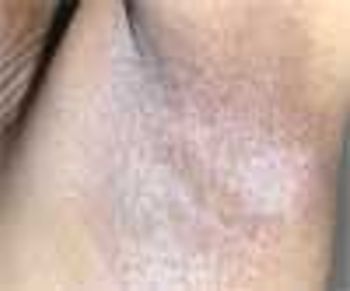
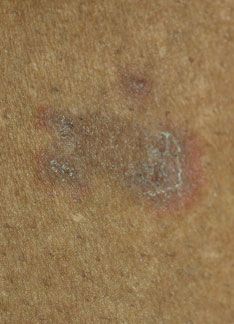
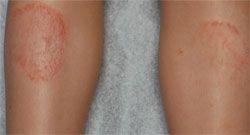
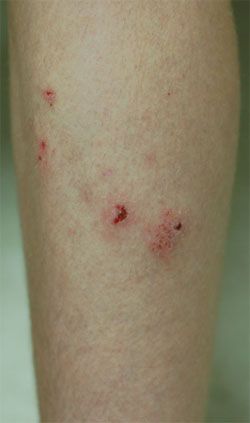
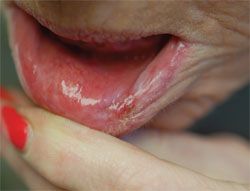
Untreated tinea versicolor has no grave sequelae. However, cutaneous dyschromia-hypopigmentation or hyperpigmentation-will persist without treatment (Figure).

For 25 years, a 74-year-old man had an intermittent, painful, and pruritic rash that caused cracking and erosions in the axillae and groin. It worsened with sweating and in the summer and also when clothing or skin rubbed against the eruption. The patient’s father, a paternal uncle, and all 3 of the patient’s daughters had a similar rash. Cetirizine and a combination of xipamide, bacitracin ointment, clotrimazole, and triamcinolone cream were prescribed to treat the rash.

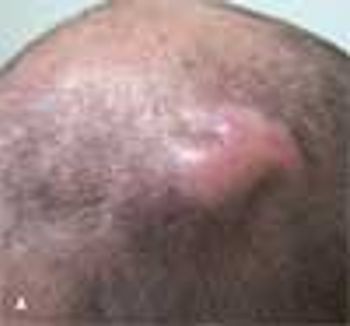
For about 10 years, a 26-year-old man had recurring cystic lesions on his scalp that would periodically enlarge, shrink, and occasionally drain. One lesion had been excised by another physician, but it later recurred. The patient had been taking minocycline (100 mg) daily for this condition.

For a week, a 36-year-old Marine had clusters of localized papular lesions on the right forearm; he had no systemic symptoms. The patient had been inoculated 20 days earlier in the United States with the vaccinia virus (smallpox vaccine) to the ipsilateral shoulder just before deployment. He had no history of eczema, psoriasis, or drug allergies.

This finely papular, slightly raised lesion below the vermilion border of a 53-year-old man’s lip had been present for several months; it was asymptomatic. Six years earlier, the patient had a squamous cell carcinoma of the left lower leg excised. He worked outdoors on an offshore oil rig.

A biopsy of this asymptomatic lesion showed invasive squamous cell carcinoma without obvious perineural involvement. The lesion was excised with Mohs surgery, with good cosmetic outcome.

During a routine physical examination, flesh-colored papules were noted on a 36-year-old man’s elbows, knees, and interphalangeal joints. The patient reported that they had been present for a long time, were nonpruritic, and had remained the same color and size. He had not self-treated with any over-the-counter medications. His only other concern was acid reflux for which he regularly took antacids. He had no significant medical or surgical history and no medication allergy. He smoked 1 pack of cigarettes per day, drank alcohol socially, and consumed caffeine-containing drinks daily.

A 65-year-old man was concerned about a skin-colored papillary lesion on the right lateral lower eyelid along the eyelash line. It had been present for 1 week and was asymptomatic.

For 5 weeks, a 27-year-old man had a rash with painful fissures on his hands. For the past 2 weeks, he also had mildly pruritic red, scaly lesions on his trunk. He was otherwise healthy, had no allergies, and did not take any medications. The patient denied the use of tobacco, alcohol, and illicit drugs.

A 56-year-old man presented with pruritic, raised plaques with crusting and occasional weeping in tattoos he had acquired a few months earlier. The lesions were confined to the red and blue pigmented areas only, which suggested a contact dermatitis to the metal in the tattoo ink.

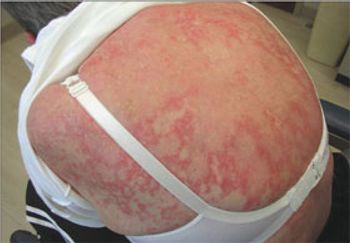
This pruritic rash appears to be a drug reaction to a cephalosporin. This class of drug often produces allergic reactions in the skin; this was quite an ordinary one, neither vasculitic nor urticarial. The mucosa was not affected, which ruled out Stevens-Johnson syndrome.

A 22-year-old Chinese man presented with a patch of increased hair growth on his back. The hair first appeared 9 years earlier, and the area of growth slowly expanded until 3 years ago.

A 25-year-old woman presents for a prenatal visit. She has an unremarkable medical history except for hypermobility of the joints and a tendency to bruise easily. Her mother and sister also have very lax joints.

For 6 weeks, a 68-year-old woman had had sharp pain in the left breast that radiated to the left arm and back. The pain was worse on palpation; ibuprofen provided only mild relief. She denied nipple discharge, skin discoloration, and fever. She had no family history of breast cancer. Results of a biopsy of the left breast 6 years earlier were benign. Her most recent mammogram, 4 weeks earlier, was negative.

Swelling of the wrists and ankles of 3 months' duration prompted a 33-year-old man to seek medical attention. The swelling was highly migratory, with periods of regression that lasted several days at a time. The patient also had a 3-year history of "breaking out" after contact with water. He had no personal or family history of asthma, allergies, or other atopic disorders. He was not taking any medications.

A Photo Quiz to Hone Dermatologic Skills

The 2-year-old boy shown here had been bitten on the left cheek by a medium-sized dog while at the home of his day-care provider. Immediately after the incident, the child was examined by his pediatrician and given a presciption for amoxicillin clavulanate. The next day, he presented to the emergency department with worsening cellulitis of the left cheek.

An 18-year-old girl presented with a red, scaly rash on her cheeks that had been scabbing over, peeling, and draining. She had had similar reactions to earrings and inexpensive jewelry. The appearance of the rash coincided with the use of a new cell phone.

A 54-year-old woman presents with an asymptomatic rash of sudden onset on both malar cheeks that developed 1 day earlier. She denies any facial trauma.

This darkly pigmented lesion on the left arm of a 27-year-old man had been present since birth and had slowly enlarged over the past 2 months. Two days earlier, another physician had diagnosed a wart and treated the lesion with liquid nitrogen, which caused erythema of the surrounding skin.

I'm sure our office has many rulers, but I often do not have one readily available during a skin examination. When this happens, I have found that knowing the width of the nail on my index finger comes in handy.

Tinea is caused by dermatophytes that can infect the stratum corneum epidermidis, hair, and nails. Dermatophytosis is a common infection worldwide, and about 20% of the US population is infected.1 Although numerous fungi can cause tinea, Trichophyton, Microsporum, and Epidermophyton are the genera that cause most cases of tinea.2 Classified by the part of the anatomy that is infected, tinea is referred to as tinea pedis, tinea manuum, tinea cruris, tinea corporis, tinea capitis, tinea faciei, tinea barbae, and tinea unguium.

For several years, a 71-year-old man has had a mildly pruritic rash on his legs that develops every winter and resolves when the weather becomes warmer. He is scheduled to undergo knee surgery, but the surgeon refuses to perform the operation until the rash has cleared.

Half way through a 15-minute iontophoresis treatment for de Quervain tenosynovitis of the right wrist, a 42-year-old woman felt exquisite pain but completed the session. After the therapist returned to the room and removed the electrodes, a light gray circular mark about 5 mm in diameter was noted on the skin. The epidermis was gone, and the underlying dermis was also injured. Within 6 hours, a tender, dark red-brown lesion developed.