














































































































































Endocrinology

Latest News


CME Content


Drs Sonia Arunabh and K. Rauhilla’s case of a 62-year-old woman with Raynaud’sphenomenon (CONSULTANT, September 15, 2001, page 1526) offers one ofthe finest photographs of this condition that I have seen (Figure).

For 2 days, a 68-year-old woman had watery, yellowish diarrhea with mucus and left lower quadrant pain. Her medical history included hypertension, diabetes mellitus, and congestive heart failure (CHF); she had left the hospital 5 days earlier following treatment of an exacerbation of CHF with intravenous furosemide and sodium and fluid restriction. The patient was taking furosemide, lisinopril, and glipizide; she denied any recent antibiotic therapy.

A 64-year-old woman with a history of diabetes, hypertension, and lymphoma was admitted to the hospital with a dull headache, conjunctival congestion, and slight dyspnea. Her pulse rate was 96 beats per minute; blood pressure, 146/68 mm Hg; and respiration rate, 22 breaths per minute. She also had increased jugular venous distention; cardiovascular and chest examination findings were normal. Edema of both arms and dilated blood vessels on the anterior chest wall were noted.

Heart failure(HF), the mostcommon Medicarediagnosisrelatedgroup,has a significant and growingimpact on health careresources. The incidenceof HF has tripled during thelast decade. Almost 5 millionAmericans have HF, and anestimated 500,000 new casesare diagnosed yearly. Thelifetime risk of HF is about20%.1 Drug therapy has improvedconsiderably in recentyears, but the magnitudeand severity of theproblem has created a needfor newer therapies--particularlysince HF is associatedwith an increased risk ofsudden death and a diminishedquality of life.2

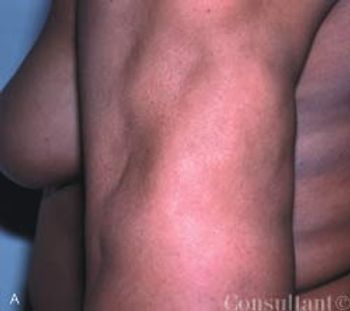
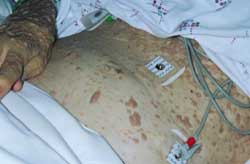
Some degree of hyperpigmentationdevelops in most pregnantwomen. This coloration is more pronouncedin dark-skinned women; onnaturally pigmented areas, such as theareolae, perineum, and umbilicus; andon the axillae, inner thighs, and otherregions that are prone to friction.

Dr Gregory Rutecki's interactive teaching case, “A Middle-Aged Man WithPolyuria: The Initial Visit” (CONSULTANT, March 2001, page 357), provided awelcome opportunity for me to review the care I provide to my patients with type 2diabetes, who comprise a very large percentage of my practice.

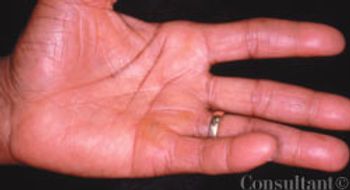
This patient with long-standing insulin-dependent diabetes has difficultyclosing his hand because of “tight skin.” Diabetes is the cause: this findingoccurs more often in persons with microvascular complications, such asretinopathy and nephropathy. The condition may occur even in patients withwell-controlled diabetes.

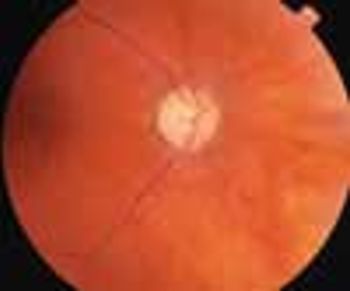
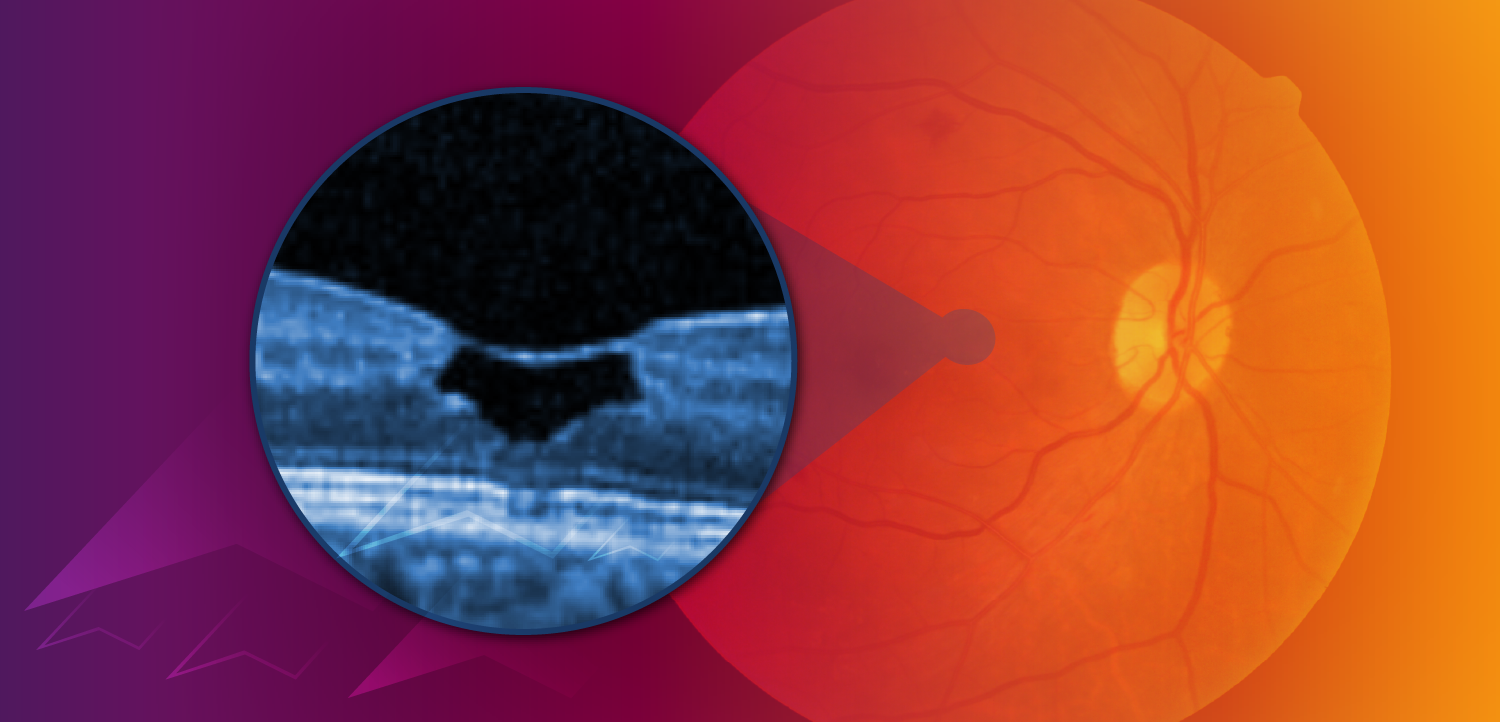
Diabetic retinopathy is the most common cause of legal blindness in personsbetween the ages of 20 and 65 years. In this 56-year-old man with a 20-yearhistory of type 2 diabetes, multiple, scattered intraretinal (dot-blot) hemorrhagesand superficial nerve fiber layer (splinter) hemorrhages can be seen.An occasional Roth spot-an intraretinal hemorrhage with a white center thatrepresents a fibrin thrombus which occludes a ruptured blood vessel-is alsoevident. Numerous yellow, waxy, hard exudates are seen between the innerplexiform and inner nuclear layers of the retina. Cotton-wool spots are alsopresent, although no neovascularization is present.

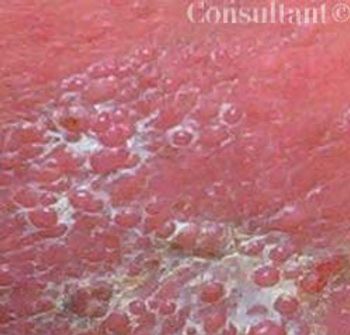
This huge blister developed spontaneously on the foot of a woman withdiabetes mellitus. There was no area of redness around the blister, whichnormally occurs with burns and inflamed lesions. Spontaneous blisters andother skin manifestations are common in persons with diabetes.

This patient with long-standing insulin-dependent diabetes mellitus has difficulty in closing his hand because the skin is "very tight."

The atrophic patches on the lower legs of this 47-year-old woman who has haddiabetes mellitus for over 20 years are those of necrobiosis lipoidica diabeticorum.These areas involve degeneration of collagen and elastic fibers in thelower dermis and changes in blood vessel walls. The lesions usually begin assingle or multiple elevated reddish nodules, most commonly in the pretibialarea. Over time, they expand and coalesce into distinctive brownish yellowpatches. These areas may be somewhat tender, but as they spread, theyfrequently become painless-unless they ulcerate. Because the involved skinis fragile, ulcers can form after any minor trauma.

Migraine is an episodic, often debilitatingcondition that affects women moreoften than men. Twenty-eight millionAmericans suffer from migraineheadaches-and nearly 75% of theseare women.1 Unlike other chronic painconditions, migraine has its peakprevalence during the years of greatestproductivity, when most women arejuggling family responsibilities andcareers.2 Many women are particularlysusceptible to migraine attacks justbefore and during menses.

Levofloxacin, 500 mg/d, had been prescribed for a 74-year-old woman who had a urinary tract infection. The patient had type 2 diabetes and hypertension. She was allergic to sulfa drugs. Two hours after taking the first oral dose of the antibiotic, painful blisters developed on the lower lip and soft palate.

Concerned about a lesion between her eyes, a 91-year-old woman sought medical evaluation. She had not seen a physician for 23 years. The patient was strong-willed and alert, with no evidence of Alzheimer disease. A huge goiter was evident.